
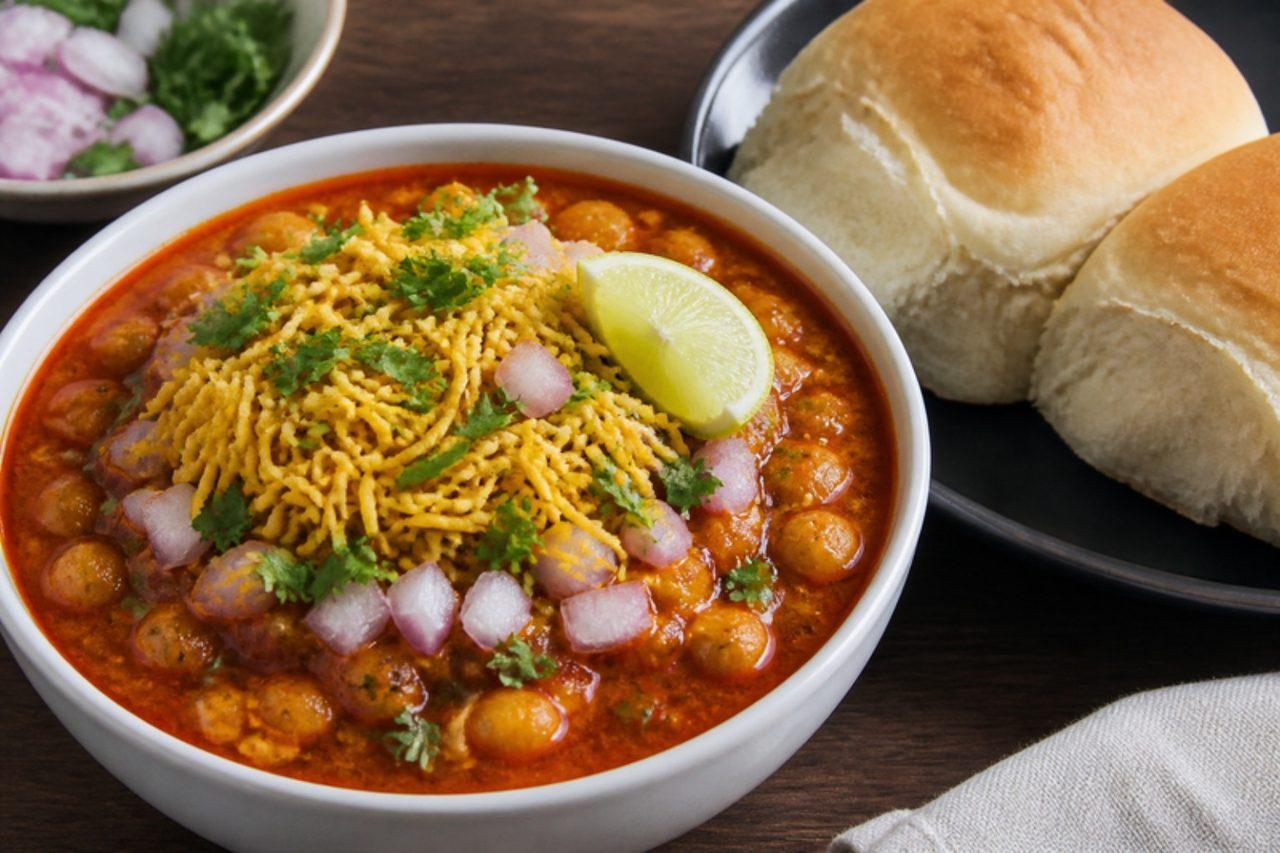
AI-generated image
Sev usal
સેવ ઉસળ: Vadodara's fiery white-pea curry under a heap of sev, onion and lemon, with pav (plus overnight soaking)


Ask anyone from Vadodara where to eat sev usal and you'll get a strong opinion and a street-corner name. Early in the morning the handcarts near Mandvi and Raopura have a huge pot of dried white peas simmering in a thin, fiery gravy, with a separate tin of brick-red chilli oil (the tari) on the side. A ladle of usal goes into a steel plate, a spoonful of tari is poured over, and then it disappears under fine sev, raw onion and coriander, with lemon and soft pav to mop it up. The gravy should be loose and soupy, not thick like a curry, so the sev stays crisp for the first few bites and then soaks in. Chef's tip: cook the tari separately and let each person add their own; the usal alone is only medium-hot, and the tari is where the fire comes from.
- Total time
- 65 min
- Difficulty
- easy
- Serves
- 4
Ingredients
For the peas
For the masala
For the tari (chilli oil)
To serve
Method
0/7 doneStep 1: Drain 7 oz dried white peas (safed vatana), put them in a pressure cooker with 3 ¾ cups water, ½ tsp ground turmeric and half the ¾ tsp salt, and cook on a medium heat for 5 whistles, about 20 minutes. Let the pressure drop by itself. The peas should be soft enough to crush between your fingers but still whole. No cooker? Simmer them covered for about 1¼ hours, topping up the water.
25 minStep 2: Heat 3 tbsp sunflower or groundnut oil in a deep pan over a medium heat. Add 1 tsp black mustard seeds; when the seeds start to pop, add 1 tsp cumin seeds, ¼ tsp asafoetida and 10 curry leaves and let them crackle for a few seconds.
Step 3: Add 1 large onion and fry, stirring often, for 6–8 minutes until soft and golden at the edges. Stir in 1 tbsp ginger-garlic paste and 2 green chillies and cook for 1 minute until the raw smell has gone.
9 minStep 4: Add 2 tomatoes, 2 tsp Kashmiri chilli powder, 2 tsp ground coriander and the rest of the ¾ tsp salt. Cook for 6–7 minutes, mashing with the spoon, until the tomatoes have melted and oil glistens at the edge of the masala.
7 minStep 5: Tip in the peas with all their cooking water. Mash a ladleful of peas against the side of the pan to give the gravy a little body, then add 1 tsp garam masala and 1 tsp jaggery. Simmer uncovered on a low heat for 12–15 minutes. It should stay thin and soupy; add hot water if it thickens. Common mistake: boiling it down to a thick curry. Sev usal needs a pourable gravy or the sev turns to paste.
15 minStep 6: For the tari, heat 4 tbsp sunflower or groundnut oil in a small pan over a low heat, take it off the heat and stir in 1 tbsp hot red chilli powder. Straight away pour in ¾ cup hot water (stand back, it spits), add a ladle of the usal gravy and simmer for 3 minutes until a layer of red oil floats on top.
4 minStep 7: To serve, ladle the usal into bowls, spoon over tari to taste, then pile on 3 ½ oz fine nylon sev, 1 red onion and ½ oz fresh coriander. Squeeze over 1 lemon and eat at once with warm 8 soft pav rolls, toasted on a buttered or oiled griddle if you like.
Nutrition per serving
- Calories
- 480 kcal
- Protein
- 17 g
- Carbs
- 52 g
- Fat
- 23 g
- Fibre
- 12 g
Nutrition values are estimates.
KrazyBadal
Good to know
- How long does sev usal take?
- About 65 minutes in total: 15 minutes to prepare and 50 minutes to cook.
- How many people does it serve?
- 4 as written. Change the servings above the ingredients and every amount scales to match.
- Is it vegan?
- Yes. It has no meat, fish, dairy or eggs.
- Is it very spicy?
- It has some heat. Use less chilli for a milder version, or more if you like it hot.
- What can I use instead of ground turmeric?
- Leave it out (it mostly adds colour).
- What can I use instead of black mustard seeds?
- Cumin seeds, same amount (different flavour, same crackle).
Reviews
No reviews yet. Be the first to cook it.
Rate this recipe
Sign in to rate and review this recipe.
You might also like
Coastal Mombasa mix
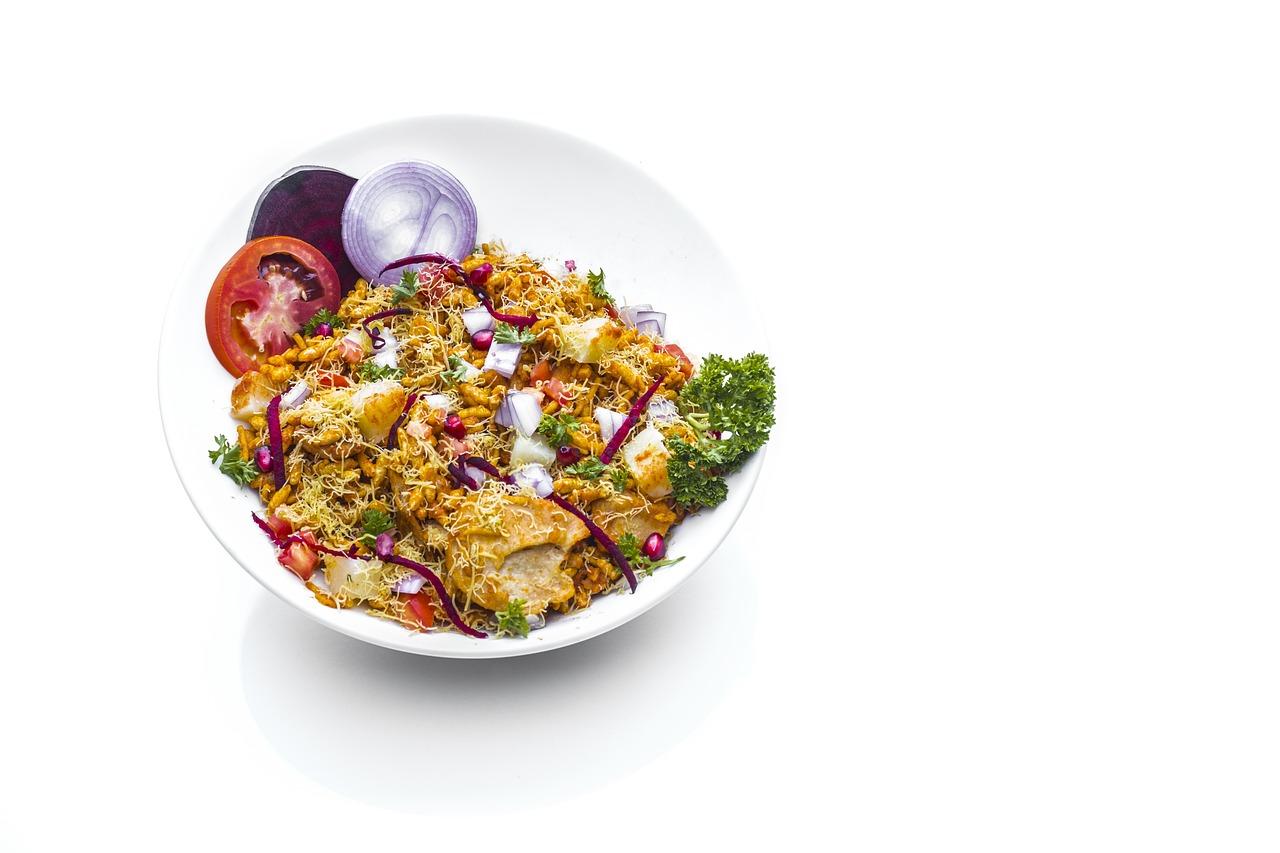
A Mombasa street-food bowl: chickpeas and potato simmered in coconut milk with raw mango and chilli, ladled into small bowls and topped with crisp lentil fritters, crunchy chevdo and red, green and tamarind chutneys. Make the fritters and chevdo ahead and assemble at the table. It's sweet, sour, hot and crunchy all at once.

Okonomiyaki
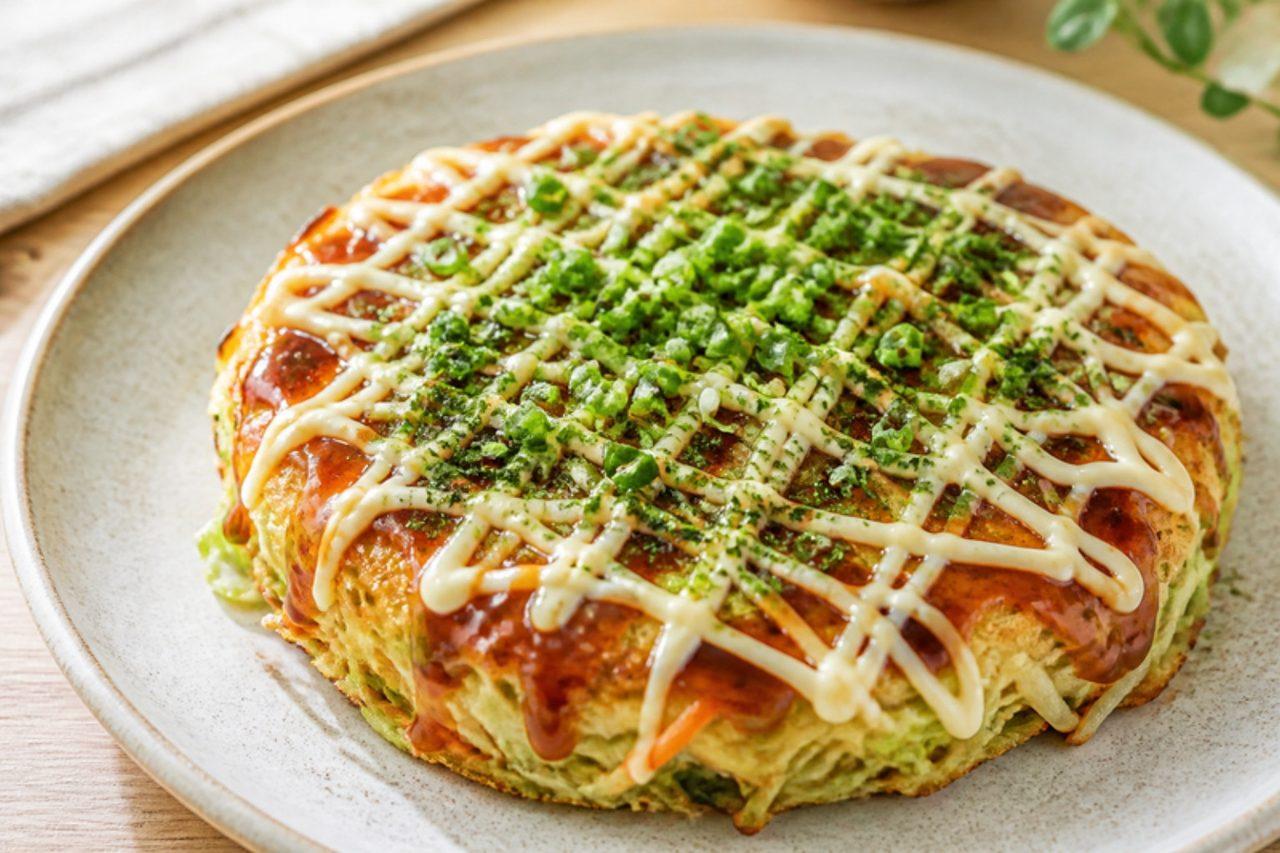
Okonomiyaki (お好み焼き, 'grilled as you like it') is the pride of Osaka, where it's cooked on hot iron griddles in lively restaurants. Finely shredded cabbage is folded into a light batter with egg and spring onion, then fried into a thick, soft pancake with a crisp outside. It's painted with a fruity brown sauce and zigzagged with mayonnaise. Bonito flakes are usual on top; this vegetarian version uses seaweed flakes and pickled ginger instead. Chef's tip: don't press the pancake down with your spatula while it cooks. Osaka cooks leave it alone so the cabbage steams inside and stays light and fluffy; pressing squeezes out the air.
Masala khakhra
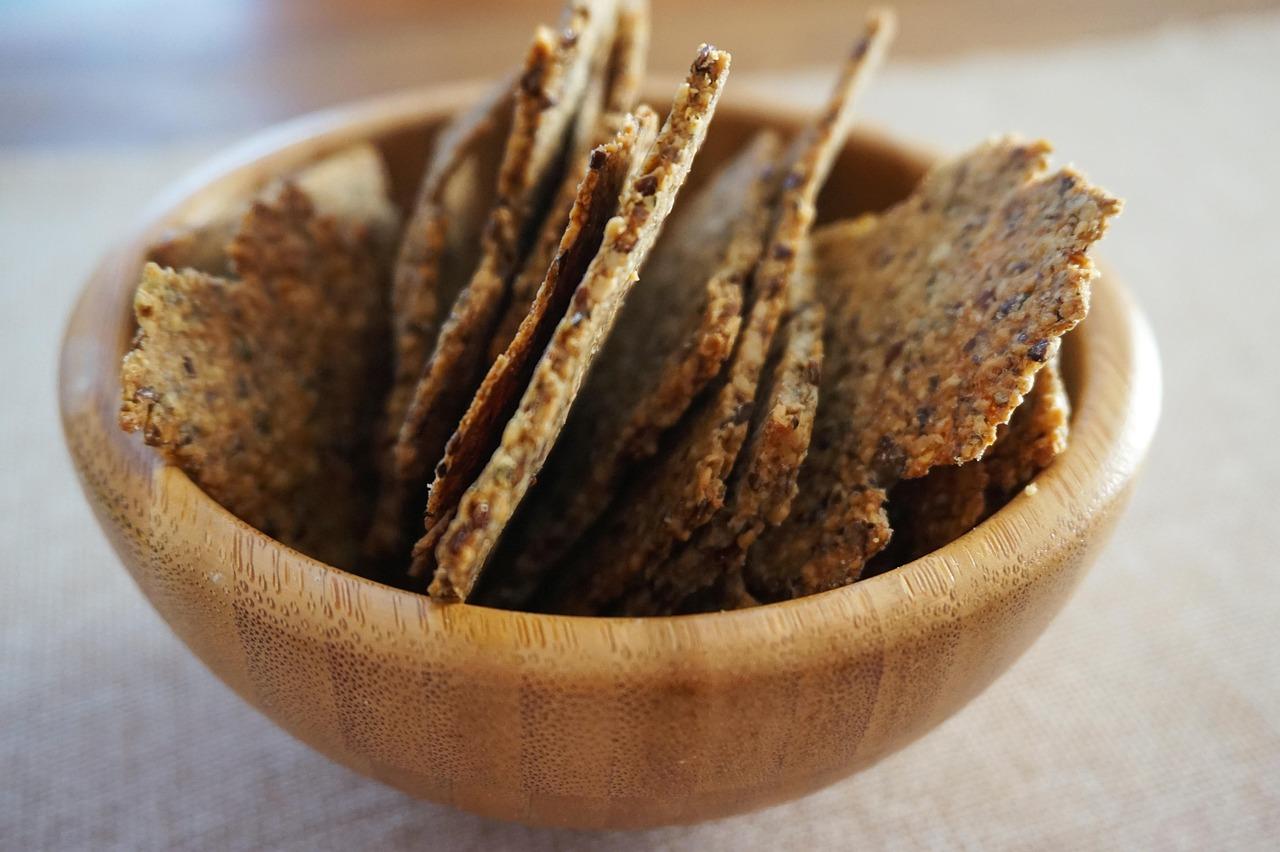
Khakhra are thin chapaties roasted slowly on a griddle until they turn crisp, like a cracker. This masala version adds gram flour, fresh fenugreek, turmeric and chilli to the wheat dough. They are a light Gujarati breakfast or tea-time snack, and lovely with pickle, chutney or a smear of butter. You can also make them in a roti maker.
