
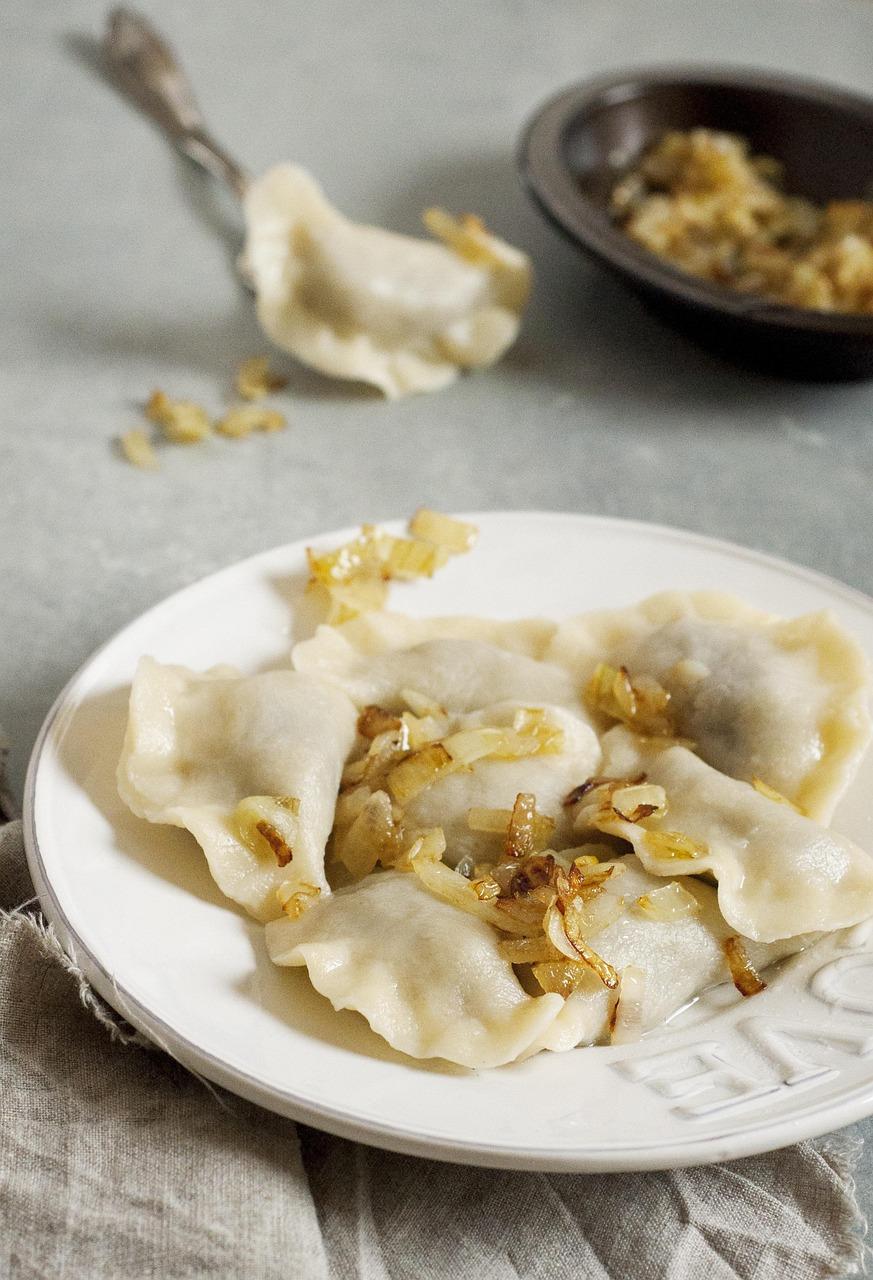
Pierogi ruskie
Potato, twaróg and onion dumplings from old Galicia
Pierogi ruskie take their name from Red Ruthenia, the old borderland around Lwów and Przemyśl, and today they are the pierogi every Polish milk bar (bar mleczny) from Kraków to Gdańsk keeps on the menu. The filling is the Polish one: floury potato mashed with crumbly twaróg curd cheese, plenty of slowly browned onion and a lot of black pepper, wrapped in a thin, soft dough. Kraków even holds a pierogi festival every August, and ruskie are always the best sellers. Serve them boiled with more golden onion and a spoon of soured cream, or fry leftovers in butter the next day. Chef's tip: let the filling cool completely and taste it before you fill a single dumpling; it should taste over-seasoned on its own, because the dough mutes it.
- Total time
- 90 min
- Difficulty
- medium
- Serves
- 4
Ingredients
For the dough
For the filling
To serve
Method
0/11 doneStep 1: Boil 1 ⅓ lb floury potatoes in salted water over a medium heat for 18–20 minutes, until a knife slides in with no resistance. Drain well and let them steam dry in the pan for 2 minutes, then mash until smooth.
22 minStep 2: Meanwhile melt 1 ⅜ oz butter in a frying pan over a medium-low heat and cook 2 onions slowly for 12–15 minutes, stirring now and then, until soft and deep golden and they smell sweet.
15 minStep 3: Crumble 9 oz twaróg (Polish curd cheese) into the warm potato and add the onions with their butter, 1 tsp salt and 1 tsp black pepper. Mash together until evenly mixed. Spread out on a plate and leave to cool completely; warm filling makes the dough sticky and tears it.
20 minStep 4: Make the dough. Put 1 ⅛ lb plain flour and 1 tsp salt in a bowl, add 2 tbsp sunflower oil and pour in 1 cup hot water little by little, stirring with a spoon. When it is cool enough to handle, knead for 6–8 minutes until smooth and soft, like an earlobe. Cover and rest for 20 minutes.
8 minStep 5: Roll a quarter of the dough on a floured worktop to about 2 mm, so you can just see the worktop through it. Keep the rest covered so it does not dry out.
Step 6: Cut circles with a 7–8 cm glass. Put a heaped teaspoon of filling on each, fold in half and pinch the edges firmly from one end to the other, pressing out the air. A common mistake is overfilling: the filling touches the edge, the seal fails and the pierogi burst in the water.
Step 7: Lay the pierogi on a floured tray or tea towel without touching. Repeat with the rest of the dough; re-roll the trimmings once.
Step 8: Bring a large pan of well-salted water to a rolling boil. Drop in 12–15 pierogi, stir gently once so none stick to the bottom, and lower the heat to a steady simmer.
1 minStep 9: Once they float, cook for 2 more minutes, until the dough edge is tender when you pinch it. Lift out with a slotted spoon.
3 minStep 10: For the topping, fry 1 onion in 1 oz butter over a medium heat for 8–10 minutes until golden. Spoon over the pierogi and serve with 5 ½ oz soured cream (śmietana 18%) and 1 tbsp chives.
10 minStep 11: To make ahead, freeze uncooked pierogi on a floured tray, then bag them. Boil from frozen, adding 2 minutes.
Nutrition per serving
- Calories
- 560 kcal
- Protein
- 18 g
- Carbs
- 82 g
- Fat
- 18 g
- Fibre
- 4 g
Nutrition values are estimates.
KrazyBadal
Good to know
- How long does pierogi ruskie take?
- About 90 minutes in total: 60 minutes to prepare and 30 minutes to cook.
- How many people does it serve?
- 4 as written. Change the servings above the ingredients and every amount scales to match.
- Is it vegetarian?
- Yes. It has no meat or fish.
- Can I make it ahead?
- Yes. It keeps well, so you can cook it earlier in the day or the day before and reheat it.
- What can I use instead of plain flour?
- Self-raising flour, same amount (then leave out the baking powder).
- What can I use instead of floury potatoes?
- Sweet potato, same weight (sweeter, cooks a little faster).
Reviews
No reviews yet. Be the first to cook it.
Rate this recipe
Sign in to rate and review this recipe.
You might also like
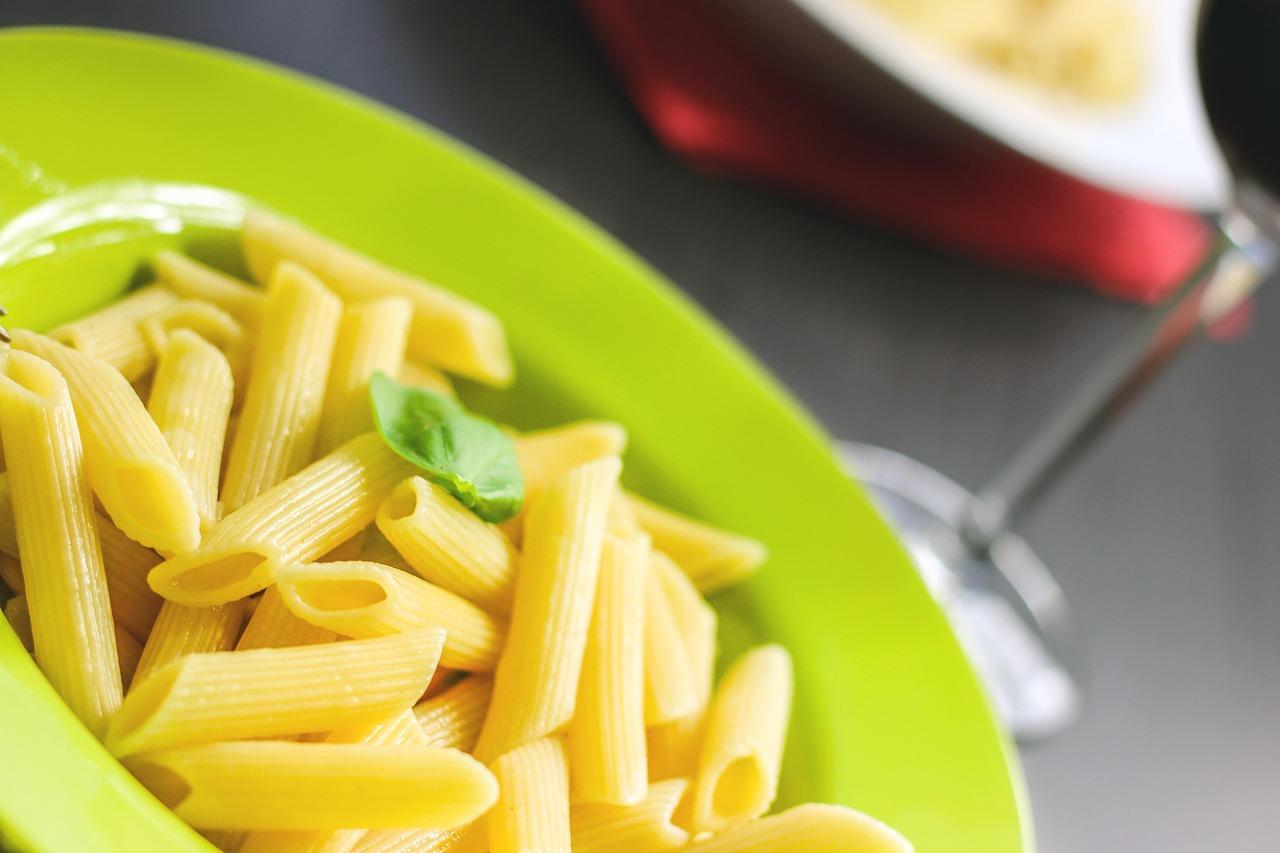
Boiled pasta
The basic method for any dried pasta, from penne to spaghetti. A large pan of salted boiling water keeps the pasta from sticking, and you cook it only until just done, with a little bite left. Use it in salads, bakes or with any sauce.


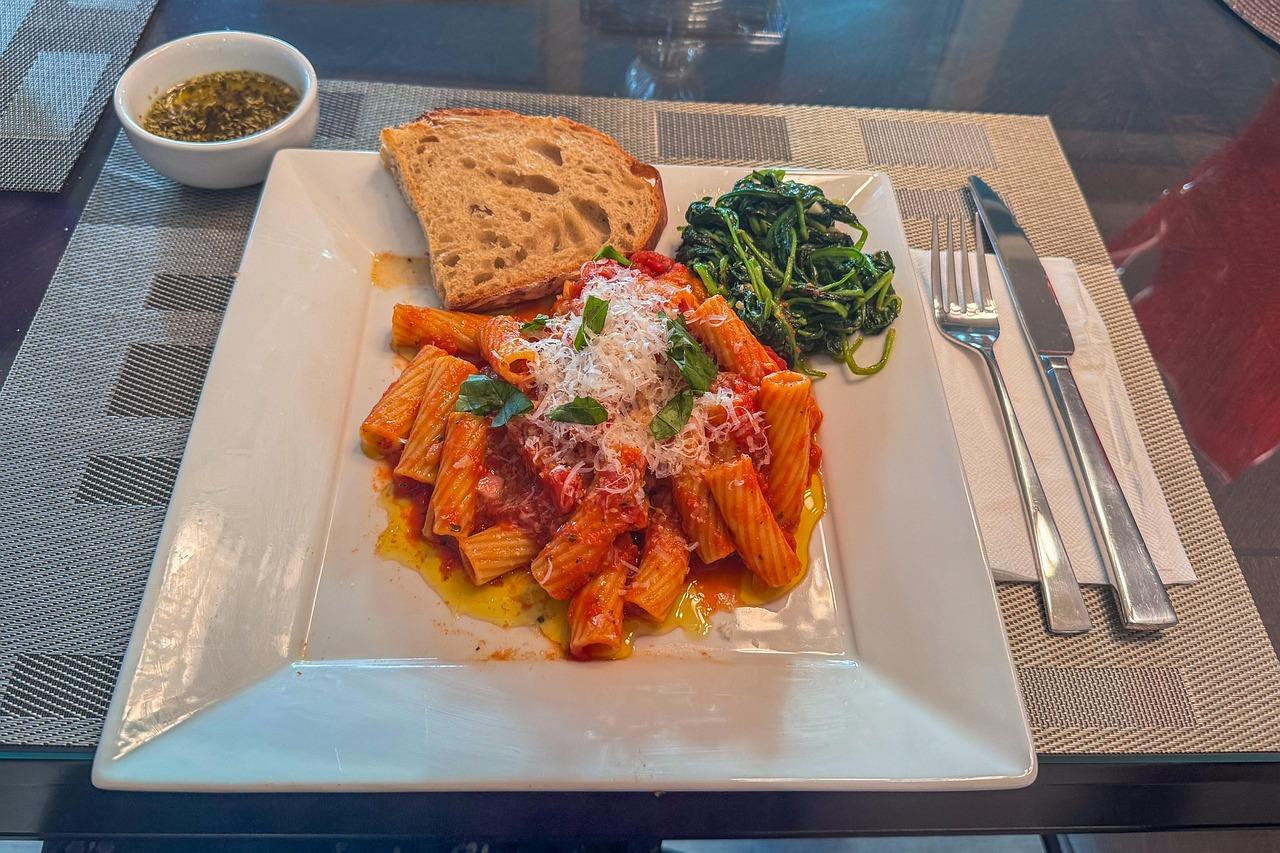
Pasta and eggplant
Rigatoni tossed in a thick tomato sauce with soft aubergine, celery and garlic, with an optional splash of brandy for depth, and topped with grated cheddar.
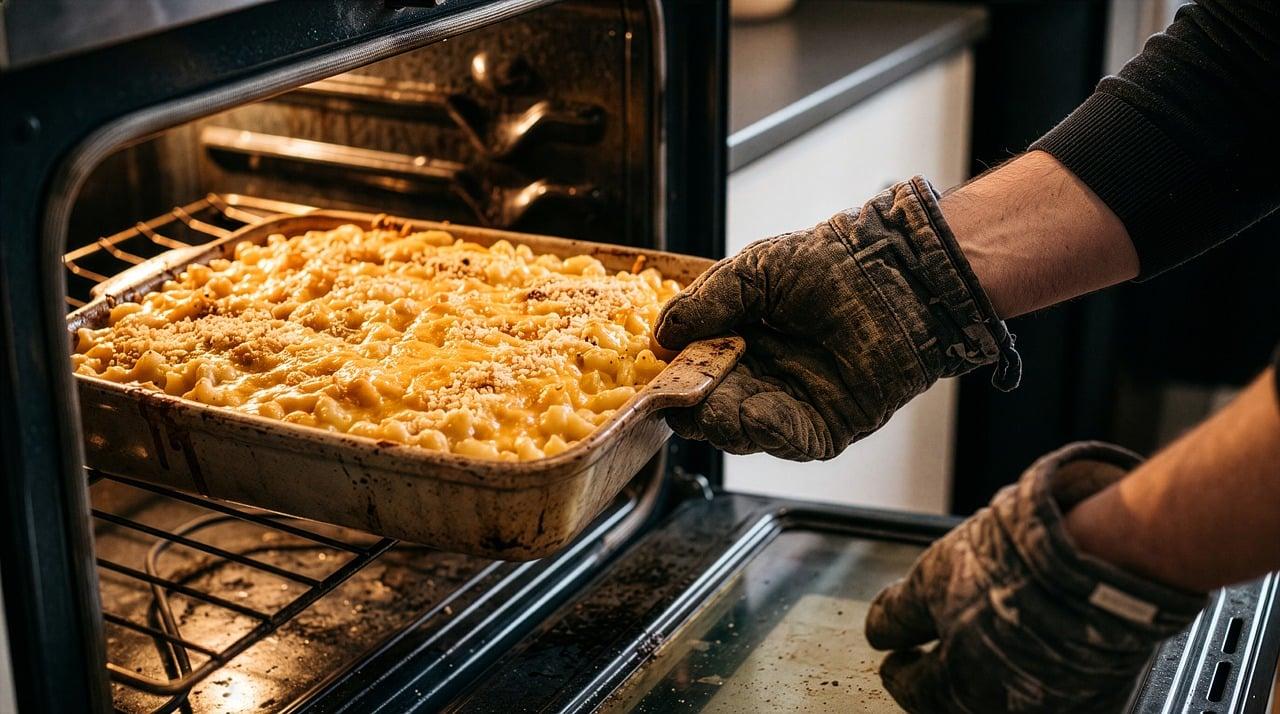
Traditional macaroni cheese
The classic comfort dish: elbow macaroni in a smooth, rich cheddar sauce, topped with more cheese and grilled until golden and bubbling. Serve it with a green salad.