
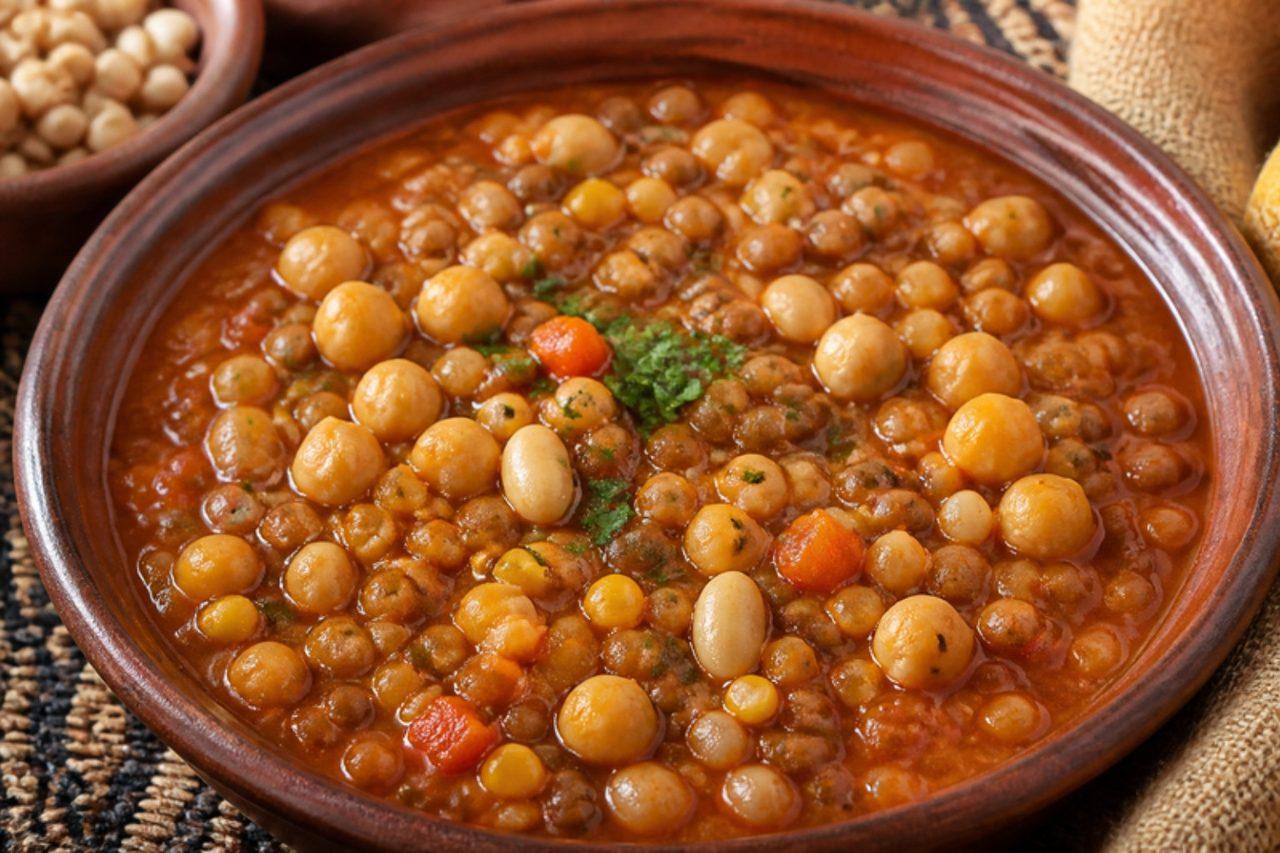
AI-generated image
Ourkimen (Yennayer pulse and grain stew)
Ourkimen: the Amazigh New Year stew of dried pulses, wheat and corn, here without lamb's feet


Ourkimen is cooked across the Souss and the Atlas for Yennayer, the Amazigh New Year on 12–13 January, when a pot of mixed dried beans, chickpeas, wheat berries and corn is simmered for hours to wish for a plentiful harvest. Many families add lamb's feet or dried meat; this is the meat-free version, made the way many cooks prepare it when meat is not on the table, and it is still deeply savoury from tomato, cumin, paprika and a good dose of olive oil. The grains turn chewy and the pulses creamy, and the stew is eaten hot from bowls with bread. Start the soaking the night before; the stew then needs about 3 1/2 hours of gentle simmering. People who have G6PD deficiency (favism) should leave out the dried broad beans and use more white beans. Chef's tip: stir from the bottom every 20 minutes in the last hour; as the stew thickens it catches easily.
- Total time
- 230 min
- Difficulty
- medium
- Serves
- 8
Ingredients
Soaked overnight
For the stew
Shop this recipe on Amazon
Spices & pantry
Fresh ingredients (5)
Links open Amazon in a new tab. As an Amazon Associate, WhatToEat.Today earns from qualifying purchases.
Method
0/6 doneStep 1: The night before, put 3 ½ oz dried chickpeas, 3 ½ oz dried peeled broad beans, 3 ½ oz dried white beans, 2 ⅞ oz whole wheat berries and 2 ⅞ oz dried corn kernels in a large bowl, cover with three times their volume of cold water and leave to soak for 12 hours. Unsoaked corn and wheat can take twice as long and may never turn tender.
Step 2: Drain and rinse everything. Put it in a large heavy pot with 1 onion, 4 garlic cloves, 2 ripe tomatoes, 1 tbsp tomato paste, 5 tbsp olive oil, 1 tsp ground cumin, 1 tsp sweet paprika, 1 tsp ground ginger, ½ tsp ground turmeric, 1 tsp ras el hanout and 1 dried red chilli.
Step 3: Pour in 10 ½ cups water and bring to the boil over a high heat. Skim off any foam, then turn the heat down to the lowest simmer and half-cover.
10 minStep 4: Simmer gently for 2 1/2 hours, stirring every 20–30 minutes and topping up with boiling water whenever the liquid drops below the pulses.
150 minStep 5: Add 1 ¾ oz brown lentils and 2 tsp salt and continue to simmer until the lentils are soft, the wheat and corn are tender but chewy and the beans are creamy, with a thick, reddish broth.
45 minStep 6: Taste for salt and spice, take out the chilli if you like and scatter with 3 tbsp flat-leaf parsley. Serve hot in bowls with bread. Leftovers keep 3 days in the fridge and thicken; loosen with water when reheating until piping hot.
Nutrition per serving
- Calories
- 300 kcal
- Protein
- 13 g
- Carbs
- 42 g
- Fat
- 10 g
- Fibre
- 11 g
Nutrition values are estimates.
KrazyBadal
Good to know
- How long does ourkimen (Yennayer pulse and grain stew) take?
- About 230 minutes in total: 20 minutes to prepare and 210 minutes to cook.
- How many people does it serve?
- 8 as written. Change the servings above the ingredients and every amount scales to match.
- Is it vegan?
- Yes. It has no meat, fish, dairy or eggs.
- What can I use instead of dried chickpeas?
- Cannellini or butter beans, same amount.
- What can I use instead of onion?
- 2 shallots per onion.
Reviews
No reviews yet. Be the first to cook it.
Rate this recipe
Sign in to rate and review this recipe.
You might also like
Sayur lodeh
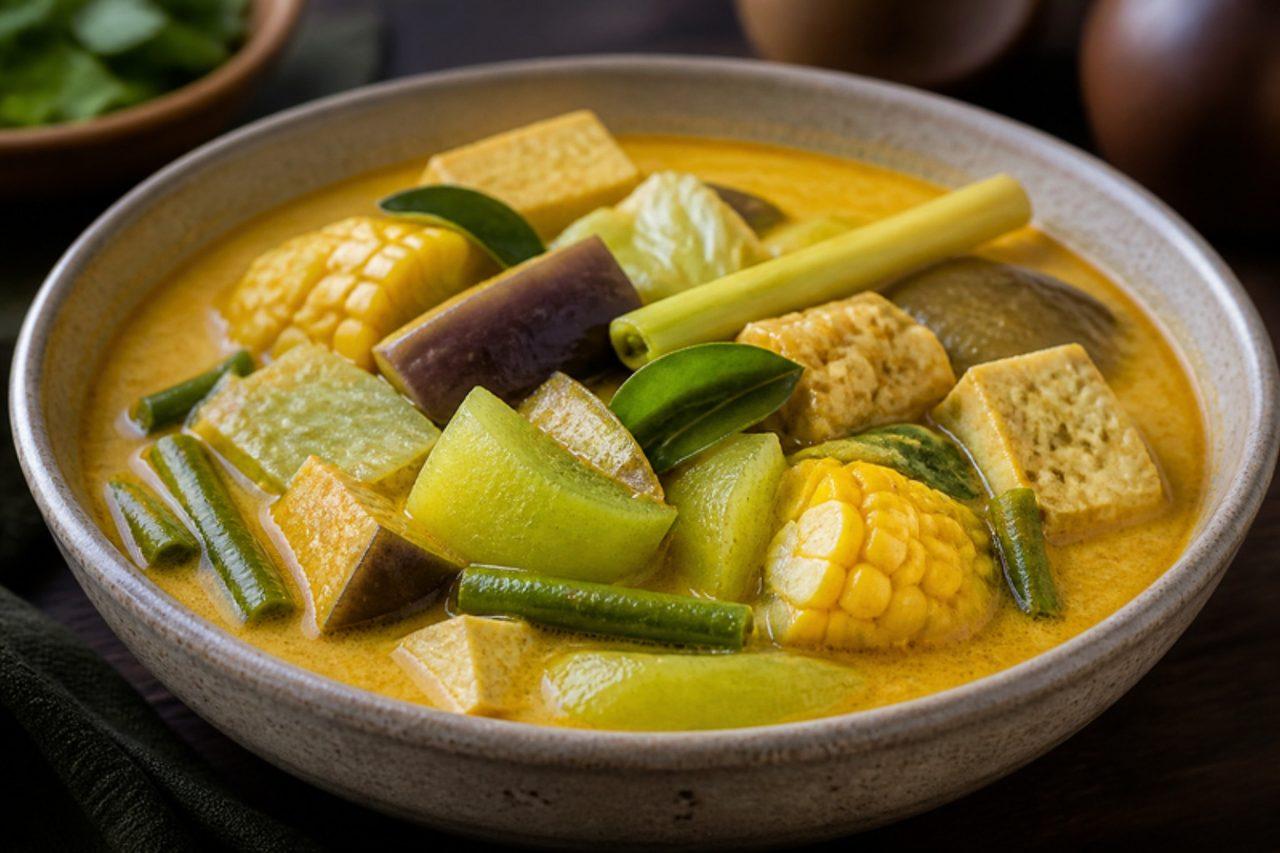
Sayur lodeh is everyday cooking in Central Java, made in big pots in Solo and Semarang kitchens and ladled over rice, with lontong rice cakes at Lebaran, or alongside opor and sambal goreng on festive tables. It's soupy rather than thick: a fragrant broth of coconut milk, galangal, lemongrass and lime leaf that carries chunks of aubergine, long beans, chayote and sweetcorn, plus tempeh and tofu to make it a meal. The flavour is mellow and slightly sweet, so the heat comes from sambal on the side. Chef's tip: keep the pot at a gentle simmer once the coconut milk goes in and stir now and then — a rolling boil splits the coconut milk into oily curds.
 Indonesian


Polos curry
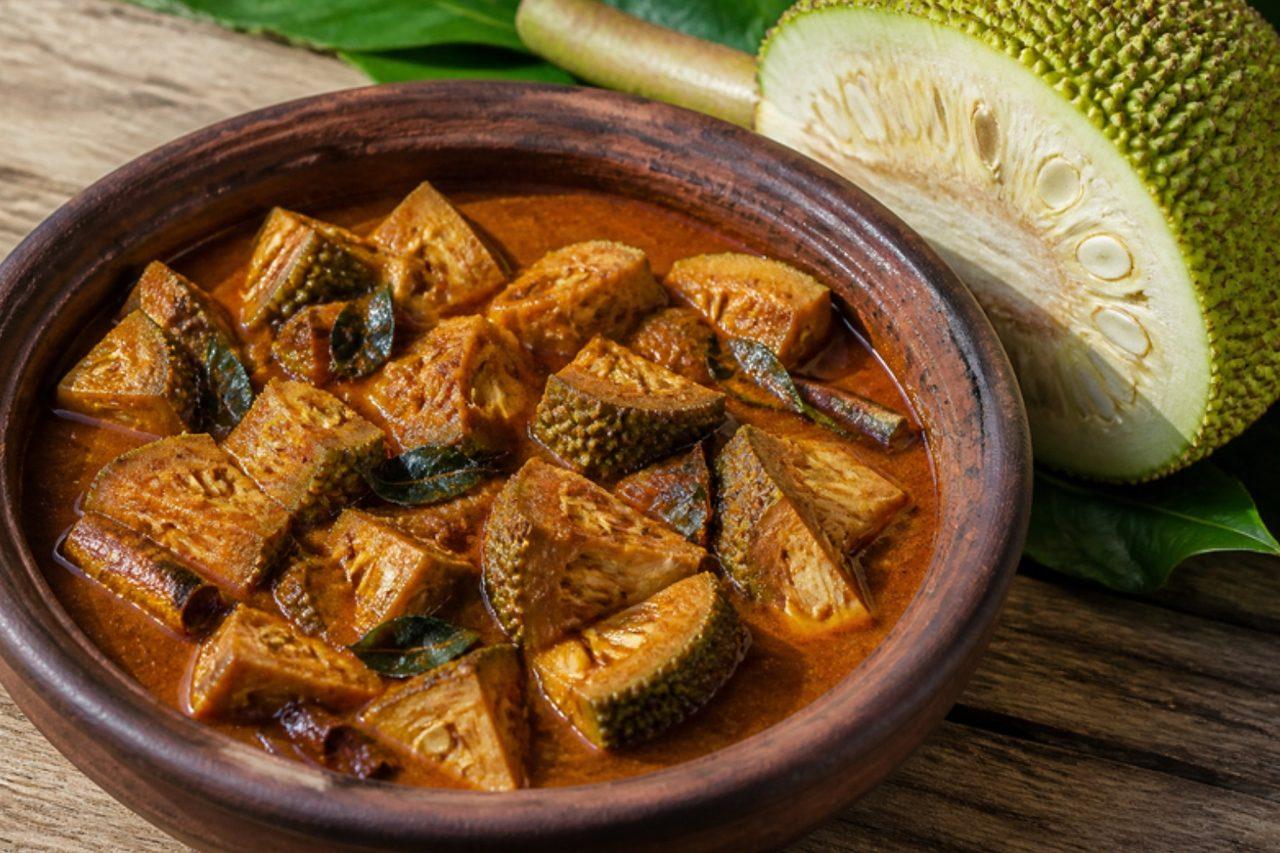
Polos is the tiny unripe jackfruit picked in the Western and Sabaragamuwa provinces long before it sweetens, and cooked low and slow it becomes one of the island's most loved festival curries, especially at Sinhala and Tamil New Year in April and at wedding lunches. The firm, pale flesh soaks up a very dark roasted curry powder, garlic, ginger, goraka (a smoky souring fruit) and coconut milk until it turns almost black-brown and tastes rich, sour and meaty. Fresh polos is hard to find abroad; tinned young green jackfruit in brine works well. A frequent mistake is not cooking it long enough, which leaves it squeaky; the pieces must be soft enough to break with a spoon. Chef's tip: oil your hands and knife before cutting fresh jackfruit; the sticky white sap washes off oiled skin but not dry skin.
 Sri Lankan

Chana masala
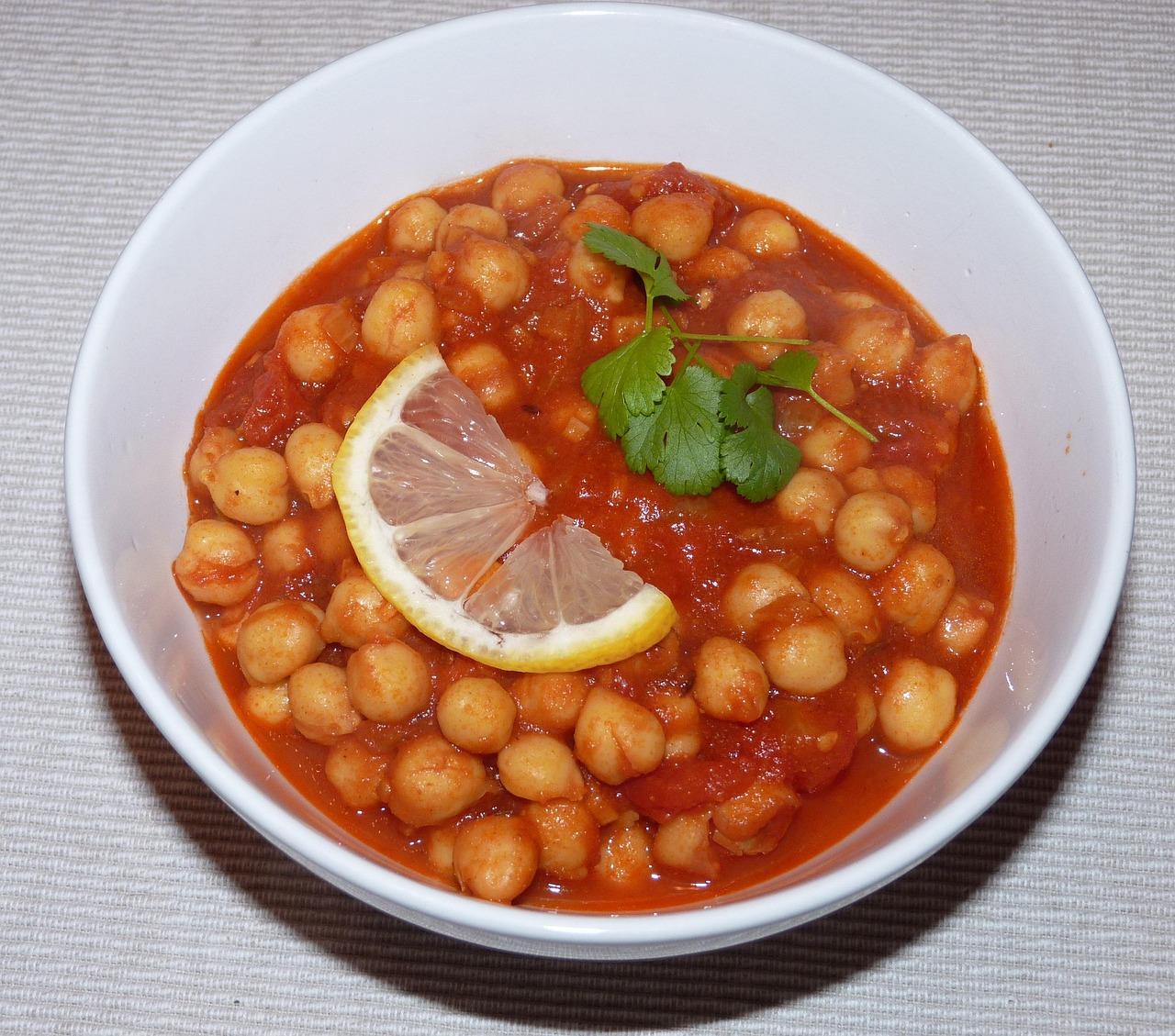
A North Indian staple that comes together from the store cupboard. Toasted cumin, slow-softened onion and a good spoonful of garam masala give tinned chickpeas real depth. Serve with rice, naan or a stack of warm rotis.
 Indian