
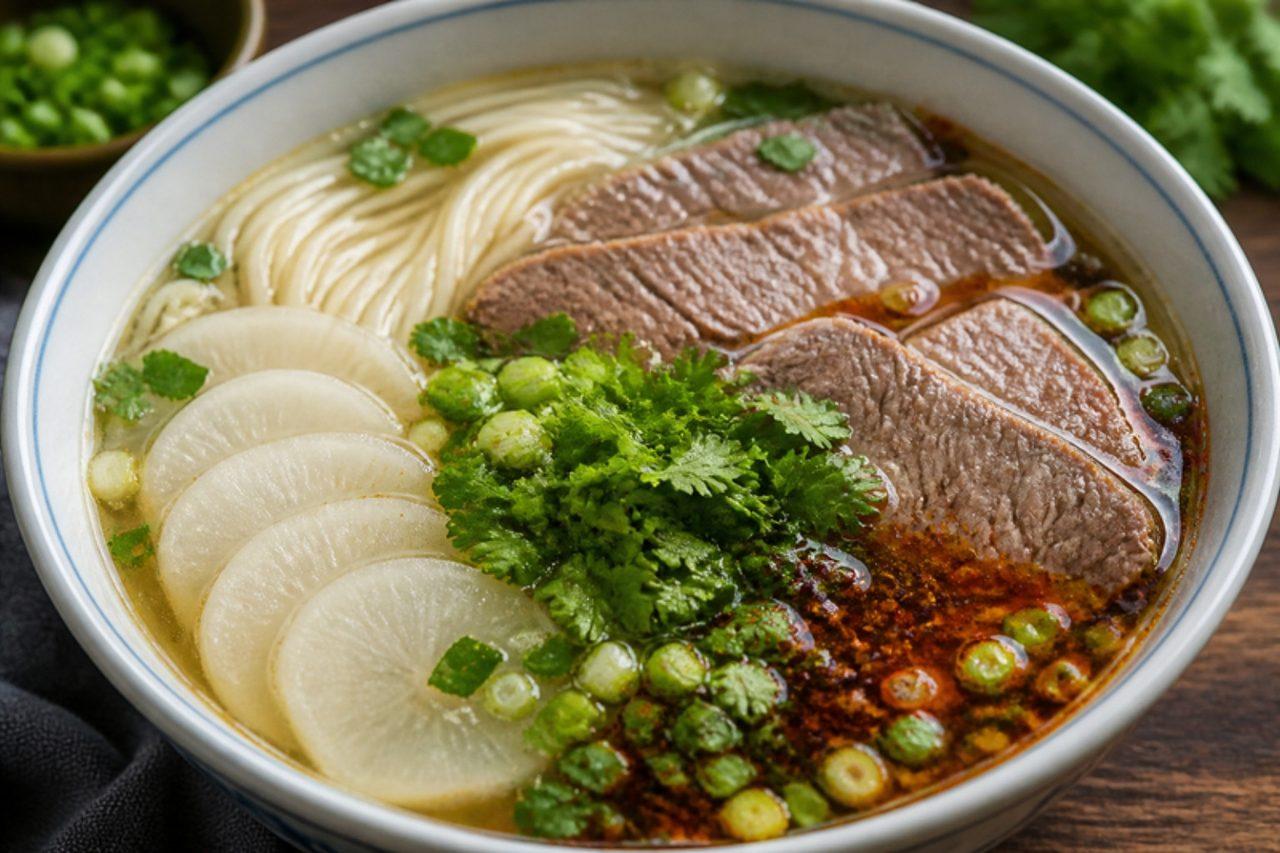
AI-generated image
Lanzhou beef noodle soup
Lánzhōu niúròu miàn (兰州牛肉面) — clear spiced beef broth with radish, chilli oil and noodles
In Lanzhou, capital of Gansu, the day starts at a noodle shop where cooks stretch dough into strands before your eyes and drop them into bowls of clear, fragrant beef broth. Locals describe the ideal bowl in five colours: clear broth, white radish, red chilli oil, green coriander and garlic shoots, and yellow noodles. The broth is light yet deeply beefy and gently spiced, the radish sweet, the chilli oil toasty rather than fierce. This version uses good bought noodles, with an optional route for pulling your own if you fancy the challenge. Chef's tip: simmer the broth, never boil it; a hard boil turns it cloudy and the clear, golden look is the whole point.
- Total time
- 180 min
- Difficulty
- hard
- Serves
- 4
Ingredients
For the broth
For the chilli oil
For the noodles
For hand-pulled noodles (optional, instead of bought)
To serve
Method
0/10 doneStep 1: Soak 1 ¾ lb beef shank (and the bones if using) in cold water for 1 hour, changing the water once; this draws out blood and keeps the broth clear. Use a separate board for raw beef.
Step 2: Put the beef into a large pot with fresh cold water, bring to the boil and boil for 5 minutes. Drain, rinse the meat and bones, and wash the pot.
10 minStep 3: Return the beef to the pot with 14 ½ cups water and 1 oz fresh ginger. Tie 1 tsp Sichuan peppercorns, 1 star anise, 1 cinnamon stick, 1 tsp fennel seeds, 1 black cardamom pod and 1 tsp white peppercorns in a muslin bag and add it. Bring slowly to a simmer and skim off all the foam.
15 minStep 4: Keep the broth at a lazy simmer, uncovered, for 2 hours, until a chopstick slides through the shank. Letting it boil hard is the common mistake: the fat emulsifies and the broth turns cloudy. The braised shank will be well past medium (145°F / 145 °F) and should be fork-tender.
120 minStep 5: Meanwhile, make the chilli oil: put 4 tbsp Chinese chilli flakes and ¼ tsp salt in a heatproof bowl. Heat ½ cup neutral oil to about 350°F, until a scrap of ginger sizzles hard, and pour it over in three goes, stirring. Leave to cool and settle.
5 minStep 6: If pulling noodles by hand, mix 1 ⅛ lb strong bread flour, 1 ¼ cups water, ⅛ oz salt and the 1 ½ tsp baked bicarbonate of soda dissolved in 2 tablespoons of the water, knead for 10 minutes, then rest under oil for 1 hour. Stretch portions into long ropes, fold and pull until thin. Otherwise skip to the next step.
Step 7: Lift out the beef and bag of spices. Strain the broth through a fine sieve or cloth back into a clean pot, season with 2 ½ tsp salt and add 14 oz white radish (mooli). Simmer for 10 minutes until the radish is tender and translucent.
10 minStep 8: Slice the cooled beef thinly across the grain.
Step 9: Cook 1 ⅛ lb fresh or dried thin wheat noodles (ramen-style) in a separate pan of boiling water as the packet says, usually 2–4 minutes, then drain. Cooking them in the broth makes it starchy.
4 minStep 10: Divide the noodles between deep bowls, ladle over the hot broth and radish, and top with beef slices, ⅔ oz coriander and 3 garlic shoots or spring onions. Spoon a tablespoon of chilli oil, with flakes, over each bowl.
Nutrition per serving
- Calories
- 640 kcal
- Protein
- 48 g
- Carbs
- 72 g
- Fat
- 18 g
- Fibre
- 4 g
Nutrition values are estimates.
KrazyBadal
Good to know
- How long does lanzhou beef noodle soup take?
- About 180 minutes in total: 20 minutes to prepare and 160 minutes to cook.
- How many people does it serve?
- 4 as written. Change the servings above the ingredients and every amount scales to match.
- What can I use instead of fresh ginger?
- ¼ tsp ground ginger per tbsp fresh (add it with the spices).
- What can I use instead of star anise?
- ½ tsp aniseeds or fennel seeds per star.
Reviews
No reviews yet. Be the first to cook it.
Rate this recipe
Sign in to rate and review this recipe.
You might also like
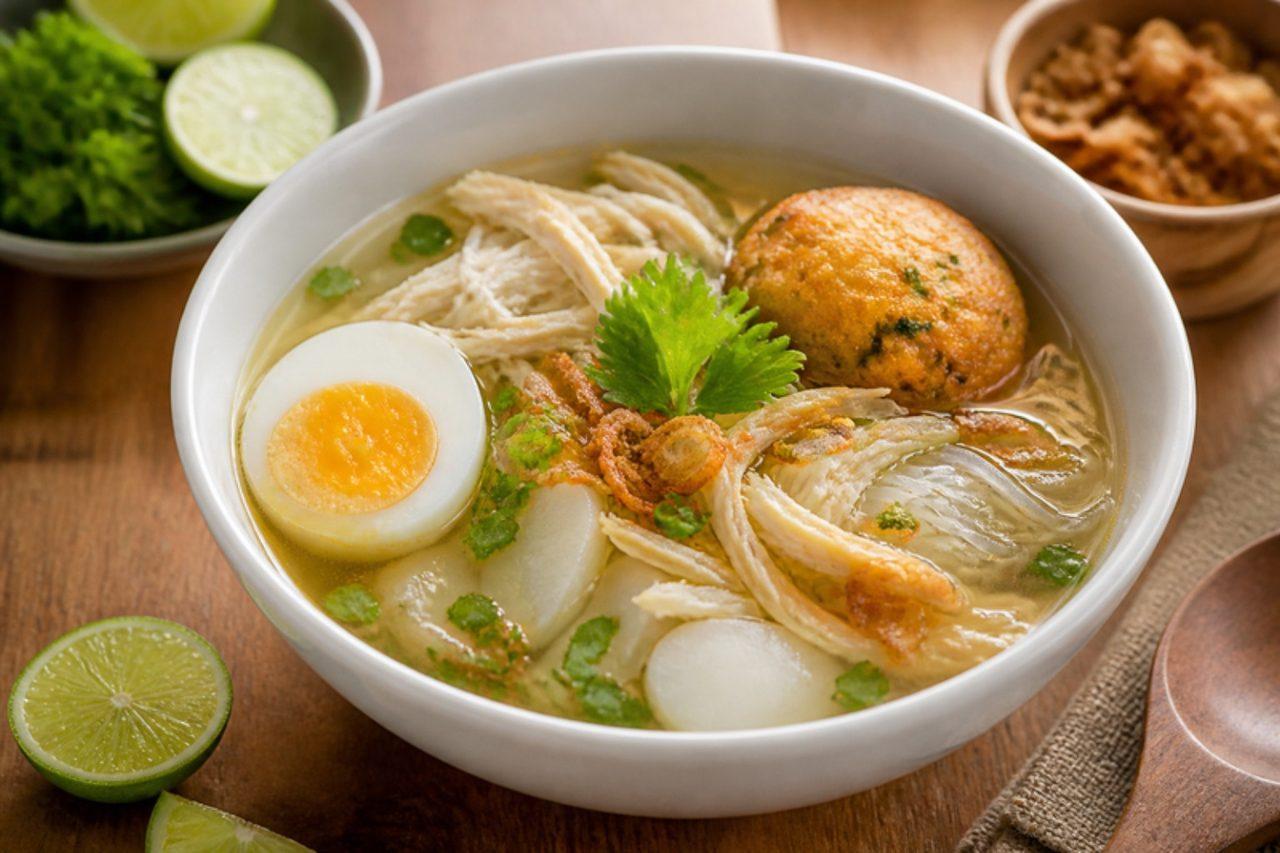
Soto Banjar
Along the rivers of Banjarmasin in South Kalimantan, breakfast often means soto Banjar eaten at a wooden riverside warung, sometimes after a dawn trip to the floating market. Unlike the turmeric sotos of Java, this broth is pale and clear, perfumed with the sweet spices that traders brought up the river centuries ago: cinnamon, cloves, star anise, cardamom and nutmeg. Shredded chicken, glass noodles, carrot and a boiled egg go into the bowl with rice cakes, and lime and a little chilli sharpen it at the table. Chef's tip: toast the whole spices in the pan for a minute before the paste goes in; it brings out their sweetness without the dusty edge of ground spice.

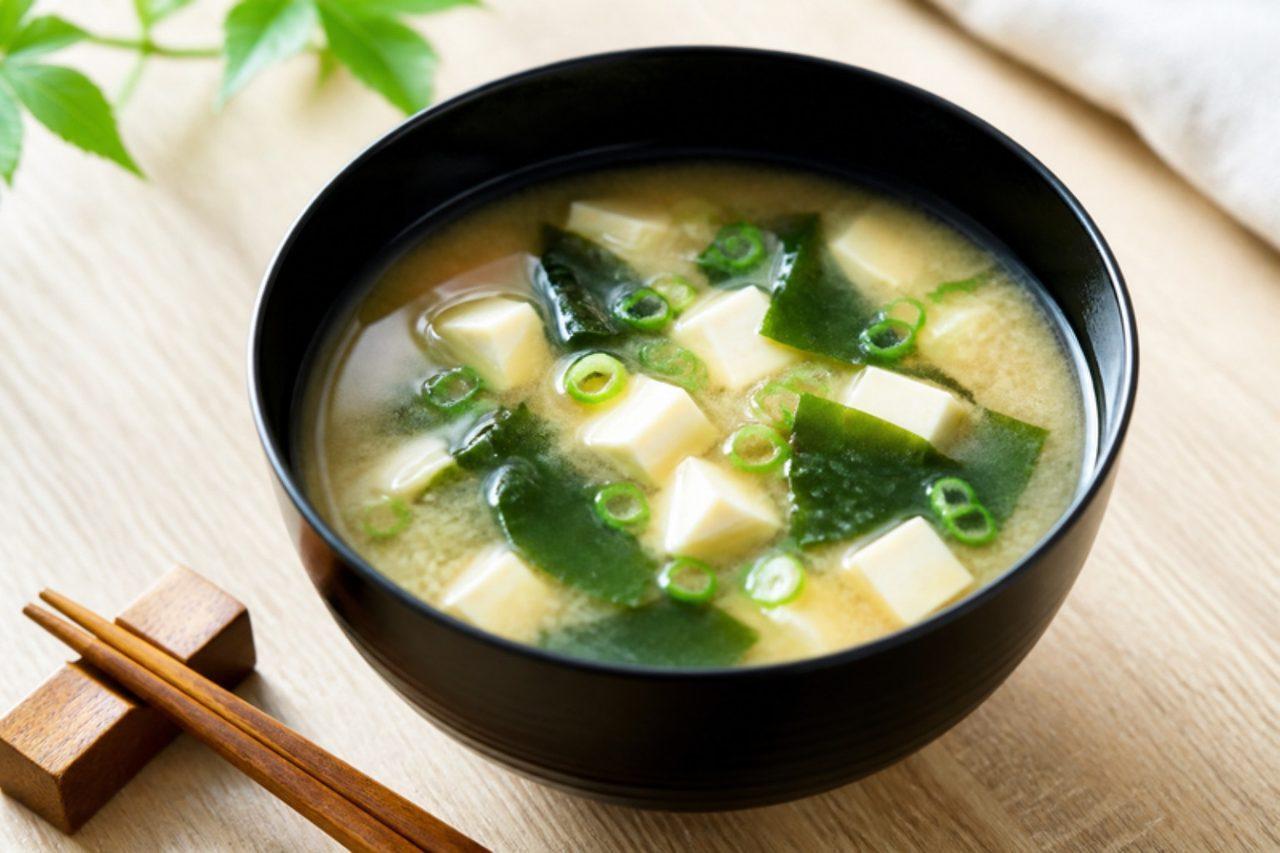
Miso soup
Miso soup (味噌汁) is drunk every day in homes all over Japan, at breakfast as well as dinner, beside a bowl of rice. The base is dashi; this vegan version uses kombu and dried shiitake instead of bonito, which gives it a deep, rounded flavour. Silken tofu and wakame seaweed are the classic fillings. It takes ten minutes; just remember not to boil the miso. Chef's tip: add the miso at the very end and never let it boil. Boiling kills the miso's fresh, fermented aroma; Japanese cooks say the soup should only 'smile', with the surface barely trembling.


Roasted tomato and basil soup
Roasting the tomatoes with onion and garlic concentrates their sweetness and gives the soup a gentle smokiness you can't get from a tin. Lovely with a grilled cheese sandwich.
