
AI-generated image
Kupat tahu
Kupat tahu: Bandung rice cakes and fried tofu under a garlicky peanut sauce


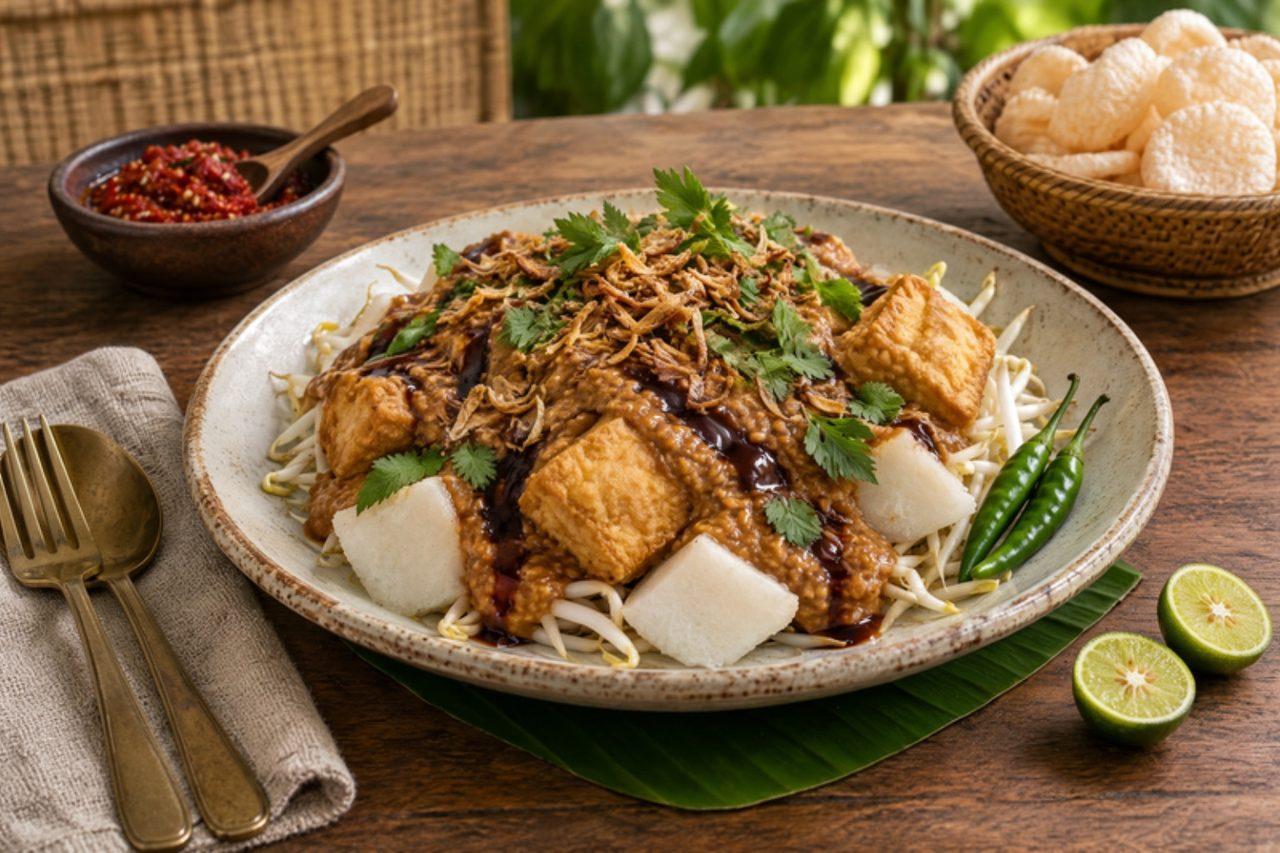
Kupat tahu is breakfast from a pushcart in Bandung and Magelang: chunks of compressed rice cake, freshly fried tofu and blanched bean sprouts, buried under a loose peanut sauce sharpened with garlic, chilli and sweet soy, then finished with crackers and fried shallots. The common mistake is grinding the peanut sauce too thick: it should pour like single cream so it soaks into the rice cake. Many prawn crackers are made with seafood, so choose plain cassava or rice crackers for a vegan plate. Chef's tip: fry the tofu just before serving; soft, hot tofu soaks up the sauce, while tofu fried ahead turns leathery.
- Total time
- 45 min
- Difficulty
- medium
- Serves
- 4
Ingredients
For the plate
- 1 ⅛ lb ketupat or lontong rice cakesready-made, cut into chunks
- 14 oz firm tofucut into 2 cm cubes and patted dry
- ½ cup neutral oilfor shallow frying
- 5 ½ oz bean sprouts
For the peanut sauce
- 5 ½ oz roasted unsalted peanuts
- 3 cloves garlic
- 2 bird's eye chillior to taste
- 1 tbsp palm sugar
- ½ tsp salt
- 1 ¼ cups warm water
- 1 tsp tamarind paste
To finish
- 3 tbsp crispy fried shallots
- 2 tbsp Chinese celery or spring onionchopped
- 8 plain cassava crackerscheck they contain no seafood
Shop this recipe on Amazon
Spices & pantry
Fresh ingredients (4)
Links open Amazon in a new tab. As an Amazon Associate, WhatToEat.Today earns from qualifying purchases.
Method
0/6 doneStep 1: Pound or blend 5 ½ oz roasted unsalted peanuts, 3 cloves garlic, 2 bird's eye chilli, 1 tbsp palm sugar and ½ tsp salt into a coarse paste.
Step 2: Loosen the paste with 1 ¼ cups warm water and 1 tsp tamarind paste, adding the water a little at a time until it pours easily. Taste for salt and sweetness.
Step 3: Heat ½ cup neutral oil in a frying pan over a medium-high heat and fry 14 oz firm tofu in two batches for 6–8 minutes, turning, until golden and crisp on all sides. Drain on kitchen paper.
8 minStep 4: Pour boiling water over 5 ½ oz bean sprouts, leave for 30 seconds and drain, so they stay crunchy.
1 minStep 5: Warm 1 ⅛ lb ketupat or lontong rice cakes in a steamer or the microwave until hot through, then divide between plates with the tofu and sprouts.
5 minStep 6: Spoon over plenty of peanut sauce, drizzle with 3 tbsp kecap manis (sweet soy sauce) and scatter with 3 tbsp crispy fried shallots and 2 tbsp Chinese celery or spring onion. Serve with 8 plain cassava crackers crumbled on top.
Nutrition per serving
- Calories
- 520 kcal
- Protein
- 20 g
- Carbs
- 58 g
- Fat
- 24 g
- Fibre
- 6 g
Nutrition values are estimates.
KrazyBadal
Good to know
- How long does kupat tahu take?
- About 45 minutes in total: 20 minutes to prepare and 25 minutes to cook.
- How many people does it serve?
- 4 as written. Change the servings above the ingredients and every amount scales to match.
- Is it vegan?
- Yes. It has no meat, fish, dairy or eggs.
- What can I use instead of garlic?
- ½ tsp garlic paste or ⅛ tsp garlic powder per clove.
- What can I use instead of palm sugar?
- Caster sugar, same amount.
Reviews
No reviews yet. Be the first to cook it.
Rate this recipe
Sign in to rate and review this recipe.
You might also like
Sayur lodeh
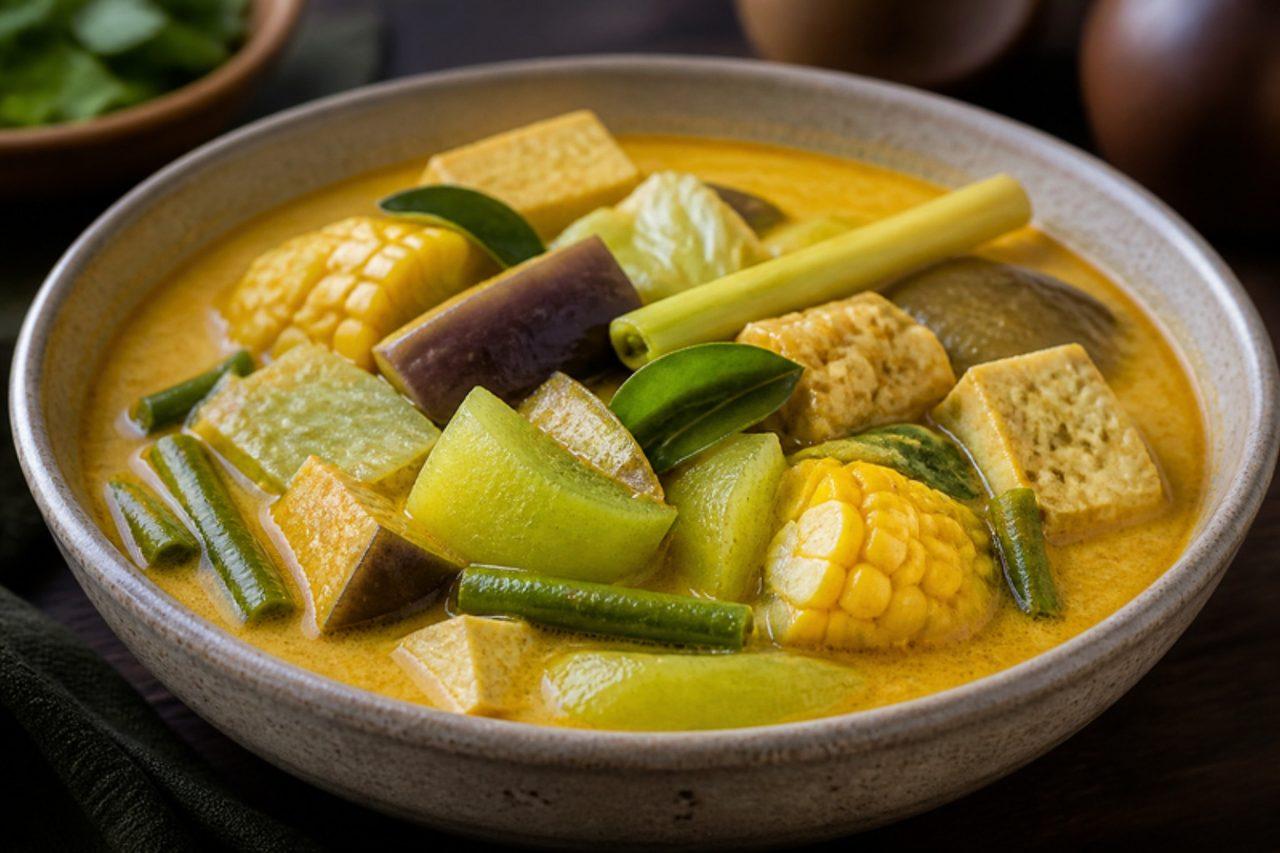
Sayur lodeh is everyday cooking in Central Java, made in big pots in Solo and Semarang kitchens and ladled over rice, with lontong rice cakes at Lebaran, or alongside opor and sambal goreng on festive tables. It's soupy rather than thick: a fragrant broth of coconut milk, galangal, lemongrass and lime leaf that carries chunks of aubergine, long beans, chayote and sweetcorn, plus tempeh and tofu to make it a meal. The flavour is mellow and slightly sweet, so the heat comes from sambal on the side. Chef's tip: keep the pot at a gentle simmer once the coconut milk goes in and stir now and then — a rolling boil splits the coconut milk into oily curds.


Bsissa
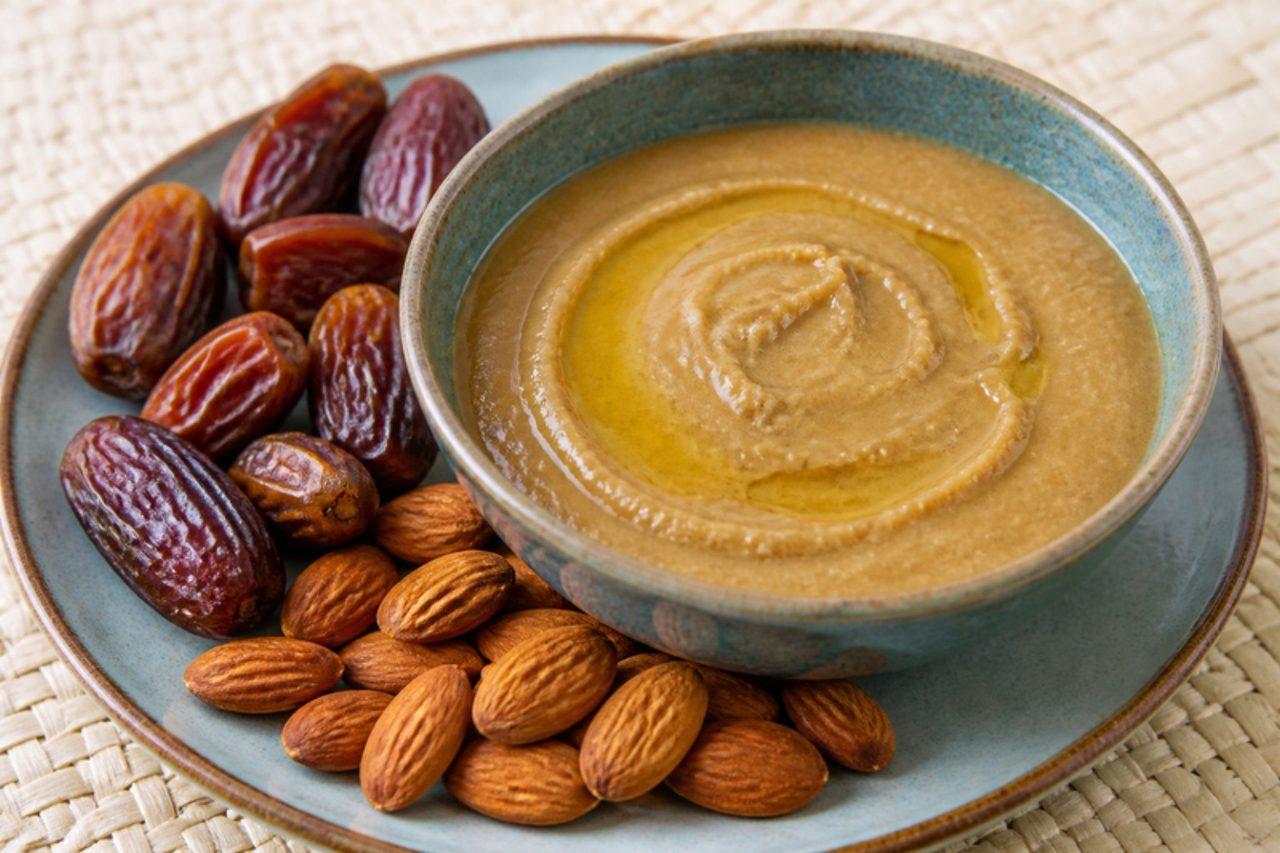
A tin of bsissa sits in many Tunisian kitchen cupboards, from Tunis flats to farmhouses in the south: a finely ground flour of roasted barley, roasted chickpeas and spices such as coriander, fennel and aniseed. In the morning a few spoonfuls are worked with olive oil and something sweet into a nutty, crumbly paste, or stirred with water into a thick drink, and it keeps you going until lunch. Travellers and pilgrims once carried it for the road. Roasting your own flour takes 15 minutes and makes a jar that lasts weeks. Sugar and dates keep it vegan; some families use honey. Chef's tip: roast the flours separately over a low heat and stir constantly; the moment they smell like toasted biscuits and turn light tan, tip them out of the pan.
 Tunisian
Sabudana khichdi
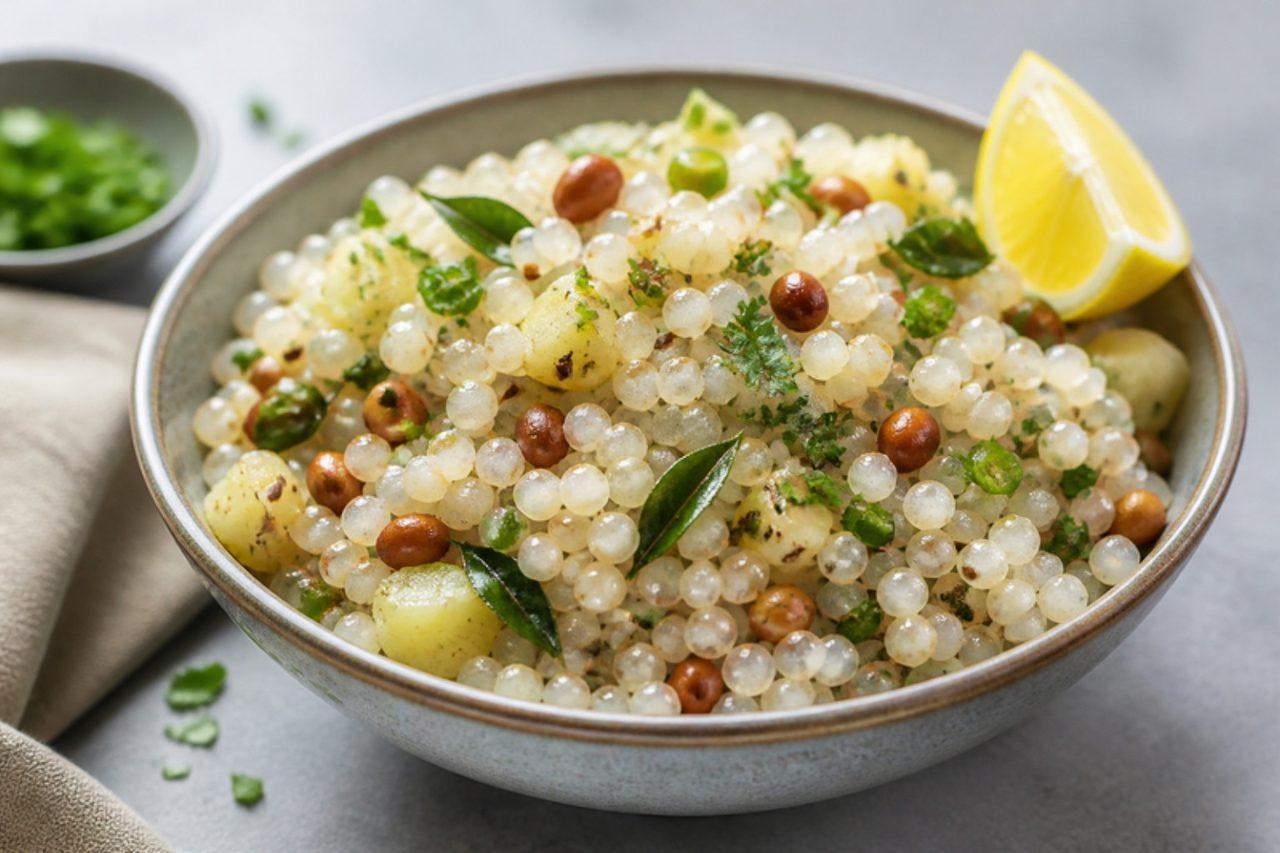
Sabudana khichdi is the dish that sees Maharashtra through every vrat (fast), from Navratri to Ekadashi, but it's so good that people eat it any day of the week. Soaked sago pearls are tossed in a pan with crushed roasted peanuts, cubes of potato, cumin and green chilli until each pearl turns glassy and separate, then finished with lemon and coriander. It's soft, chewy, nutty and gently hot. Fasting rules vary from family to family, so check yours; this version uses rock salt and no asafoetida, onion or garlic. Traditionally it's cooked in ghee; use ghee instead of oil if you aren't keeping it vegan. Chef's tip: soak the sago in just enough water to cover by the height of the pearls themselves, no more; too much water is the reason khichdi turns into one sticky lump.
 Indian