
AI-generated image
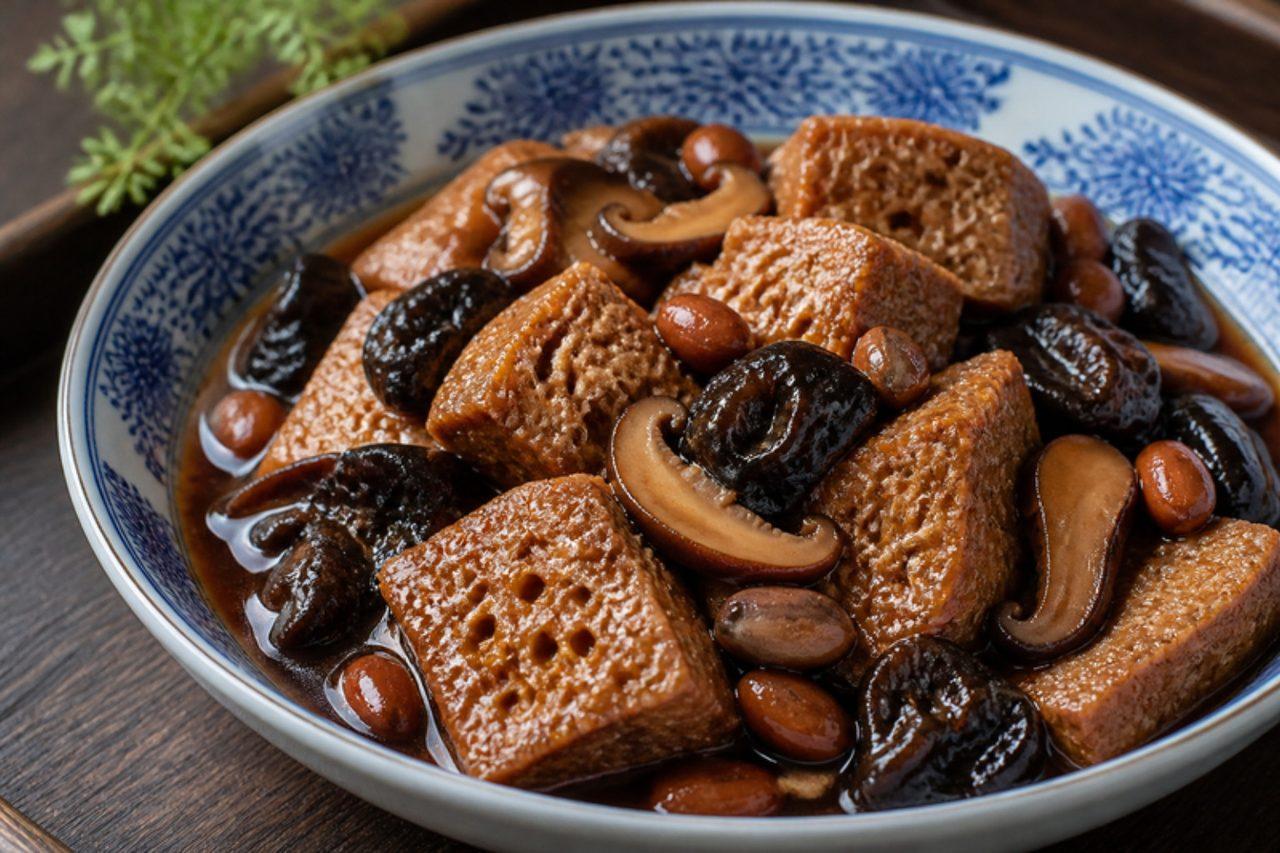
Kao fu (braised wheat gluten)
Kao fu 烤麸: Shanghai's sweet-savoury braised gluten with wood ear, shiitake and peanuts


Every Shanghainese family puts a bowl of kao fu on the table for Chinese New Year, and the city's temple canteens serve it all year as a cold dish. The spongy wheat-gluten cubes drink up a dark, glossy braise of soy and rock sugar, with crunchy wood ear, meaty shiitake and soft peanuts in every mouthful. It tastes better the next day, eaten cold or just above room temperature with rice or congee. Most people get it wrong by cutting the gluten with a knife; tear it by hand so the rough edges soak up more sauce. Chef's tip: squeeze the boiled gluten hard, like a sponge, before frying, or it spits in the oil and stays bland inside.
- Total time
- 75 min
- Difficulty
- medium
- Serves
- 6
Ingredients
- 14 oz kao fu (wheat gluten)fresh or frozen and thawed, or 100 g dried and soaked
- ⅓ oz dried wood ear mushroomssoaked in cold water for 30 minutes
- 8 dried shiitake mushroomssoaked in 400 ml warm water for 30 minutes
- 2 ⅛ oz raw peanutssoaked for 1 hour
- ½ oz dried lily buds (optional)soaked, hard ends trimmed
- 5 tbsp neutral oil
For the braise
- 3 slices fresh ginger
- 3 tbsp light soy sauce
- 1 ½ tbsp dark soy sauce
- 1 ⅜ oz rock sugaror 3 tbsp brown sugar
- 1 tsp toasted sesame oil
Shop this recipe on Amazon
What you'll need
Spices & pantry
Fresh ingredients (1)
Links open Amazon in a new tab. As an Amazon Associate, WhatToEat.Today earns from qualifying purchases.
Method
0/8 doneStep 1: Tear 14 oz kao fu (wheat gluten) into rough 3 cm chunks. Drop them into a pan of boiling water for 3 minutes, drain and leave until cool enough to handle.
Step 2: Squeeze each chunk hard between your palms until no more water comes out. This is the step people skip, and it is why their kao fu is soggy.
Step 3: Drain ⅓ oz dried wood ear mushrooms and tear it into bite-sized pieces. Squeeze 8 dried shiitake mushrooms, cut into halves and strain 300 ml of the soaking water to use as stock. Drain 2 ⅛ oz raw peanuts and ½ oz dried lily buds.
Step 4: Heat 5 tbsp neutral oil in a wok over a medium-high heat and fry the gluten, turning often, until golden and slightly crisp on the outside.
8 minStep 5: Push the gluten aside, add 3 slices fresh ginger and 2 star anise and fry for 30 seconds until fragrant.
1 minStep 6: Add the shiitake, peanuts, wood ear and lily buds with 3 tbsp light soy sauce, 1 ½ tbsp dark soy sauce, 1 ⅜ oz rock sugar and the mushroom stock. Bring to the boil, then cover and simmer over a low heat until the peanuts are tender.
25 minStep 7: Uncover, turn the heat up and stir until the sauce has reduced to a sticky glaze that coats the gluten and only a spoonful or two is left in the wok.
6 minStep 8: Stir in 1 tsp toasted sesame oil, remove the ginger and star anise and leave to cool. Serve at room temperature or chilled; it keeps for 4 days in the fridge.
Nutrition per serving
- Calories
- 260 kcal
- Protein
- 17 g
- Carbs
- 18 g
- Fat
- 14 g
- Fibre
- 3 g
Nutrition values are estimates.
KrazyBadal
Good to know
- How long does kao fu (braised wheat gluten) take?
- About 75 minutes in total: 30 minutes to prepare and 45 minutes to cook.
- How many people does it serve?
- 6 as written. Change the servings above the ingredients and every amount scales to match.
- Is it vegan?
- Yes. It has no meat, fish, dairy or eggs.
- Can I make it ahead?
- Yes. It keeps well, so you can cook it earlier in the day or the day before and reheat it.
- What can I use instead of dried wood ear mushrooms?
- Aubergine, diced, same weight.
- What can I use instead of dried shiitake mushrooms?
- Aubergine, diced, same weight.
Reviews
No reviews yet. Be the first to cook it.
Rate this recipe
Sign in to rate and review this recipe.
You might also like
TashmijabiMashed potatoes with stretchy cheese
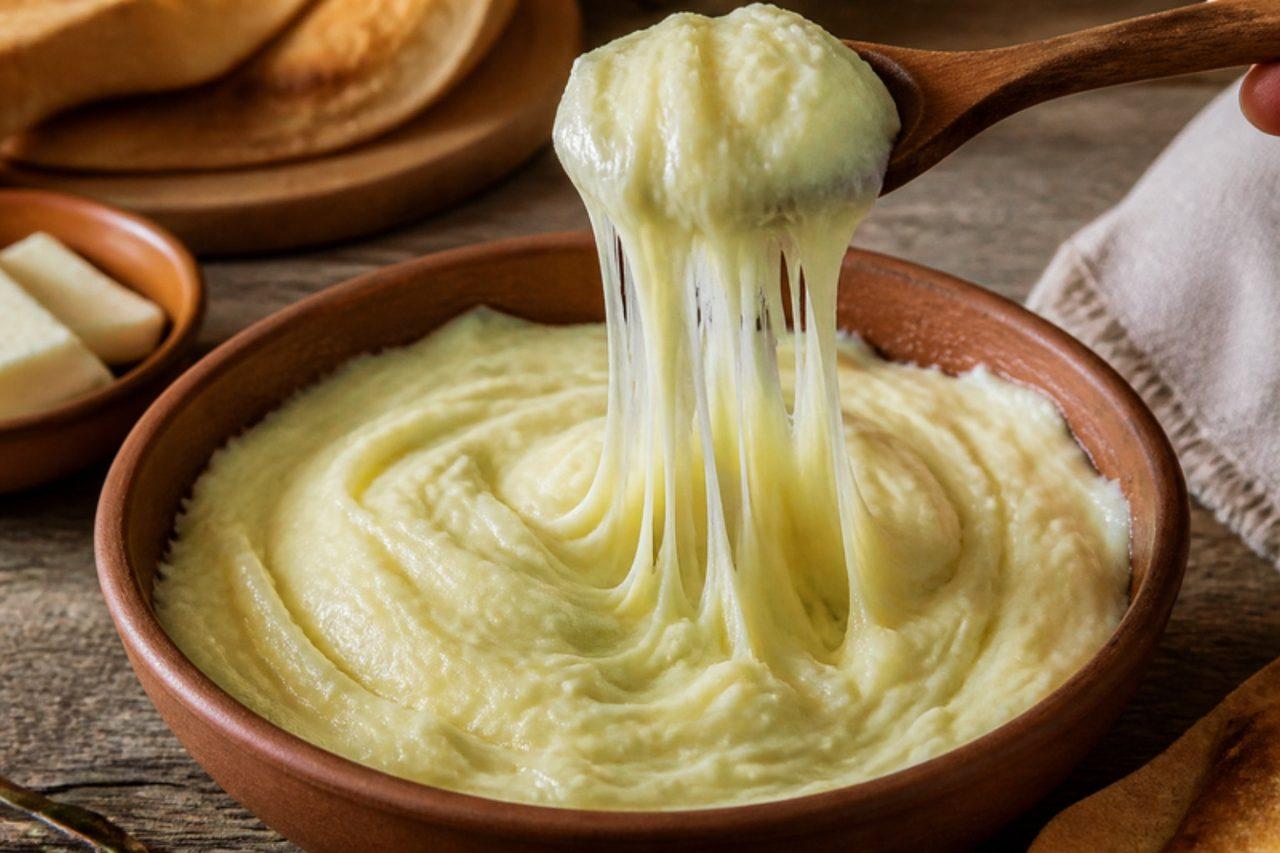
Potatoes grow well in the cold valleys of Svaneti, and tashmijabi is how families around Mestia turn them into a feast dish: they are mashed hot, then beaten with handfuls of young sulguni until the purée becomes glossy and stretches from the spoon in long strands. It is served with grilled meat, kubdari or simply with pickles and Svan salt. A common mistake is letting the potatoes cool before adding the cheese; they must be piping hot for the cheese to melt and stretch. Chef's tip: keep the pan on a low heat while you beat, and use a firm wooden spoon. Most sulguni uses animal rennet; choose a vegetarian one or use mozzarella.
 Georgian

Jamaican callalooSteamed callaloo greens
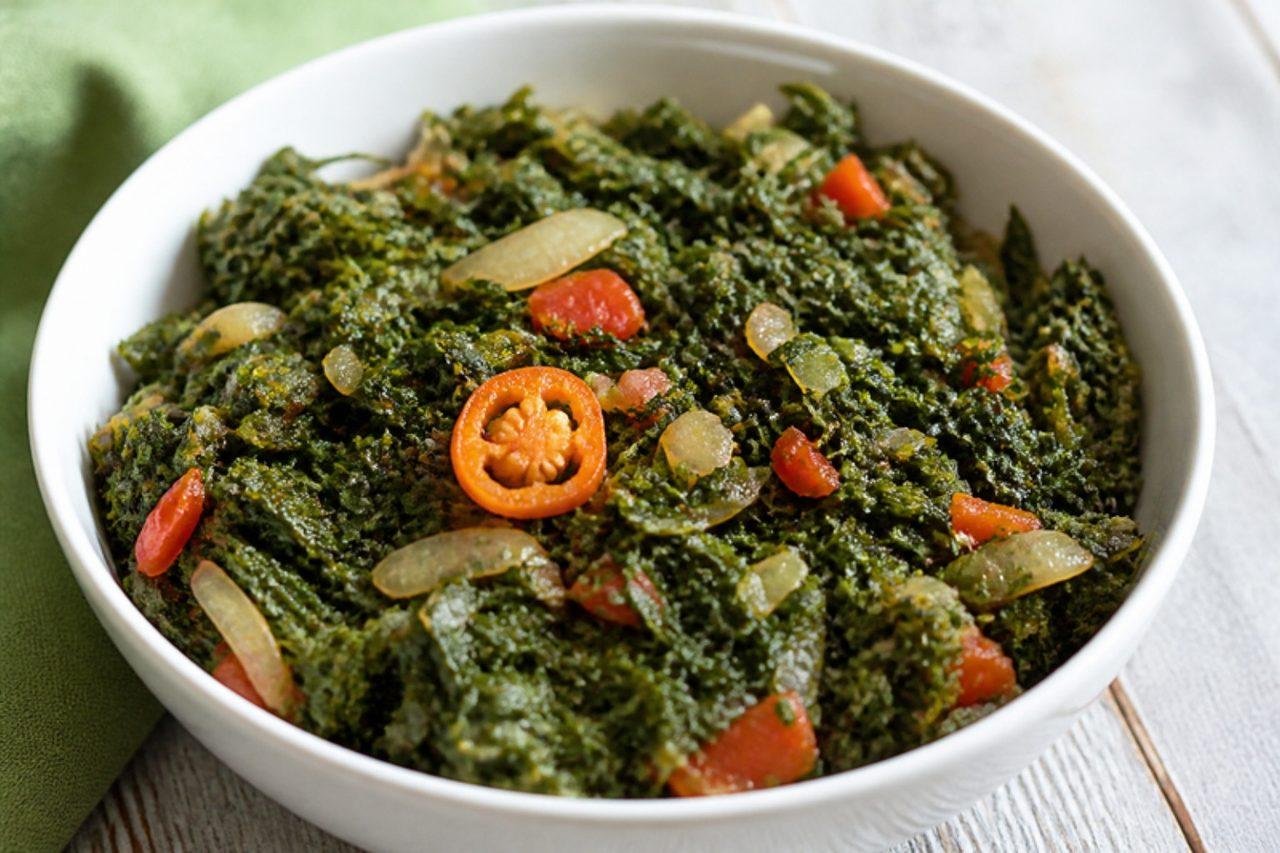
In Jamaica, callaloo means the leaves and tender stems of a type of amaranth, sold in big bundles in every market from Coronation Market in Kingston to Santa Cruz in St Elizabeth. It's steamed down with onion, tomato, garlic and thyme into soft, savoury greens with a mild mineral sweetness, and eaten at breakfast with fried dumplings, boiled green bananas or hard dough bread, or as a side at dinner. Spinach or Swiss chard can stand in if you can't find callaloo. Chef's tip: peel the fibrous skin from the thicker stems with a small knife and slice the stems and leaves finely across, about 1 cm wide. That's how Jamaican cooks get callaloo that's tender all the way through rather than stringy.
 Jamaican

Char siuHoney roast pork
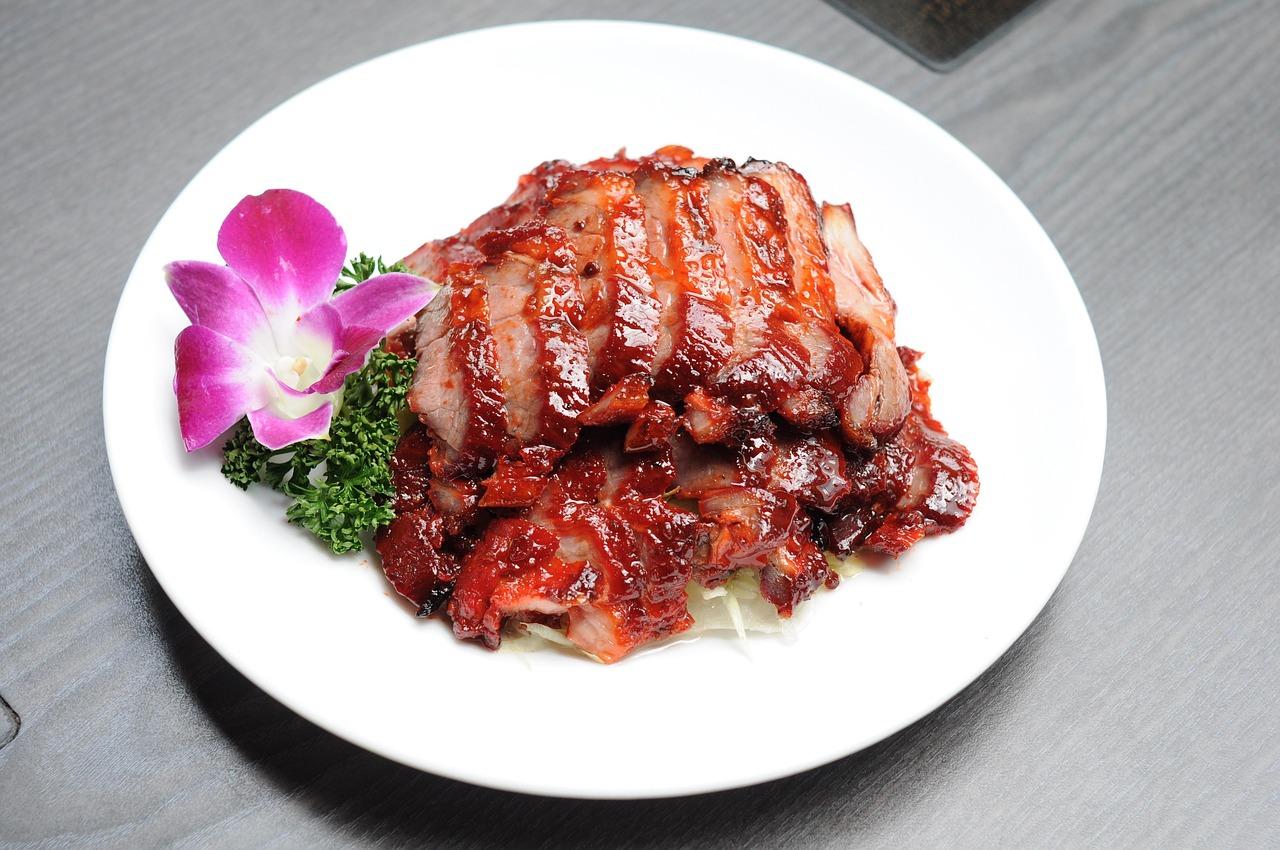
Hanging in long glossy strips in the windows of Guangzhou's siu mei shops, char siu is the roast pork Cantonese families pick up on the way home to put on rice, noodles or into steamed buns. The outside is lacquered, sweet and a little charred at the edges; the inside stays juicy, savoury and faintly scented with five-spice. Shoulder (pork butt) is the cut to use, because its marbling keeps the strips moist through a hot oven. Marinate it overnight in the fridge, roast it the next day and eat it warm with steamed rice and blanched greens, or cold in fried rice and noodle soups. Chef's tip: save the honey for the last ten minutes; brushed on at the start it burns black long before the pork is cooked.