
AI-generated image
Jaffna crab curry
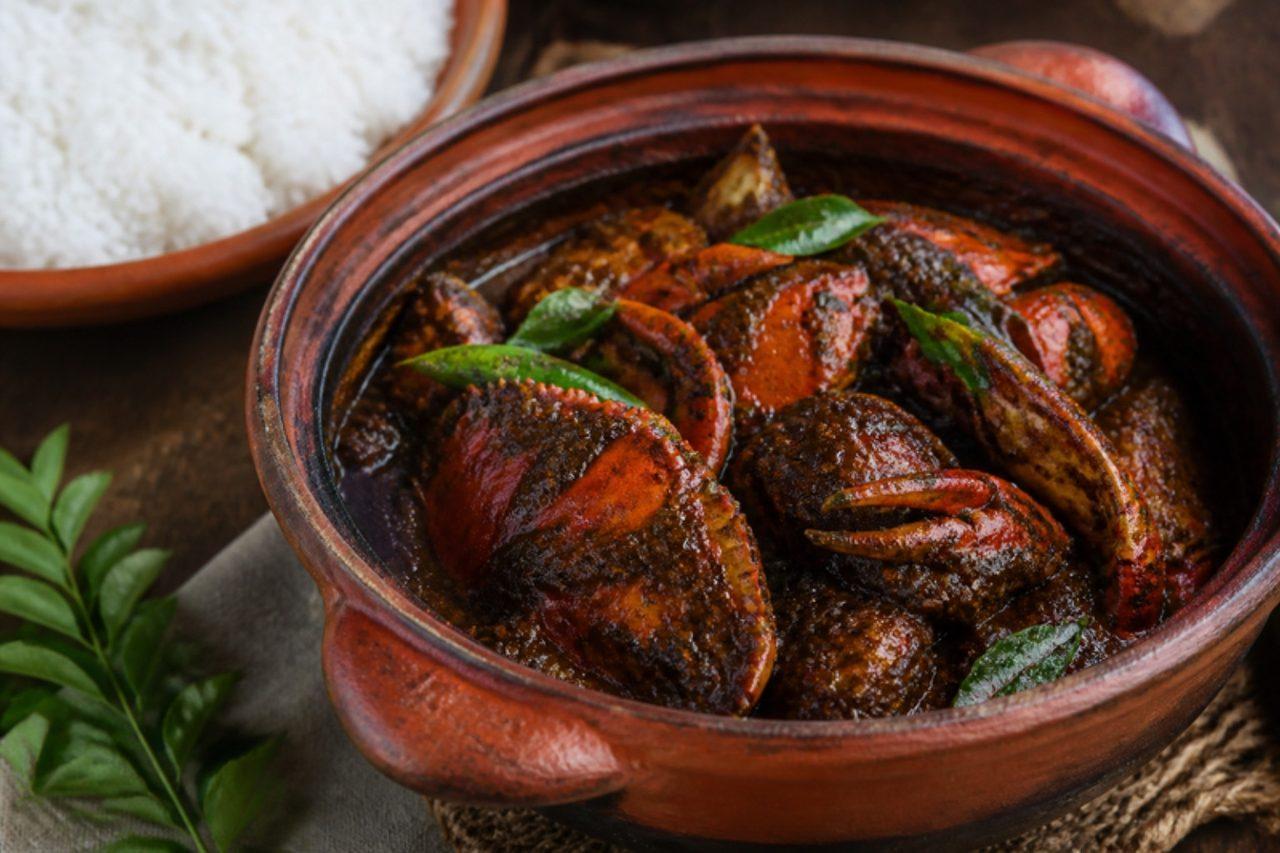
யாழ்ப்பாண நண்டுக் கறி (yaazhpaana nandu kari): lagoon crab in a fiery, near-black Jaffna curry with moringa leaves


The shallow lagoons around Jaffna and the islands of Kayts and Delft produce big, sweet mud crabs, and the town's answer to them is a curry so dark and hot that visitors are warned before they order. Jaffna curry powder, heavy with roasted red chilli, coriander and fennel, is fried in sesame oil with onion and garlic, then loosened with tamarind and a little coconut milk so the sauce clings to every crack in the shell. A handful of moringa leaves wilted in at the end adds a grassy note, and the crab is eaten with the hands, sucked from the shell, alongside plain rice or puttu. A frequent misstep is boiling the crab hard for too long, which makes the meat dry and stringy. Chef's tip: crack the claws before cooking so the sauce soaks in and the meat is easy to reach at the table.
- Total time
- 60 min
- Difficulty
- medium
- Serves
- 4
Ingredients
For the crab
- 2 ⅝ lb live or freshly cooked mud crabscleaned, quartered, claws cracked
- 1 /2 tsp ground turmeric
- 1 tsp salt
For the curry
- 3 tbsp sesame (gingelly) oil
- 1 /2 tsp fenugreek seeds
- 1 /2 tsp fennel seeds
- 2 sprigs curry leaves
- 2 red onionsfinely chopped
- 8 cloves garliccrushed
- 3 cm piece fresh gingergrated
- 2 tomatoeschopped
- 3 tbsp Jaffna curry powder
- ⅔ oz tamarind pulpsoaked in 100 ml hot water, strained
- 1 cup water
- ¾ cup thick coconut milk
- 1 handful moringa (drumstick) leaves (optional)
Shop this recipe on Amazon
Spices & pantry
Fresh ingredients (5)
Links open Amazon in a new tab. As an Amazon Associate, WhatToEat.Today earns from qualifying purchases.
Method
0/8 doneStep 1: Discard any crabs that were dead before cooking or smell unpleasant. Toss the pieces of 2 ⅝ lb live or freshly cooked mud crabs with 1 /2 tsp ground turmeric and 1 tsp salt.
2 minStep 2: Heat 3 tbsp sesame (gingelly) oil in a wide heavy pan over a medium heat and add 1 /2 tsp fenugreek seeds, 1 /2 tsp fennel seeds and 2 sprigs curry leaves; let them crackle for 20 seconds.
1 minStep 3: Add 2 red onions and cook for 7–8 minutes, stirring, until soft and deep golden.
8 minStep 4: Add 8 cloves garlic and 3 cm piece fresh ginger and fry for 2 minutes until fragrant.
2 minStep 5: Stir in 3 tbsp Jaffna curry powder for 1 minute, then add 2 tomatoes and cook for 2 minutes until it breaks down.
3 minStep 6: Add ⅔ oz tamarind pulp and 1 cup water and bring to a simmer.
2 minStep 7: Add the crab, stir to coat, cover and simmer over a medium-low heat for 10–12 minutes, turning the pieces halfway, until the shells are bright red and the meat inside is white and opaque.
12 minStep 8: Stir in ¾ cup thick coconut milk and 1 handful moringa (drumstick) leaves and simmer uncovered for 3 minutes until the sauce is thick and dark. Rest 5 minutes and serve with rice.
3 min
Nutrition per serving
- Calories
- 380 kcal
- Protein
- 30 g
- Carbs
- 14 g
- Fat
- 22 g
- Fibre
- 4 g
Nutrition values are estimates.
KrazyBadal
Good to know
- How long does jaffna crab curry take?
- About 60 minutes in total: 25 minutes to prepare and 35 minutes to cook.
- How many people does it serve?
- 4 as written. Change the servings above the ingredients and every amount scales to match.
- Is it gluten free?
- Yes, as written. Check the labels on stock, sauces and spice mixes, which sometimes contain gluten.
- Is it very spicy?
- It has some heat. Use less chilli for a milder version, or more if you like it hot.
- What can I use instead of ground turmeric?
- Leave it out (it mostly adds colour).
- What can I use instead of fenugreek seeds?
- Leave them out, or add a little extra mustard seed (you lose the slightly bitter, maple-like note).
Reviews
No reviews yet. Be the first to cook it.
Rate this recipe
Sign in to rate and review this recipe.
You might also like
Polos curry
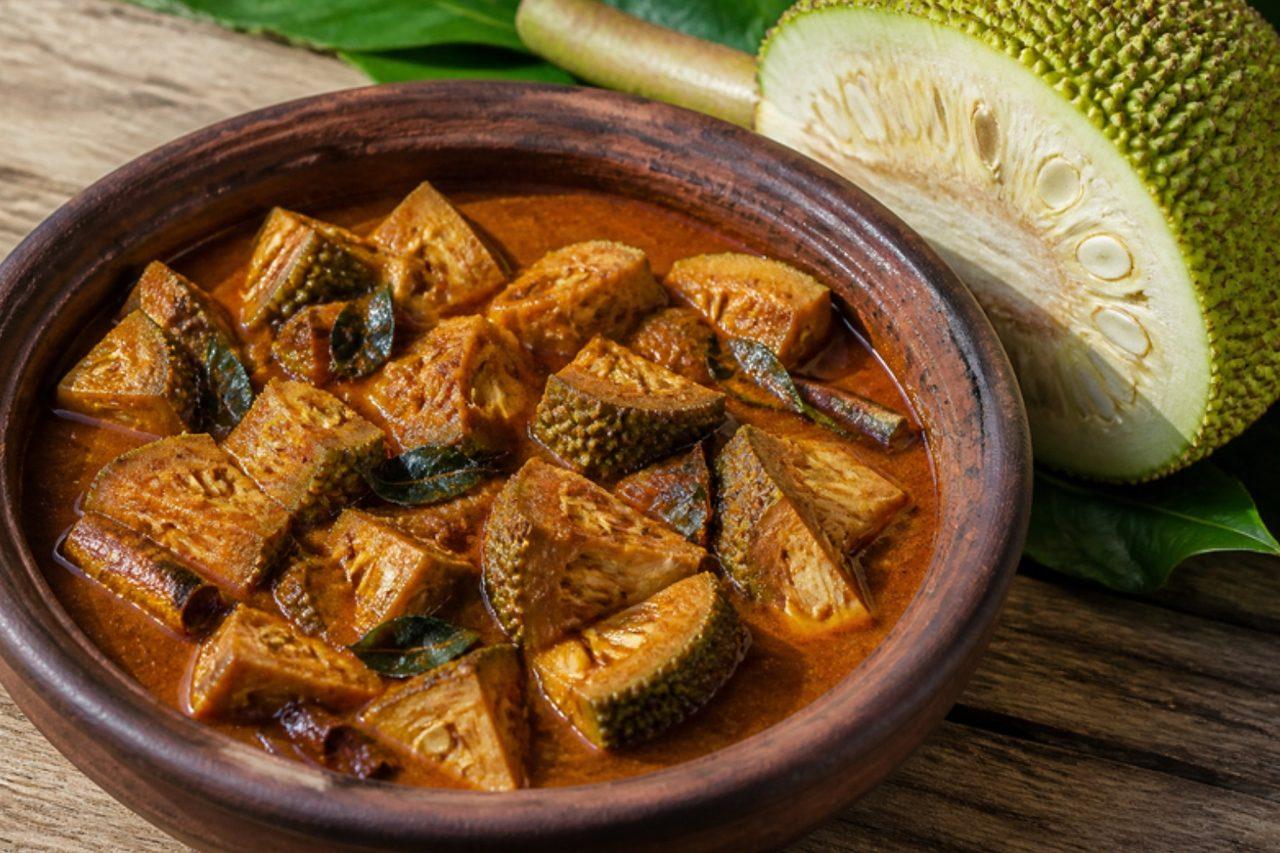
Polos is the tiny unripe jackfruit picked in the Western and Sabaragamuwa provinces long before it sweetens, and cooked low and slow it becomes one of the island's most loved festival curries, especially at Sinhala and Tamil New Year in April and at wedding lunches. The firm, pale flesh soaks up a very dark roasted curry powder, garlic, ginger, goraka (a smoky souring fruit) and coconut milk until it turns almost black-brown and tastes rich, sour and meaty. Fresh polos is hard to find abroad; tinned young green jackfruit in brine works well. A frequent mistake is not cooking it long enough, which leaves it squeaky; the pieces must be soft enough to break with a spoon. Chef's tip: oil your hands and knife before cutting fresh jackfruit; the sticky white sap washes off oiled skin but not dry skin.


Singapore chilli crab
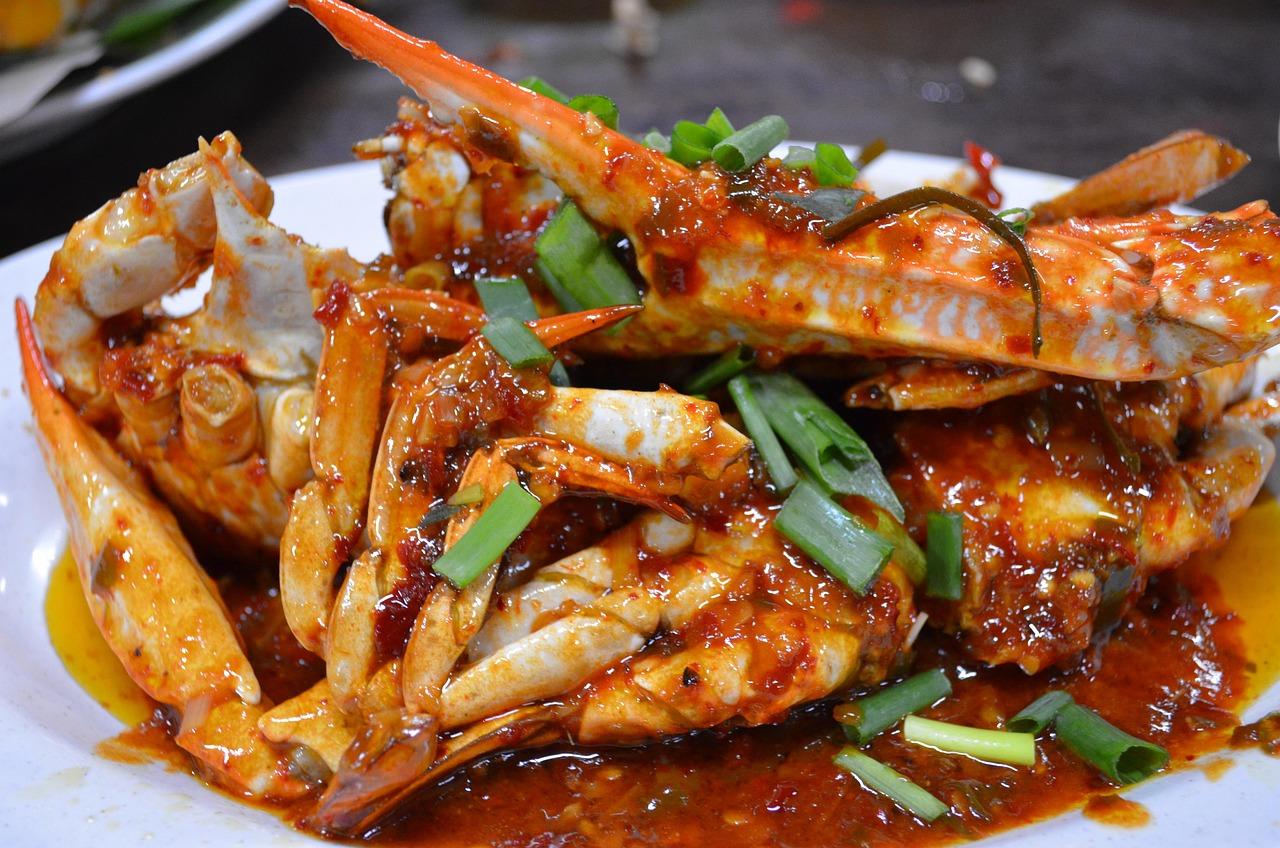
Chilli crab was first sold from a pushcart on the Kallang river in the 1950s and is now the dish visitors queue for along Singapore's East Coast seafood strip. Big mud crabs are cut up, wok-fried and simmered in a thick, sweet, tangy and gently hot sauce of chilli, tomato and garlic, which is then silked with beaten egg. Everyone eats with their hands and mops up the sauce with fried or steamed mantou buns. It is a weekend or celebration meal, messy and loud. Buy crabs live or freshly cooked the same day from a fishmonger you trust. Discard any live crab that doesn't move, smells of ammonia or has a cracked, leaking shell. The common mistake is boiling the sauce after adding the egg, which scrambles it into lumps; pour it in a thin stream over a low heat. Chef's tip: ask the fishmonger to clean and quarter the crab for you, and crack each claw lightly with the back of a cleaver so the sauce soaks in.
 Singaporean

Undu walalu
Walalu means bangles, and these dark, sticky rings of fried urad dal soaked in kithul treacle are a sweet that Sinhala families bring out for Avurudu and for special almsgivings, often made in large batches by an aunt known for her steady hand. A thick, fluffy paste of ground black gram is piped into loops and fried until crisp, then plunged straight into warm treacle, so the rings stay crunchy on the outside while drinking up the syrup. They taste a little like a darker, smokier jalebi, with a toffee finish from the palm treacle. Watery batter is what ruins them; it spreads into flat blobs, so grind the soaked dal with as little water as possible and beat it until light. This recipe uses no asafoetida, so it is naturally gluten free. Chef's tip: pipe the rings onto small squares of baking paper and lower them into the oil paper and all; the paper peels away in seconds.