
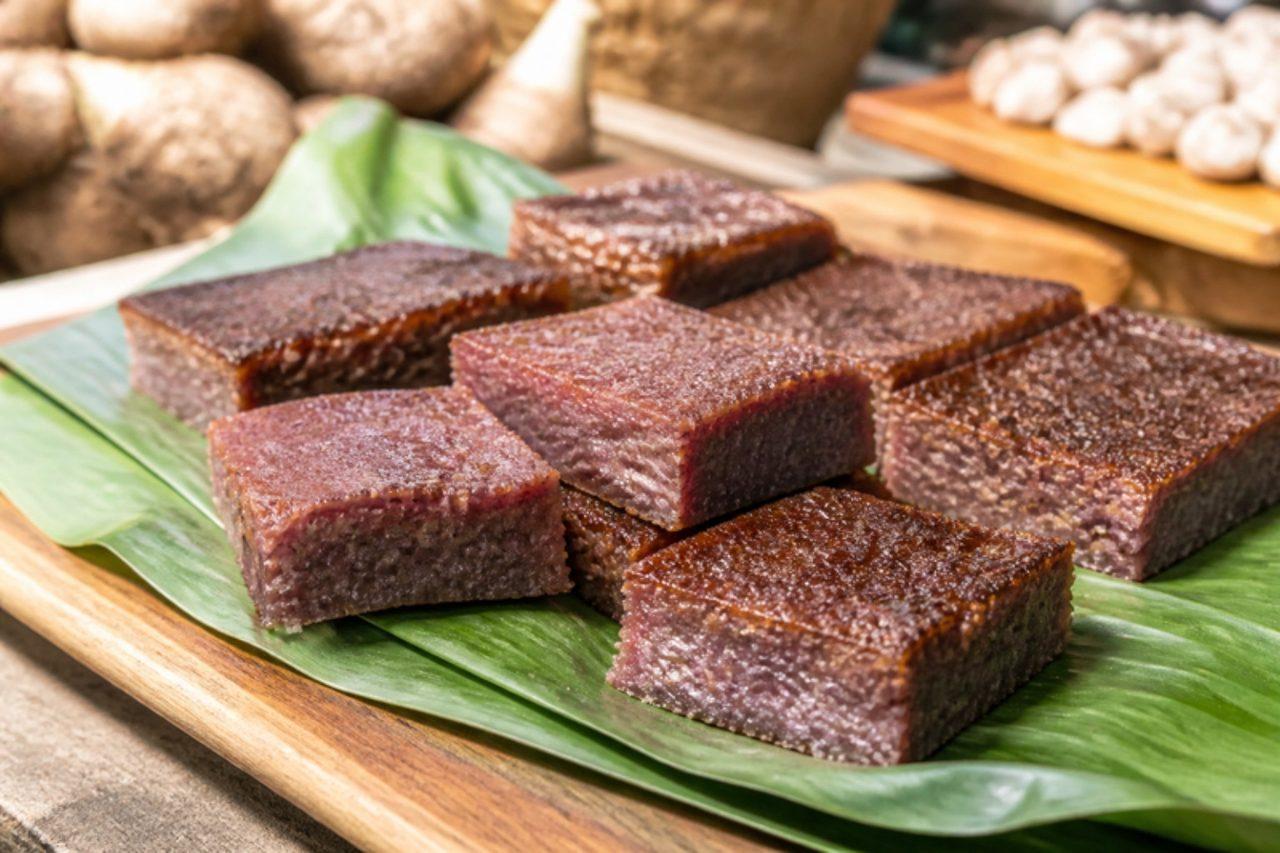
AI-generated image
Kulolo
Hawaiian taro and coconut pudding


Kulolo is one of the oldest Hawaiian sweets, a dense, fudgy pudding of grated taro and coconut that was once wrapped in ti leaves and baked for hours in an imu (earth oven) for lū'au feasts. On the windward side of O'ahu and in Hilo it is still sold in slabs at farmers' markets. Taro must always be fully cooked; raw taro contains crystals that badly irritate the mouth and throat, so peel it with gloves and bake the full time. A common mistake is cutting it hot; it firms as it cools. Chef's tip: bake it long and low until deep brown and sticky at the edges, where the caramel flavour is.
- Total time
- 210 min
- Difficulty
- medium
- Serves
- 12
Ingredients
- 2 ¼ lb taro rootpeeled (wear gloves) and finely grated
- 1 ¾ cups coconut milk
- 7 oz brown sugar
- 2 tbsp golden syrup
Shop this recipe on Amazon
Links open Amazon in a new tab. As an Amazon Associate, WhatToEat.Today earns from qualifying purchases.
Method
0/5 doneStep 1: Heat the oven to 350°F (300°F fan). Wearing gloves, peel 2 ¼ lb taro root and grate it finely.
20 minStep 2: Mix the taro with 1 ¾ cups coconut milk, 3 ½ oz freshly grated or desiccated coconut, 7 oz brown sugar and 2 tbsp golden syrup into a thick, sticky batter.
5 minStep 3: Line a 20 × 20 cm tin with a double layer of baking paper (or ti or banana leaves), spread in the mixture and cover tightly with foil.
5 minStep 4: Bake for about 3 hours, until the kulolo is a deep reddish-brown, firm and fudgy, and a knife comes out sticky but not raw-tasting. Take off the foil for the last 30 minutes to brown the top.
180 minStep 5: Cool completely, then cut into squares with an oiled knife.
120 min
Nutrition per serving
- Calories
- 260 kcal
- Protein
- 2 g
- Carbs
- 40 g
- Fat
- 11 g
- Fibre
- 3 g
Nutrition values are estimates.
KrazyBadal
Good to know
- How long does kulolo take?
- About 210 minutes in total: 30 minutes to prepare and 180 minutes to cook.
- How many people does it serve?
- 12 as written. Change the servings above the ingredients and every amount scales to match.
- Is it vegan?
- Yes. It has no meat, fish, dairy or eggs.
- Is it gluten free?
- Yes, as written. Check the labels on stock, sauces and spice mixes, which sometimes contain gluten.
- What can I use instead of coconut milk?
- Single cream, same amount (not dairy free).
- What can I use instead of brown sugar?
- White sugar + 1 tbsp molasses or treacle per 200g.
Reviews
No reviews yet. Be the first to cook it.
Rate this recipe
Sign in to rate and review this recipe.
You might also like
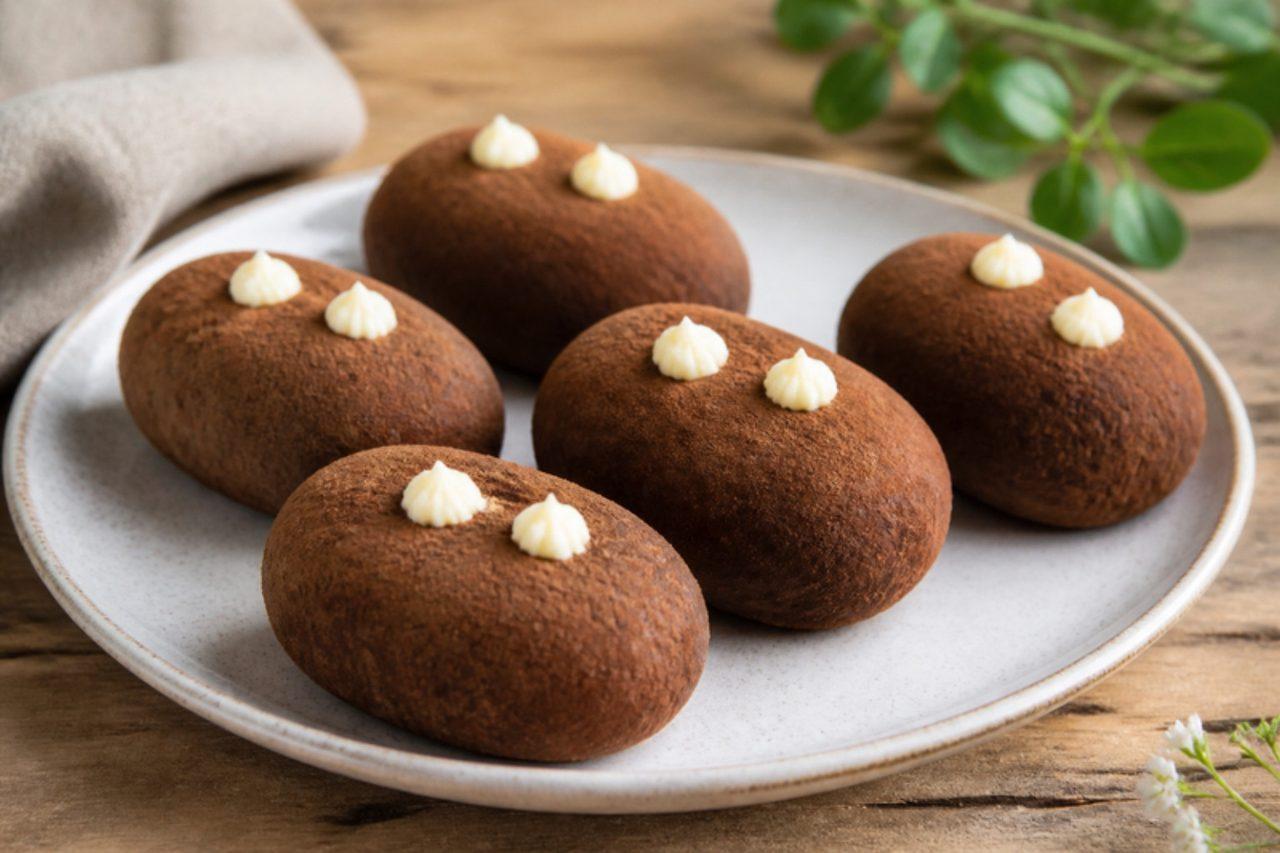
Kartoshka cake
Soviet cafés and school canteens sold these knobbly brown 'potatoes' for a few kopecks, and they began as a thrifty way to use up sponge and biscuit trimmings at the bakery. Crumbs are bound with butter and sweetened condensed milk, flavoured with cocoa and vanilla, shaped into little potatoes, rolled in cocoa and finished with two dabs of pale butter cream for the sprouts. They are fudgy and dense like a brownie truffle, need no oven, and children love making them. Traditional bakers added a spoonful of rum, an optional extra for adult batches only; this version is alcohol-free with vanilla. The usual slip is coarse crumbs, which make the potatoes crack, so blitz them as fine as sand. Chef's tip: chill the shaped potatoes for at least 20 minutes so they hold their shape and slice cleanly.
 Russian

Undu walalu
Walalu means bangles, and these dark, sticky rings of fried urad dal soaked in kithul treacle are a sweet that Sinhala families bring out for Avurudu and for special almsgivings, often made in large batches by an aunt known for her steady hand. A thick, fluffy paste of ground black gram is piped into loops and fried until crisp, then plunged straight into warm treacle, so the rings stay crunchy on the outside while drinking up the syrup. They taste a little like a darker, smokier jalebi, with a toffee finish from the palm treacle. Watery batter is what ruins them; it spreads into flat blobs, so grind the soaked dal with as little water as possible and beat it until light. This recipe uses no asafoetida, so it is naturally gluten free. Chef's tip: pipe the rings onto small squares of baking paper and lower them into the oil paper and all; the paper peels away in seconds.
 Sri Lankan


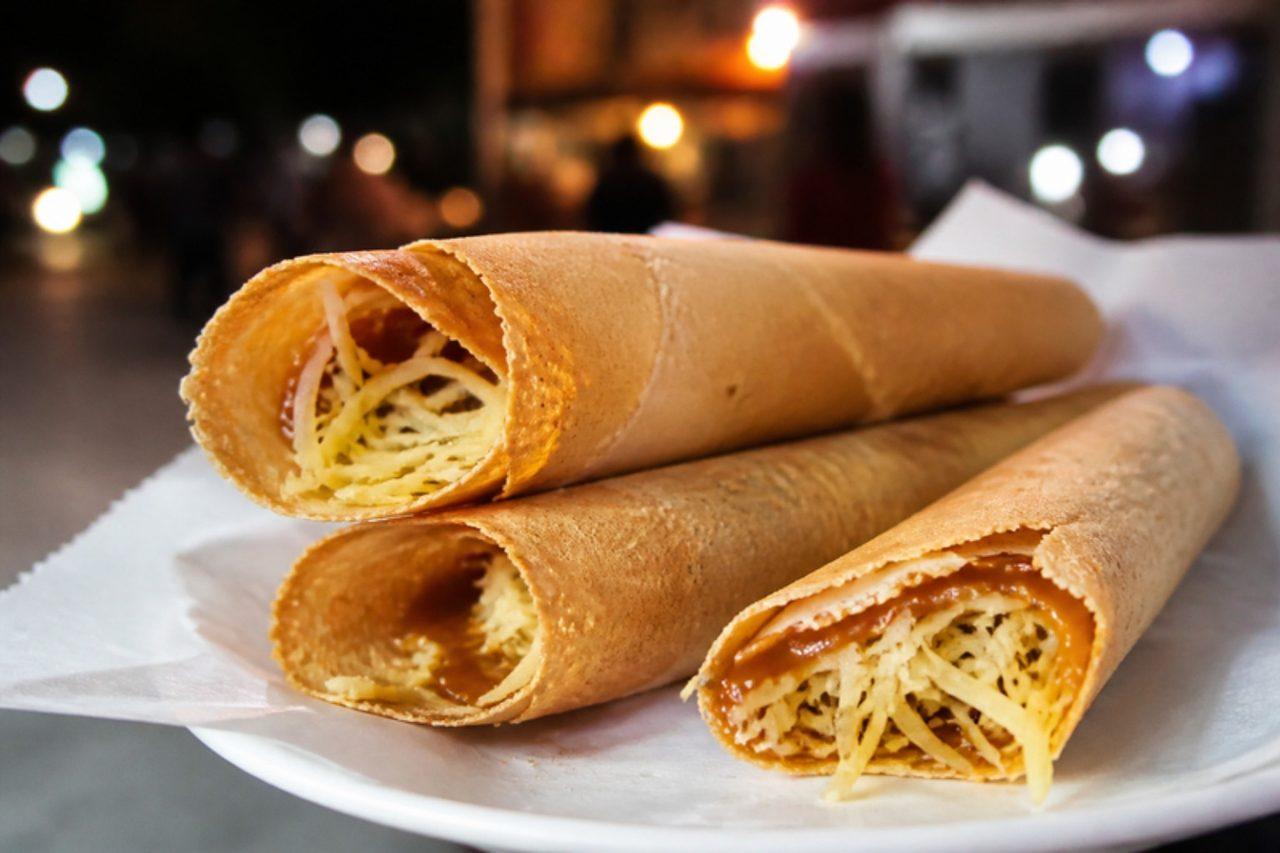
Marquesitas
Evening in Mérida's Plaza Grande means the smell of marquesitas: thin batter pressed in hot hinged irons until crisp, then rolled like a cigar around grated Edam cheese and a sweet filling such as cajeta, chocolate-hazelnut spread or jam. Edam came to the Yucatán through the port trade with the Netherlands and became part of the local cooking, and the salty-sweet combination is the whole point. At home you can cook them in a thin, wide frying pan. Edam is usually made with animal rennet, so check the label or use a vegetarian Gouda-style cheese. Chef's tip: roll while the crêpe is still in the pan and hot; within seconds it hardens and will crack.
 Mexican