
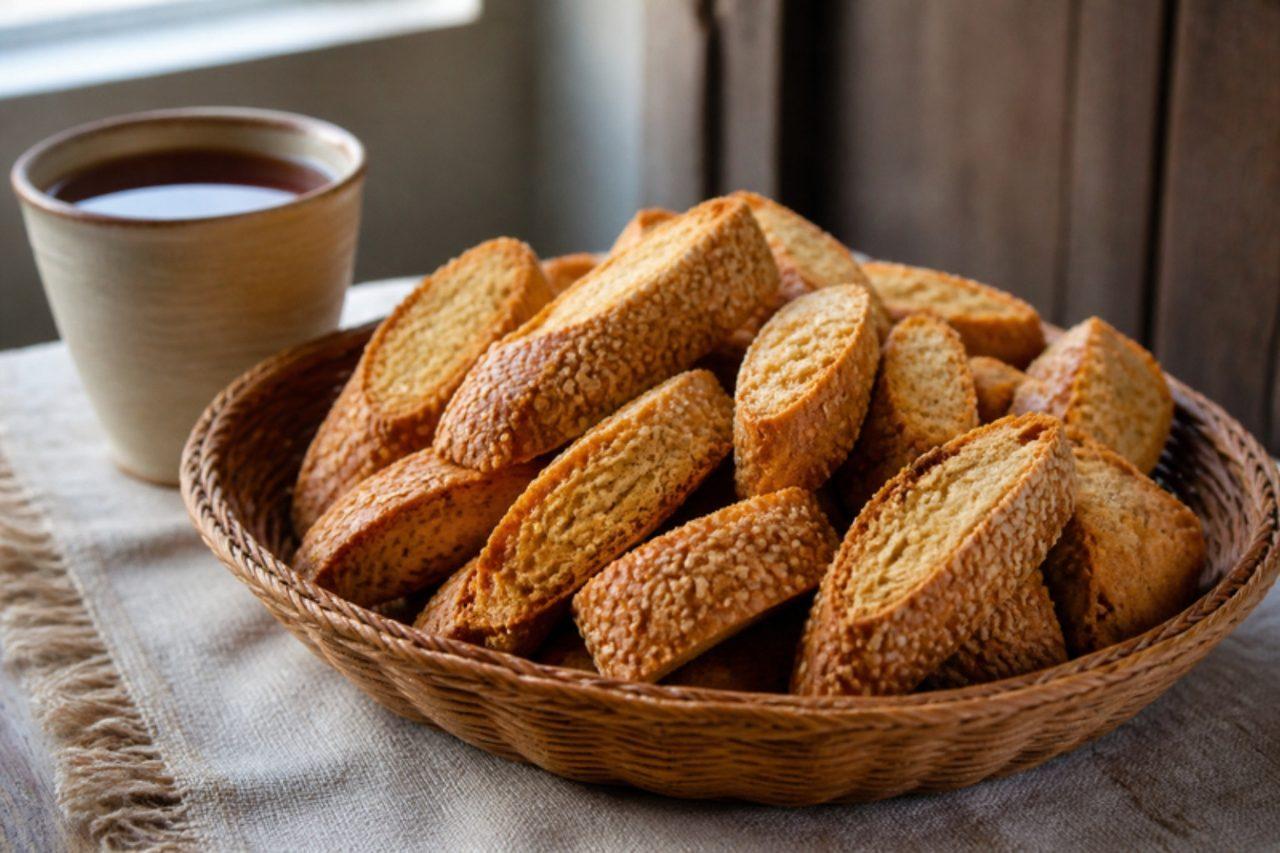
AI-generated image
Egyptian fayesh
Sweet sesame rusks
فايش: sweet sesame rusks from Upper Egypt

Fayesh belongs to the Sa'id, Upper Egypt, where village women bake it in big batches in mud-brick ovens so the family has something crunchy for breakfast tea for weeks, and travellers from Luxor and Aswan carry bags of it north as a gift. A lightly sweet, aniseed-scented bread is baked, sliced, then dried slowly into hard, golden rusks crusted with sesame. They are dunked in black tea with plenty of sugar or in hot milk, and they never go stale. The common error is drying them too fast at a high heat: the outside browns while the middle stays soft, and that softness turns mouldy in the tin. Chef's tip: slice the loaves the next morning, not while warm; a rested loaf cuts into clean, even slices that dry at the same rate.
- Total time
- 210 min
- Difficulty
- medium
- Serves
- 16
Ingredients
For the dough
- 1 ⅛ lb plain flour
- ¼ oz fast-action dried yeast1 sachet
- 3 ½ oz sugar
- 1 tsp salt
- 1 tsp ground aniseed
- ½ tsp ground mahlab (optional)
- 1 cup lukewarm milk
- ¼ cup sunflower oil
- 1 oz gheemelted
To finish
- 3 tbsp milkfor brushing
- 1 ¾ oz sesame seeds
Shop this recipe on Amazon
Spices & pantry
Fresh ingredients (2)
Links open Amazon in a new tab. As an Amazon Associate, WhatToEat.Today earns from qualifying purchases.
Method
0/10 doneStep 1: Mix 1 ⅛ lb plain flour, ¼ oz fast-action dried yeast, 3 ½ oz sugar, 1 tsp salt, 1 tsp ground aniseed and ½ tsp ground mahlab, if using, in a large bowl.
Step 2: Add 1 cup lukewarm milk, ¼ cup sunflower oil and 1 oz ghee and knead for 10 minutes into a smooth, soft dough.
10 minStep 3: Cover and leave in a warm place for about 1 hour, until doubled.
60 minStep 4: Line two trays with baking paper. Divide the dough in four and shape each piece into a flat oval loaf about 25 cm long and 3 cm high.
Step 5: Brush the loaves with 3 tbsp milk, scatter thickly with 1 ¾ oz sesame seeds and press it on. Cover and leave for 30 minutes, until puffy. Meanwhile heat the oven to 375°F (350°F fan).
30 minStep 6: Bake for 20–25 minutes, until deep golden and the base sounds hollow when tapped; inside it should read about 88–194°F.
22 minStep 7: Cool the loaves completely on a rack, ideally overnight, wrapped loosely in a cloth.
Step 8: Heat the oven to 250°F (200°F fan). Slice the loaves on a slant into 1.5 cm slices and lay them flat on the trays.
Step 9: Dry for 60–70 minutes, turning once halfway, until the rusks are golden and hard right through; a slice snapped in half should be dry and crisp in the centre.
65 minStep 10: Cool completely in the oven with the door ajar, then store airtight for up to two months.
Nutrition per serving
- Calories
- 235 kcal
- Protein
- 5 g
- Carbs
- 34 g
- Fat
- 9 g
- Fibre
- 1 g
Nutrition values are estimates.
KrazyBadal
Good to know
- How long does egyptian fayesh take?
- About 210 minutes in total: 120 minutes to prepare and 90 minutes to cook.
- How many people does it serve?
- 16 as written. Change the servings above the ingredients and every amount scales to match.
- Is it vegetarian?
- Yes. It has no meat or fish.
- Can I make it ahead?
- Yes. It keeps well, so you can cook it earlier in the day or the day before and reheat it.
- What can I use instead of plain flour?
- Self-raising flour, same amount (then leave out the baking powder).
- What can I use instead of fast-action dried yeast?
- Fresh yeast, three times the weight.
Reviews
No reviews yet. Be the first to cook it.
Rate this recipe
Sign in to rate and review this recipe.
You might also like
Ful nabitSprouted fava bean soup
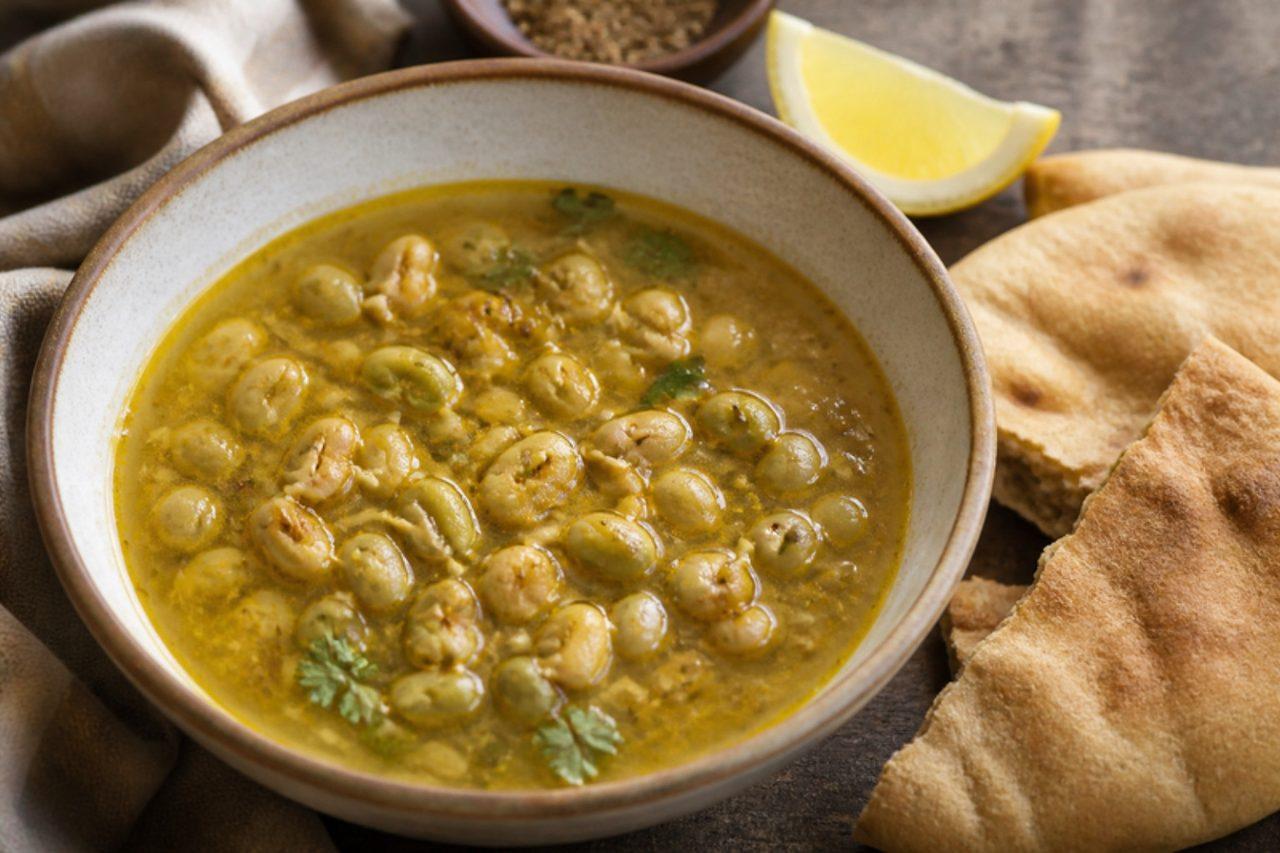
Sprouted beans are ladled out with their cooking liquor in Cairo homes when the weather turns cold or someone is feeling run down, and Egyptians swear by the broth as a pick-me-up. The beans are soaked and left to sprout for a few days, then simmered with onion, garlic and cumin into a light, earthy soup that is sharpened at the table with plenty of lemon. You can eat the beans with a spoon or pop them from their skins. Allow 3 to 4 days for sprouting, although the hands-on work is only about 20 minutes. People with G6PD deficiency (favism) must not eat fava beans. Chef's tip: stop the sprouting when the shoots are about 1 cm long; longer sprouts taste grassy and bitter.


Basque burnt cheesecake
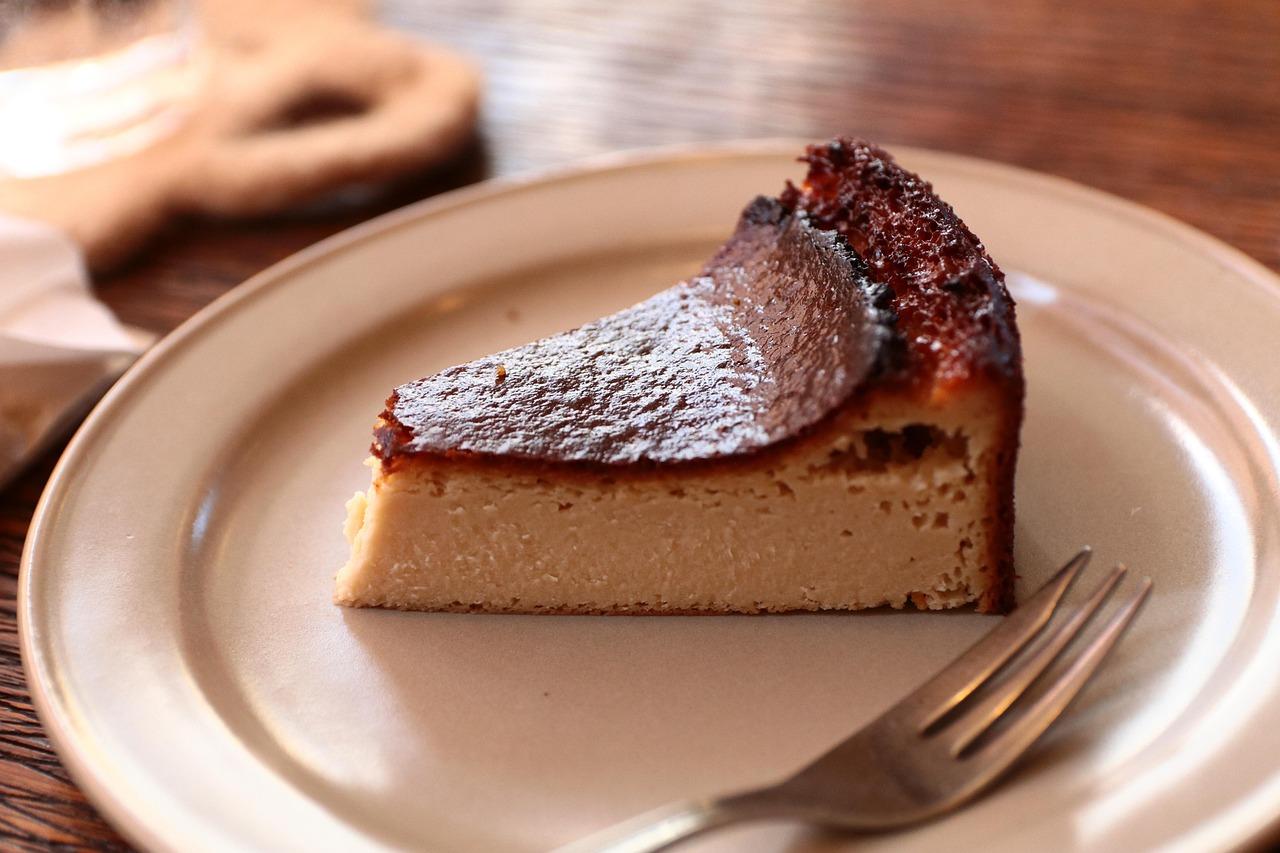
This crustless cheesecake was created in the early 1990s at La Viña, a pintxos bar in the old town of San Sebastián (Donostia) in the Basque Country, and is now famous around the world. It's baked very hot so the top caramelises almost black and the sides rise and crack, while the middle stays soft and creamy, almost runny. There's no base and no water bath, and the rough, rustic look is the point: it's lined with crumpled baking paper. La Viña uses a spoonful of wheat flour; cornflour does the same job and keeps it gluten free. Chef's tip: take it out of the oven while the centre still wobbles like a soft set custard; it firms up as it cools, and if it looks set in the oven, the middle will be dry instead of creamy.
 Spanish
Almond cookiesOat, coconut and almond cookies
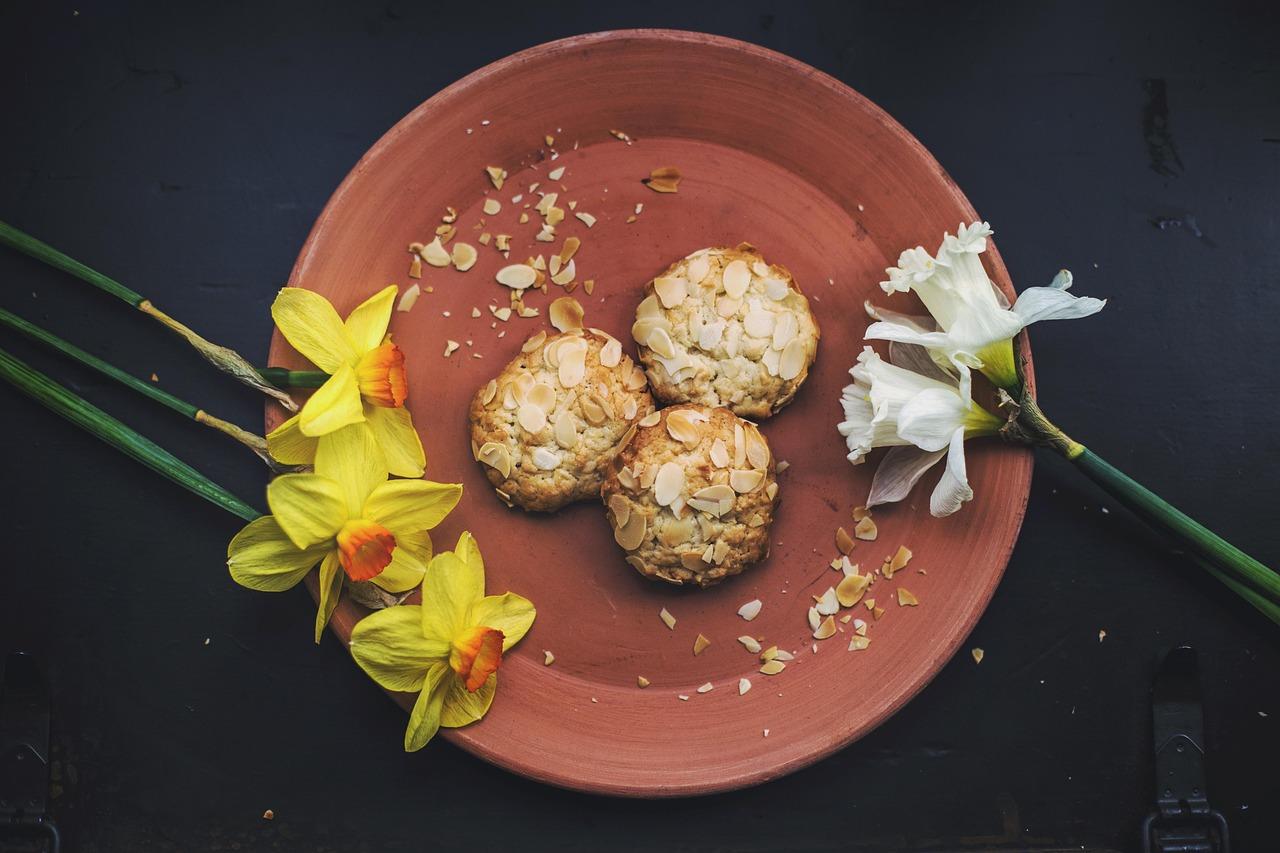
A big batch of crunchy cookies with rolled oats, coconut, chopped almonds and chunks of cooking chocolate. For a change, use cashew nuts instead of almonds.