
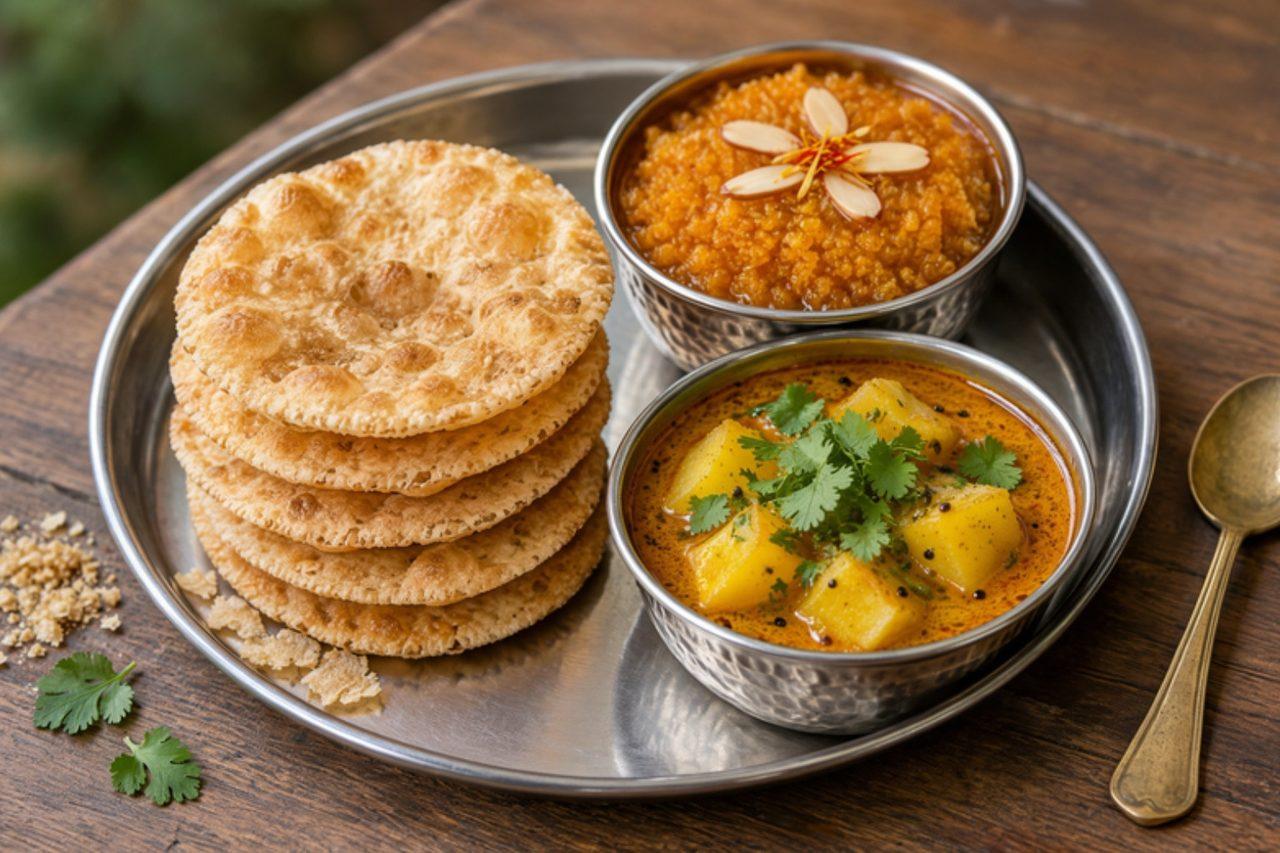
AI-generated image
Nagori halwa
नागोरी हलवा (nagori halwa): tiny crisp semolina puris with sweet sooji halwa and a tangy potato curry
 Indian
On cold winter mornings in Old Delhi, the halwais near Chawri Bazar and Sitaram Bazar set out trays of nagori: thumb-sized, rock-crisp puris made with semolina. You crack one open, spoon in warm, ghee-rich sooji halwa and eat it with a bite of spicy potato curry, the sweet and the savoury taking turns. It is a breakfast that keeps you going through a foggy December day. Chef's tip: roast the semolina for the halwa slowly until it smells of toasted nuts; under-roasted semolina makes a pasty, flat halwa.
- Total time
- 60 min
- Difficulty
- medium
- Serves
- 4
Ingredients
For the nagori
- 3 ½ oz fine semolina (sooji)
- 1 ¾ oz wholewheat flour (atta)
- ¼ tsp carom seeds (ajwain)
- 1 ¼ tsp salt¼ tsp for the dough, 1 tsp for the curry
- 1 tbsp ghee
- ¼ cup waterabout
- 3 ¼ cups sunflower oil2 tbsp for the curry, the rest for frying
For the halwa
- 3 ½ oz coarse semolina
- 2 ⅞ oz ghee
- 4 oz sugar
- 1 ¾ cups water
- ½ tsp ground cardamom
For the potato curry
- 14 oz potatoesboiled, peeled and broken into chunks
- 1 tsp cumin seeds
- 1 tbsp fresh gingergrated
- 1 green chillichopped
- 1 tomatochopped
- ½ tsp ground turmeric
- 1 tsp red chilli powder
- 1 tsp ground coriander
- 1 ¼ cups water
Shop this recipe on Amazon
What you'll need
Spices & pantry
Fresh ingredients (5)
Links open Amazon in a new tab. As an Amazon Associate, WhatToEat.Today earns from qualifying purchases.
Method
0/9 doneStep 1: Mix 3 ½ oz fine semolina (sooji), 1 ¾ oz wholewheat flour (atta), ¼ tsp carom seeds (ajwain) and a fifth of the 1 ¼ tsp salt. Rub in 1 tbsp ghee, then knead with ¼ cup water to a stiff dough. Cover and rest for 15 minutes.
5 minStep 2: For the curry, heat 2 tbsp of the 3 ¼ cups sunflower oil in a pan over a medium heat, add 1 tsp cumin seeds, then 1 tbsp fresh ginger and 1 green chilli. Add 1 tomato, ½ tsp ground turmeric, 1 tsp red chilli powder, 1 tsp ground coriander and the rest of the salt and cook for 3 minutes.
5 minStep 3: Add 14 oz potatoes and 1 ¼ cups water, crush a few pieces to thicken and simmer for 10 minutes. Stir in ½ tsp dried mango powder (amchur) and keep warm.
10 minStep 4: For the halwa, warm 2 ⅞ oz ghee in a heavy pan over a low heat and add 3 ½ oz coarse semolina. Stir constantly for 8–10 minutes, until golden and nutty-smelling. Common mistake: hurrying this on a high heat; the halwa ends up raw-tasting and gluey.
10 minStep 5: Meanwhile bring 1 ¾ cups water and 4 oz sugar to the boil in another pan. Pour the hot syrup carefully into the semolina, standing back as it splutters, and stir for 3 minutes until it thickens and pulls away from the pan. Stir in ½ tsp ground cardamom.
4 minStep 6: Divide the dough into 24 small balls and roll each into a 5 cm round. Prick each twice with a fork so it stays flat and crisp instead of puffing.
8 minStep 7: Pour 3 ¼ cups sunflower oil into a deep, heavy pan so it is no more than a third full and heat it over a medium heat to 350°F on a thermometer; with no thermometer, a small cube of bread should turn golden in about 70 seconds. Never leave hot oil unattended, and keep children well away.
5 minStep 8: Fry the nagori in batches for 2–3 minutes, turning, until evenly golden and hard. Drain on kitchen paper.
8 minStep 9: Serve the nagori warm with bowls of halwa and potato curry: crack a nagori, fill it with halwa and eat it with a bite of the curry.
Nutrition per serving
- Calories
- 620 kcal
- Protein
- 9 g
- Carbs
- 85 g
- Fat
- 27 g
- Fibre
- 4 g
Nutrition values are estimates.
KrazyBadal
Good to know
- How long does nagori halwa take?
- About 60 minutes in total: 25 minutes to prepare and 35 minutes to cook.
- How many people does it serve?
- 4 as written. Change the servings above the ingredients and every amount scales to match.
- Is it vegetarian?
- Yes. It has no meat or fish.
- What can I use instead of ghee?
- Butter, same amount (keep the heat a little lower, butter burns sooner).
- What can I use instead of ghee?
- Butter, same amount (keep the heat a little lower, butter burns sooner).
Reviews
No reviews yet. Be the first to cook it.
Rate this recipe
Sign in to rate and review this recipe.
You might also like
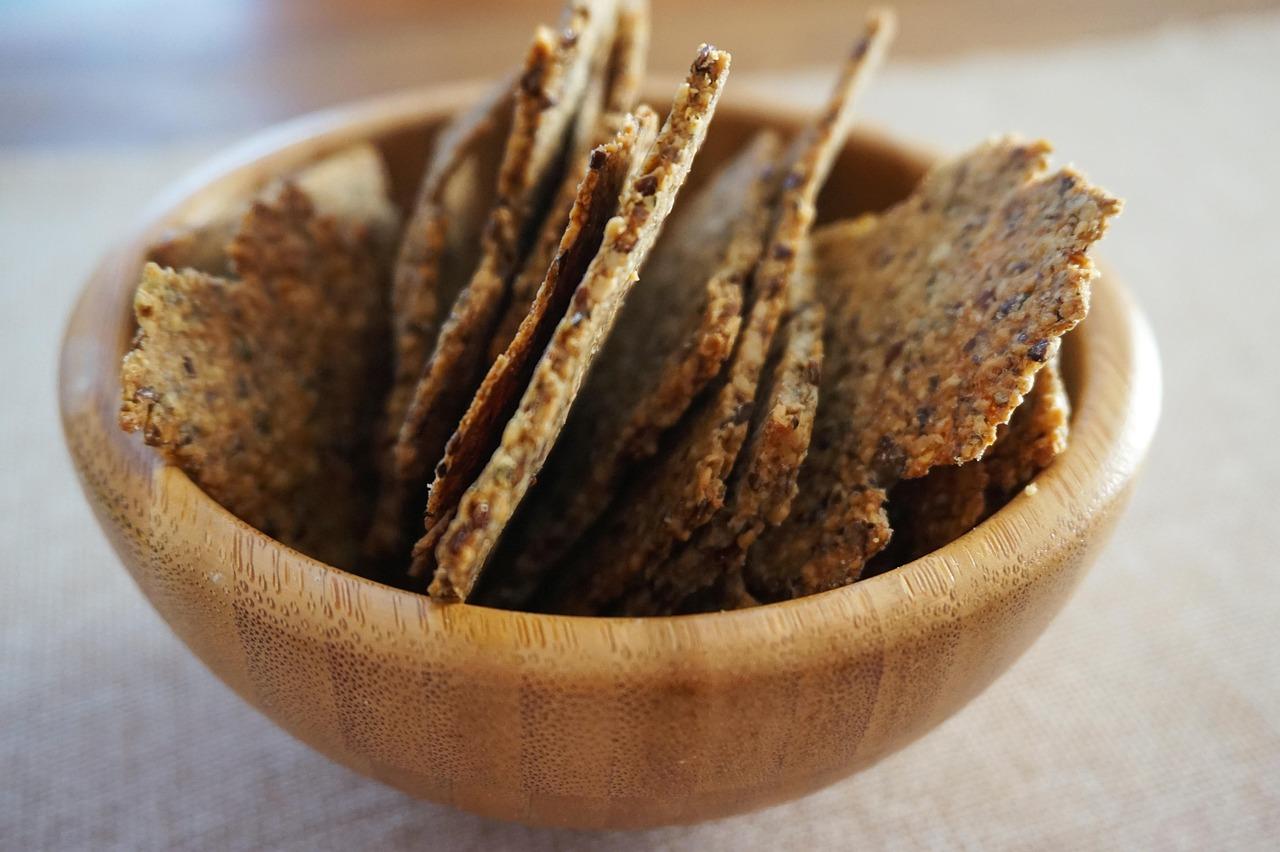
Masala khakhra
Khakhra are thin chapaties roasted slowly on a griddle until they turn crisp, like a cracker. This masala version adds gram flour, fresh fenugreek, turmeric and chilli to the wheat dough. They are a light Gujarati breakfast or tea-time snack, and lovely with pickle, chutney or a smear of butter. You can also make them in a roti maker.

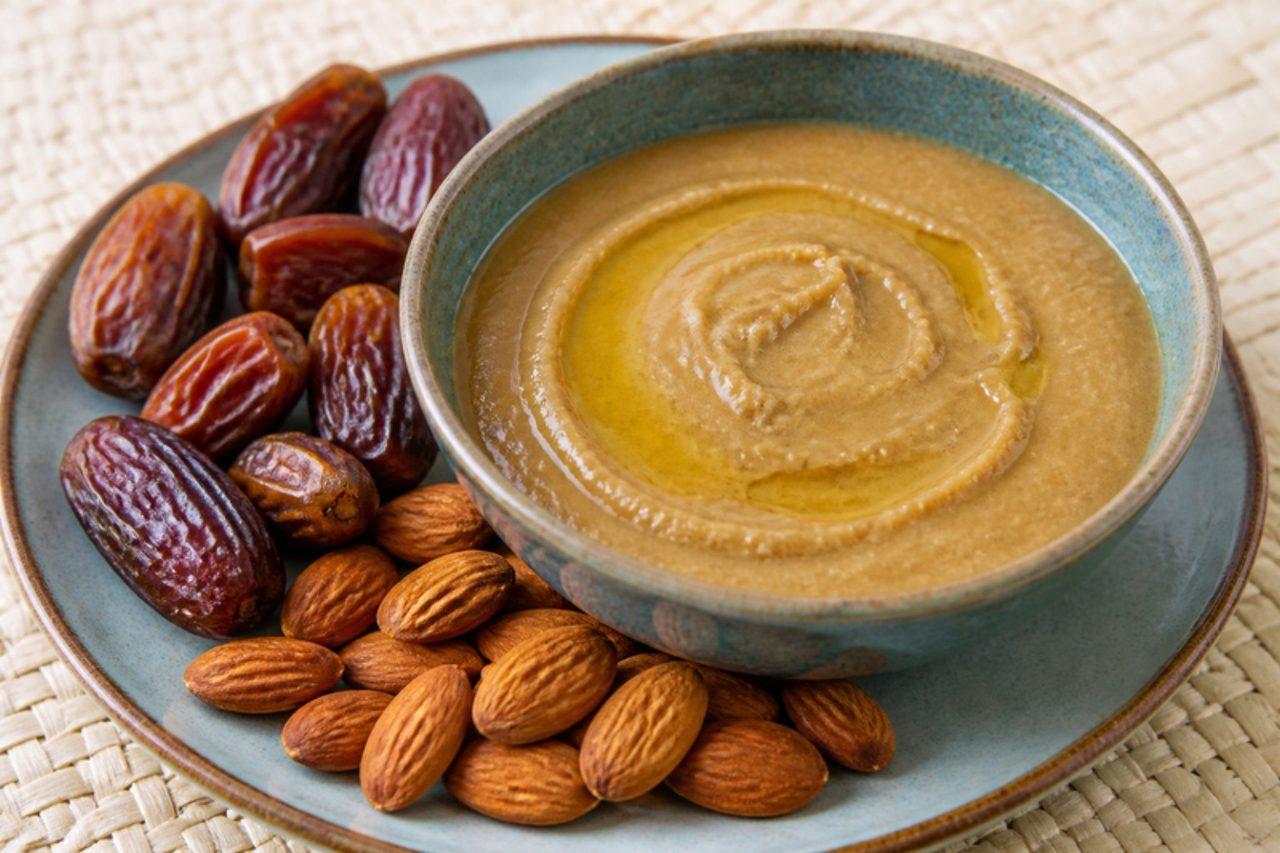
Bsissa
A tin of bsissa sits in many Tunisian kitchen cupboards, from Tunis flats to farmhouses in the south: a finely ground flour of roasted barley, roasted chickpeas and spices such as coriander, fennel and aniseed. In the morning a few spoonfuls are worked with olive oil and something sweet into a nutty, crumbly paste, or stirred with water into a thick drink, and it keeps you going until lunch. Travellers and pilgrims once carried it for the road. Roasting your own flour takes 15 minutes and makes a jar that lasts weeks. Sugar and dates keep it vegan; some families use honey. Chef's tip: roast the flours separately over a low heat and stir constantly; the moment they smell like toasted biscuits and turn light tan, tip them out of the pan.
 Tunisian
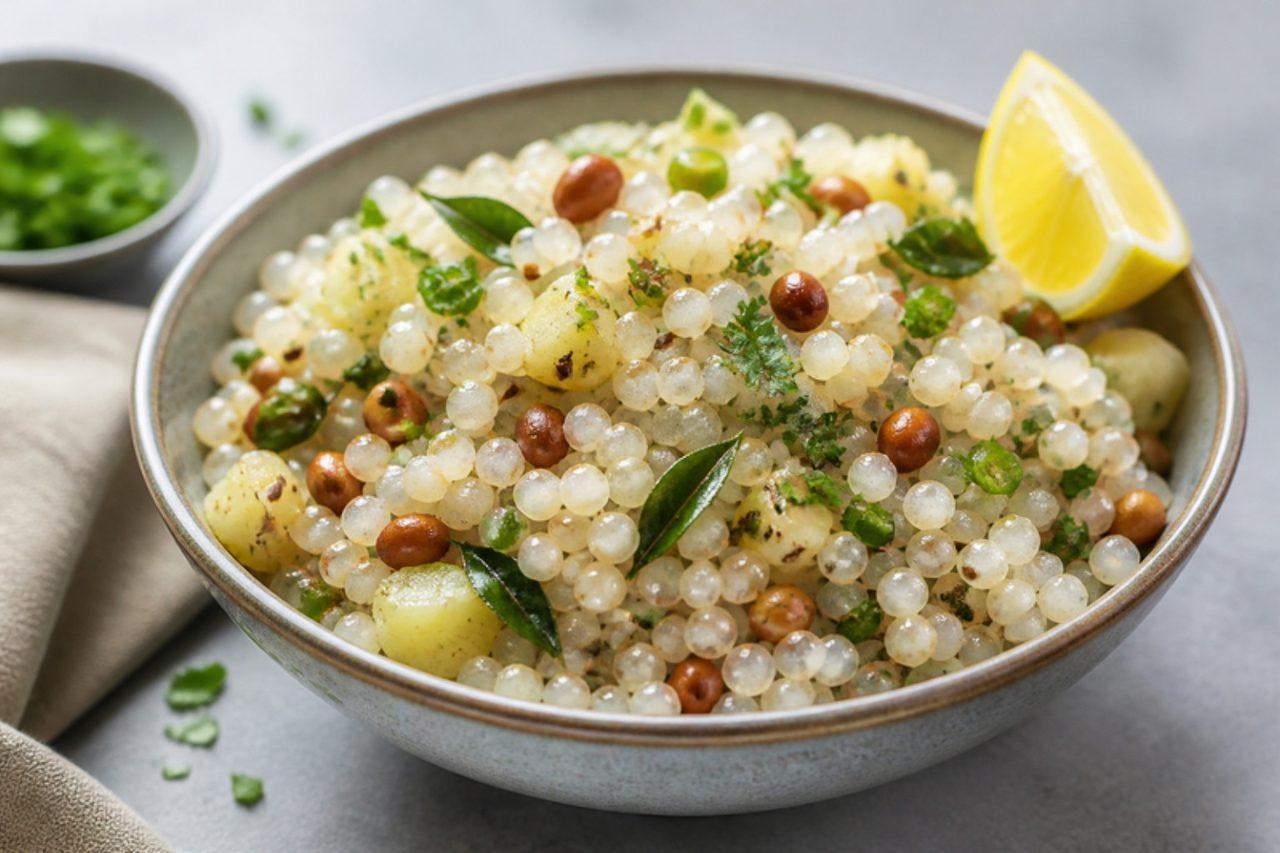
Sabudana khichdi
Sabudana khichdi is the dish that sees Maharashtra through every vrat (fast), from Navratri to Ekadashi, but it's so good that people eat it any day of the week. Soaked sago pearls are tossed in a pan with crushed roasted peanuts, cubes of potato, cumin and green chilli until each pearl turns glassy and separate, then finished with lemon and coriander. It's soft, chewy, nutty and gently hot. Fasting rules vary from family to family, so check yours; this version uses rock salt and no asafoetida, onion or garlic. Traditionally it's cooked in ghee; use ghee instead of oil if you aren't keeping it vegan. Chef's tip: soak the sago in just enough water to cover by the height of the pearls themselves, no more; too much water is the reason khichdi turns into one sticky lump.
