
AI-generated image
Cháo sườn
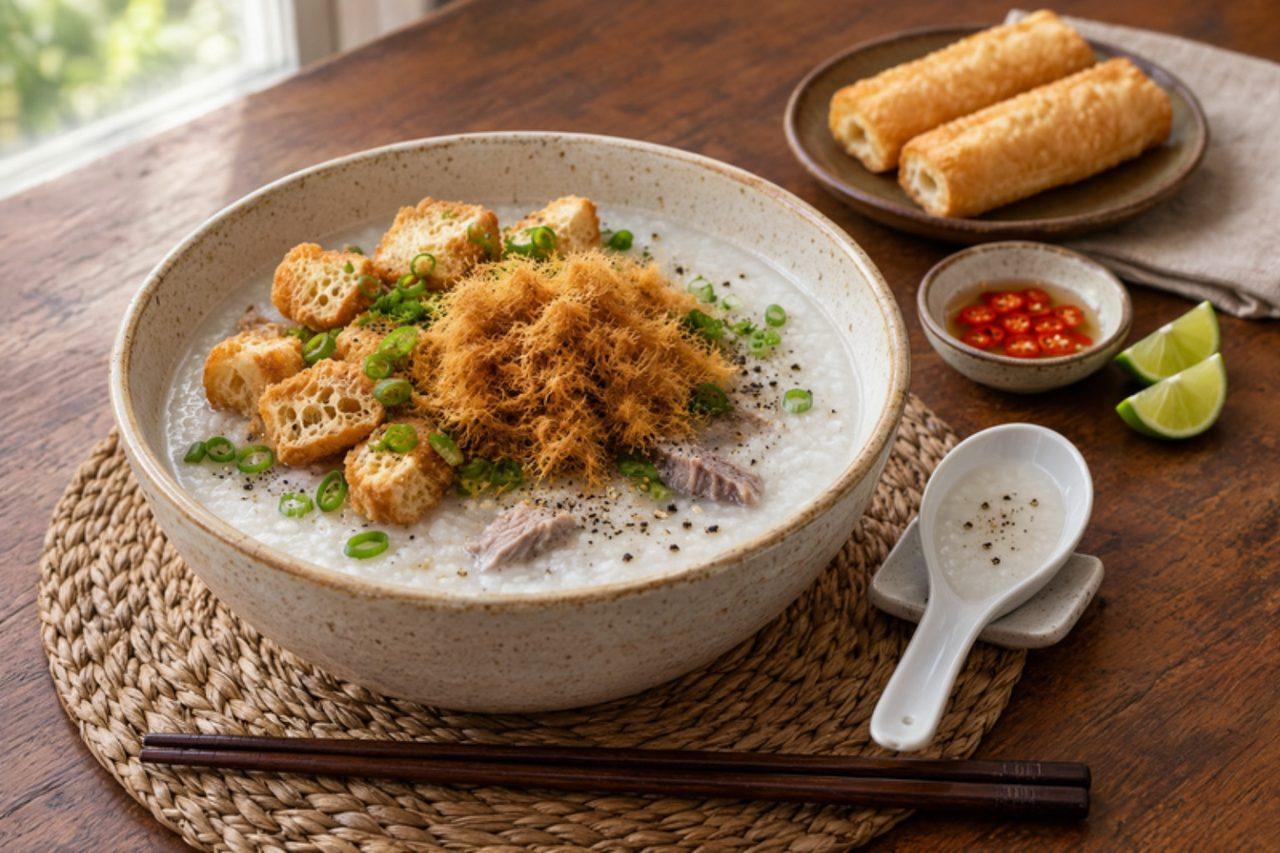
Cháo sườn: Hanoi's velvety ground-rice porridge with pork rib broth, fried dough and pork floss
 Vietnamese
On Hanoi street corners, cháo sườn sellers ladle out this porridge from first light, and children eat it before school with a heap of crisp quẩy (fried dough) and fluffy pork floss on top. Unlike whole-grain congee, the rice is ground first, so it cooks into a pale, silky cream flavoured by a long-simmered pork rib broth. The usual mistake is adding the ground rice to boiling broth all at once, which makes stubborn lumps; whisk it into a slurry first. Chef's tip: toast the rice in a dry pan until it smells like popcorn before you grind it, which gives the porridge its gentle nutty depth.
- Total time
- 120 min
- Difficulty
- medium
- Serves
- 4
Ingredients
For the broth
- 1 ⅓ lb pork spare ribscut into 4 cm pieces
- 2.5 litres water
- 3 shallotspeeled
- 1 tsp salt
For the porridge
- 5 ½ oz jasmine rice
- 1 ½ tbsp fish sauce
- 1 tsp sugar
To serve
- 2 Vietnamese fried dough sticks (quẩy)cut into thin slices
- 1 oz pork floss
- 2 spring onionsfinely sliced
- ½ tsp ground black pepper
- 2 tbsp crisp fried shallots (optional)
Shop this recipe on Amazon
What you'll need
Fresh ingredients (5)
Links open Amazon in a new tab. As an Amazon Associate, WhatToEat.Today earns from qualifying purchases.
Method
0/8 doneStep 1: Put 1 ⅓ lb pork spare ribs in a pot, cover with cold water, bring to the boil and boil for 3 minutes. Drain and rinse the ribs to wash off the scum.
5 minStep 3: While the broth simmers, toast 5 ½ oz jasmine rice in a dry frying pan over a medium-low heat for 6–8 minutes, shaking often, until pale golden and fragrant. Cool, then grind to a coarse powder in a spice grinder or blender.
8 minStep 4: Lift out the ribs and keep them warm. Measure the broth; you need about 1.6 litres.
Step 5: Whisk the ground rice with 300 ml of the cooled broth until smooth. Bring the rest of the broth to the boil, then pour in the slurry in a thin stream, whisking all the time.
Step 6: Simmer over a low heat for 25–30 minutes, stirring often, until the porridge is smooth, thick and creamy with no gritty taste. Add a little hot water if it becomes stiff.
30 minStep 7: Season with 1 ½ tbsp fish sauce and 1 tsp sugar, and return the ribs for 3 minutes to heat through until piping hot.
3 minStep 8: Ladle into bowls with a few ribs each, then pile on 2 Vietnamese fried dough sticks (quẩy), 1 oz pork floss, 2 spring onions, ½ tsp ground black pepper and 2 tbsp crisp fried shallots. Eat at once while the dough is still crisp.
Nutrition per serving
- Calories
- 420 kcal
- Protein
- 22 g
- Carbs
- 52 g
- Fat
- 14 g
- Fibre
- 1 g
Nutrition values are estimates.
KrazyBadal
Good to know
- How long does cháo sườn take?
- About 120 minutes in total: 20 minutes to prepare and 100 minutes to cook.
- How many people does it serve?
- 4 as written. Change the servings above the ingredients and every amount scales to match.
- What can I use instead of shallots?
- Half an onion per 2 shallots.
- What can I use instead of jasmine rice?
- Any long-grain rice, same amount.
Reviews
No reviews yet. Be the first to cook it.
Rate this recipe
Sign in to rate and review this recipe.
You might also like
Caramelised clay-pot tofu and mushrooms
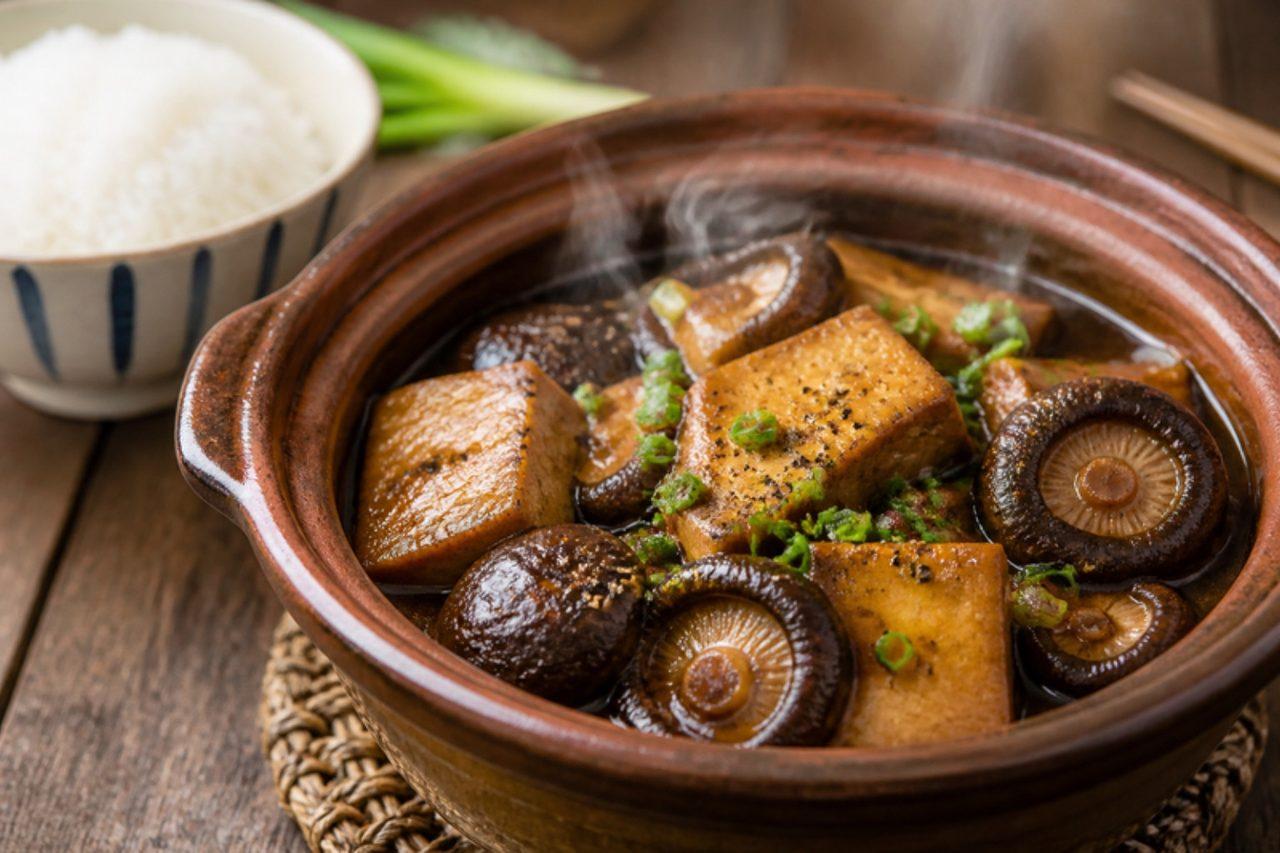
Kho is the slow braise of the Mekong Delta: food simmered in a little clay pot (nồi đất) with dark caramel and seasoning until the sauce is sticky and the flavours go deep. This vegetarian cousin of cá kho tộ (braised fish) uses golden tofu and meaty mushrooms in place of fish, cooked in coconut water, as cooks do in the south, and finished with plenty of black pepper. Serve it bubbling in its pot with steamed rice and a sour soup or plain boiled vegetables. Chef's tip: take the caramel (nước màu) to a deep mahogany, darker than you think, just before it smokes; pale caramel only tastes sweet, while dark caramel gives the bittersweet, smoky flavour of a real kho.

Vegan nuoc cham
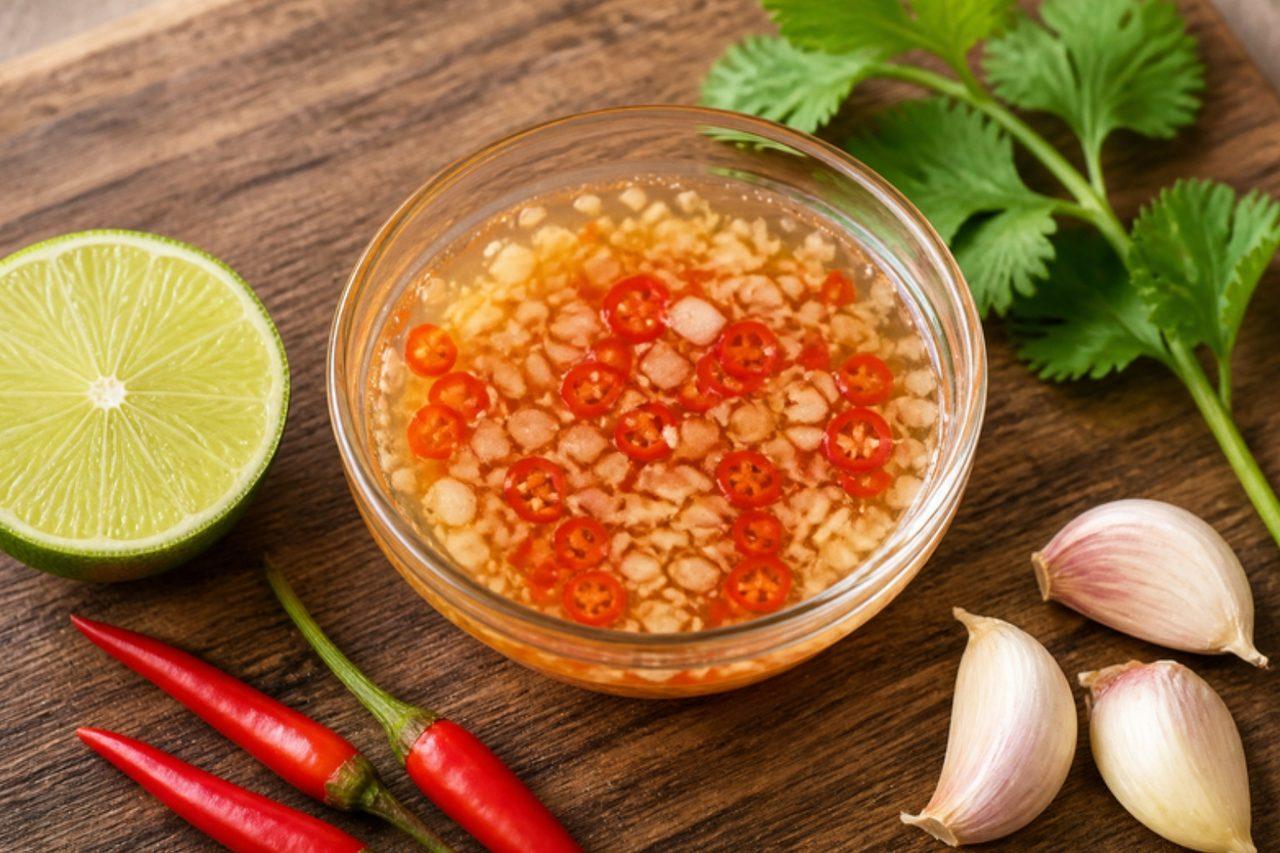
Nước chấm is the dipping sauce that goes with almost everything in Vietnam: spring rolls, bánh xèo, noodle salads and broken rice. Buddhist vegetarian cooks, all over the country, make it without fish sauce, using light soy sauce and a little coconut water for the deep, rounded taste. It should be thin, clear and pale amber, with flecks of garlic and chilli floating on top. Chef's tip: dissolve the sugar in the warm water first, then add the lime and soy, and stir in the garlic and chilli last, pounded with a pinch of sugar, so they float on the surface instead of sinking.
Hyderabadi chicken dum biryani
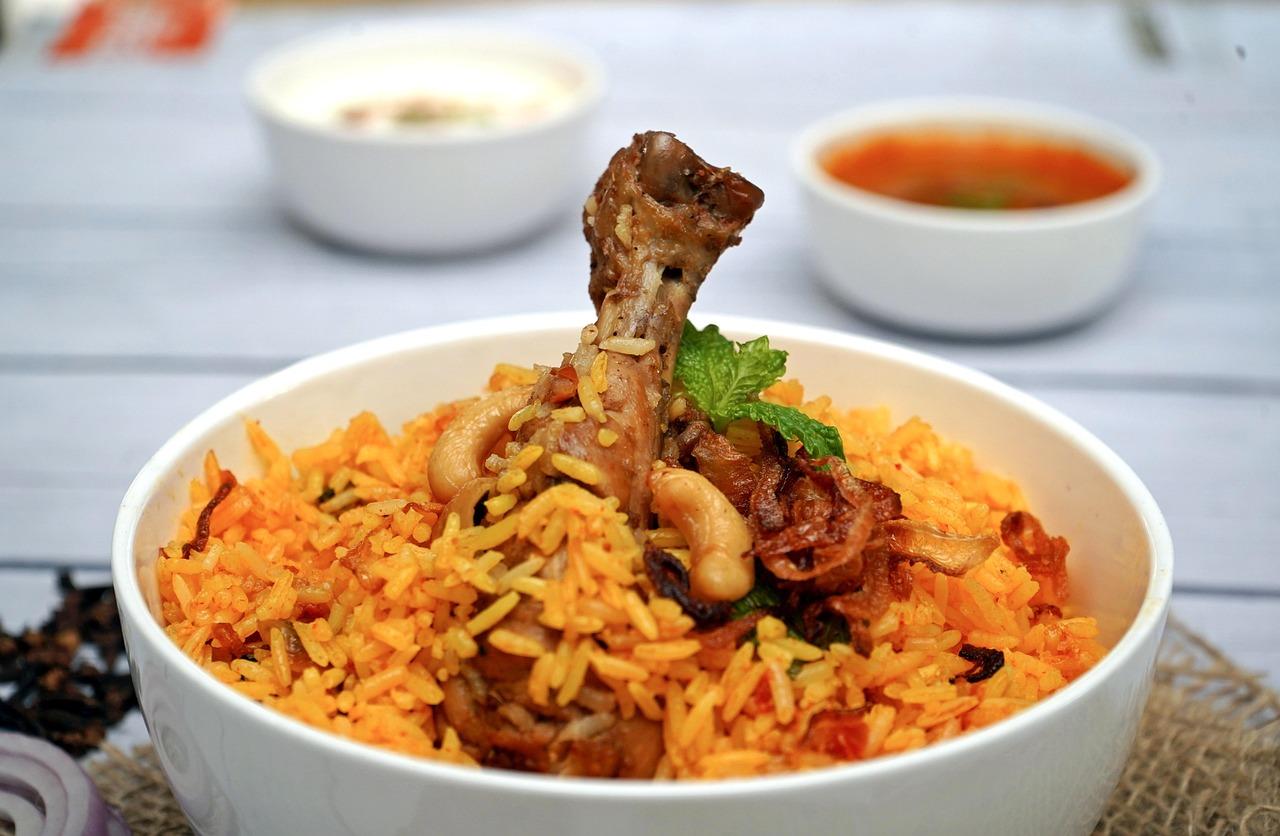
Hyderabad's biryani grew up in the kitchens of the Nizams, and the kacchi style is its proudest form: the chicken goes into the pot raw, in a thick yogurt, mint and fried-onion marinade, and cooks only in the steam trapped under part-cooked basmati. In the old city it is wedding and Eid food, ordered in huge copper deghs, and at home it's the Sunday showpiece, served with mirchi ka salan and a cooling raita. Because the meat cooks without being stirred, small bone-in thigh and drumstick pieces work best. Chef's tip: marinate overnight in the fridge — the yogurt tenderises the chicken and the flavours go right to the bone.
 Indian
