
AI-generated image
Chalta achar
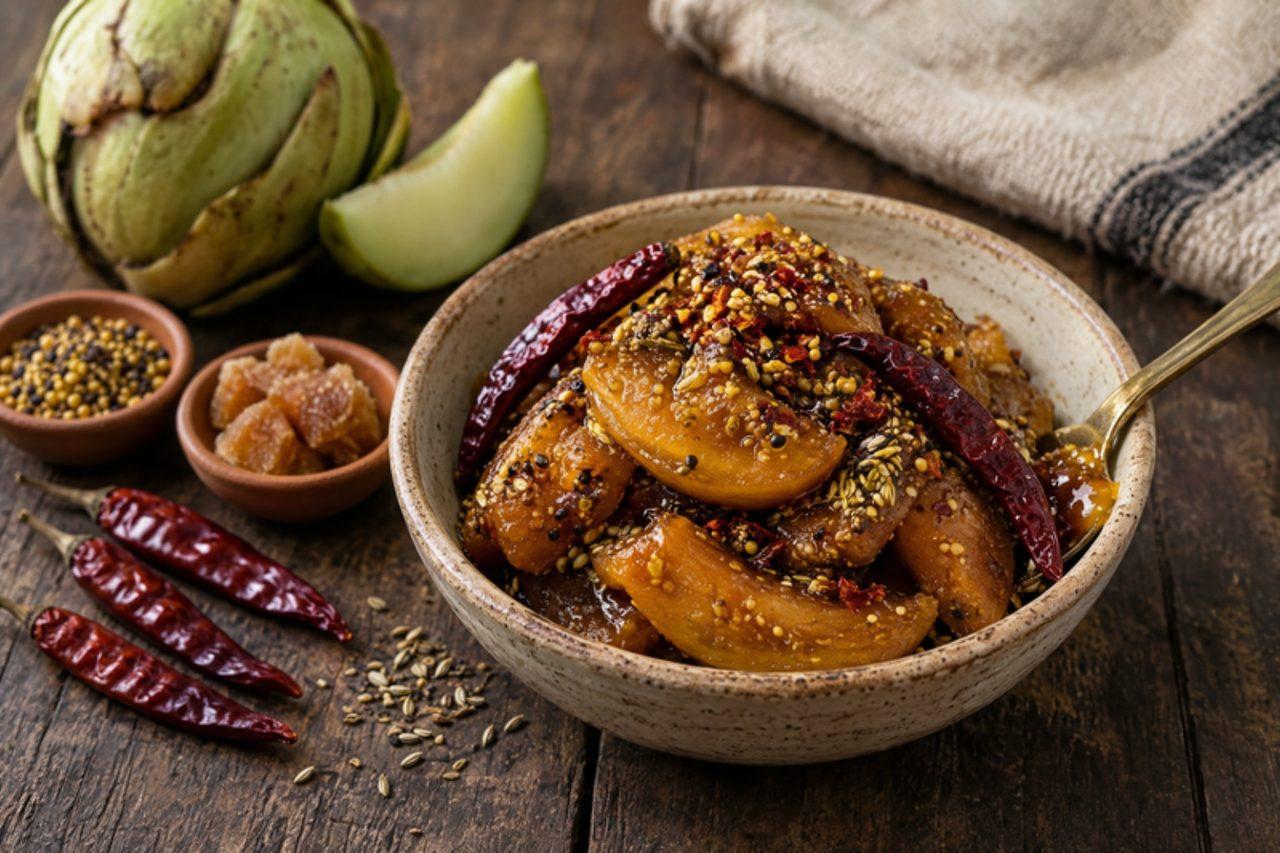
চালতার আচার: sour elephant apple boiled soft, then cooked with mustard, chilli and jaggery into a tangy-sweet relish


Chalta, the elephant apple, is a big green fruit of tightly wrapped, fleshy petals, and in Bengal it arrives in the markets in autumn, around Durga Puja, staying through early winter. Raw it is so sour and fibrous that it is almost impossible to eat, but cooked with jaggery and mustard it becomes one of the best-loved sweet-sour pickles of the region. The petals soften into chewy, slightly crunchy pieces in a thick, amber syrup, sour and sweet with a sharp kick of ground mustard and chilli. Serve it with dal and rice at the end of a meal, or with khichuri on a rainy day. The common mistake is skipping the pounding: after boiling, the pieces need a few firm knocks with a pestle to break the fibres, or they stay tough and never absorb the syrup. It is ready when the syrup coats a spoon and the chalta pieces look glossy and translucent. Keep it in a clean jar in the fridge for up to a month. Outside India, frozen chalta is sold in Bangladeshi grocers; hard, sour cooking apples with a squeeze of lime are a passable stand-in. Chef's tip: a pinch of ground mustard added at the very end gives the classic nose-tingling bite.
- Total time
- 65 min
- Difficulty
- medium
- Serves
- 12
Ingredients
For the chalta
- 1 elephant apple (chalta)about 600 g; or 3 hard, sour cooking apples plus 1 tbsp lime juice
- 4 ¼ cups water
- 1 ½ tsp salt
- ½ tsp ground turmeric
For the pickle
- 3 tbsp mustard oil
- 1 tsp black mustard seeds
- 1 tsp red chilli powder
- 7 oz jaggerygrated
- ¾ cup water
- 1 tsp ground yellow mustard
Shop this recipe on Amazon
What you'll need
Spices & pantry
Fresh ingredients (1)
Links open Amazon in a new tab. As an Amazon Associate, WhatToEat.Today earns from qualifying purchases.
Method
0/9 doneStep 1: Prepare the jar: wash jar and lid in hot soapy water, rinse well, then stand the jar upside down in a 250°F oven for 10 minutes (or boil jar and lid for 10 minutes and let them dry upside down). Let it cool completely; jar, lid, bowls and spoons must be bone dry, because a single drop of water is the usual reason a pickle goes mouldy.
Step 2: Cut off the hard top and base of the 1 elephant apple (chalta). Separate the thick outer petals and discard the hard centre and any tough tips. Cut the petals into 2 cm pieces and wash them.
20 minStep 3: Bring 4 ¼ cups water to the boil with 1 ½ tsp salt and ½ tsp ground turmeric. Add the chalta and boil on a medium heat until a piece can be squashed with a spoon, 12–15 minutes.
15 minStep 4: Drain. Lay the pieces on a board and hit each one a few times with a pestle or rolling pin to break the fibres, without mashing to a pulp.
5 minStep 5: Heat 3 tbsp mustard oil in a heavy pan over a medium-high heat until it smokes lightly, then lower to medium. Add 1 tsp black mustard seeds and 3 dried red chillies and stir until the seeds pop.
2 minStep 6: Add the chalta and 1 tsp red chilli powder and stir-fry for 3 minutes.
3 minStep 7: Add 7 oz jaggery and ¾ cup water, and cook on a medium-low heat, stirring often, for 10–12 minutes, until the syrup is thick and glossy and coats a spoon.
12 minStep 8: Turn off the heat and stir in 1 tsp ground yellow mustard. Taste and balance with a pinch more salt or jaggery.
Step 9: Cool, then spoon into the dry jar. Keep in the fridge for up to 1 month, with a clean dry spoon. Throw it away if you see mould, it fizzes or it smells sour and boozy.
Nutrition per serving
- Calories
- 100 kcal
- Protein
- 0 g
- Carbs
- 24 g
- Fat
- 3 g
- Fibre
- 2 g
Nutrition values are estimates.
KrazyBadal
Good to know
- How long does chalta achar take?
- About 65 minutes in total: 30 minutes to prepare and 35 minutes to cook.
- How many people does it serve?
- 12 as written. Change the servings above the ingredients and every amount scales to match.
- Is it vegan?
- Yes. It has no meat, fish, dairy or eggs.
- Is it gluten free?
- Yes, as written. Check the labels on stock, sauces and spice mixes, which sometimes contain gluten.
- Can I make it ahead?
- Yes. It keeps well, so you can cook it earlier in the day or the day before and reheat it.
- What can I use instead of elephant apple (chalta)?
- Pears, same amount.
- What can I use instead of ground turmeric?
- Leave it out (it mostly adds colour).
Reviews
No reviews yet. Be the first to cook it.
Rate this recipe
Sign in to rate and review this recipe.
You might also like
Masala khakhra
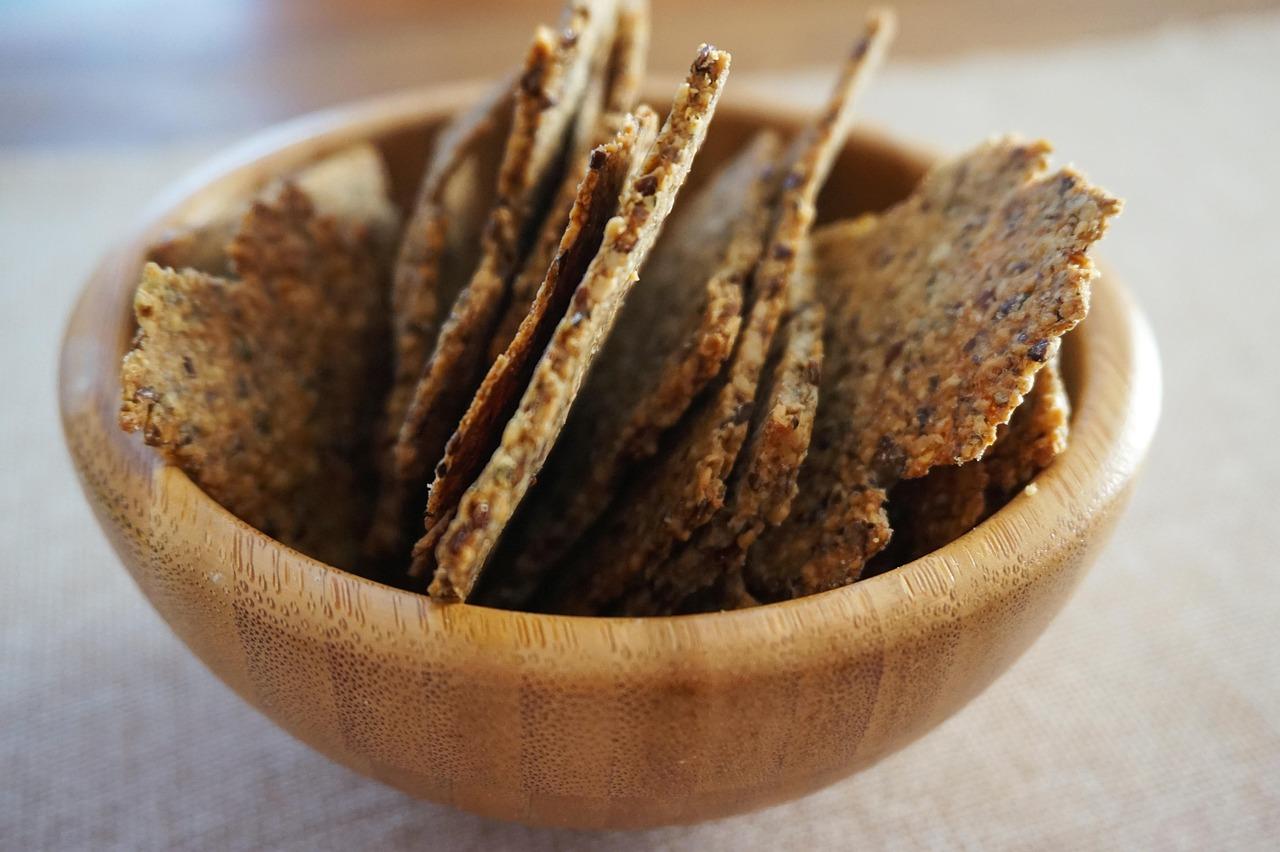
Khakhra are thin chapaties roasted slowly on a griddle until they turn crisp, like a cracker. This masala version adds gram flour, fresh fenugreek, turmeric and chilli to the wheat dough. They are a light Gujarati breakfast or tea-time snack, and lovely with pickle, chutney or a smear of butter. You can also make them in a roti maker.

Sabudana khichdi
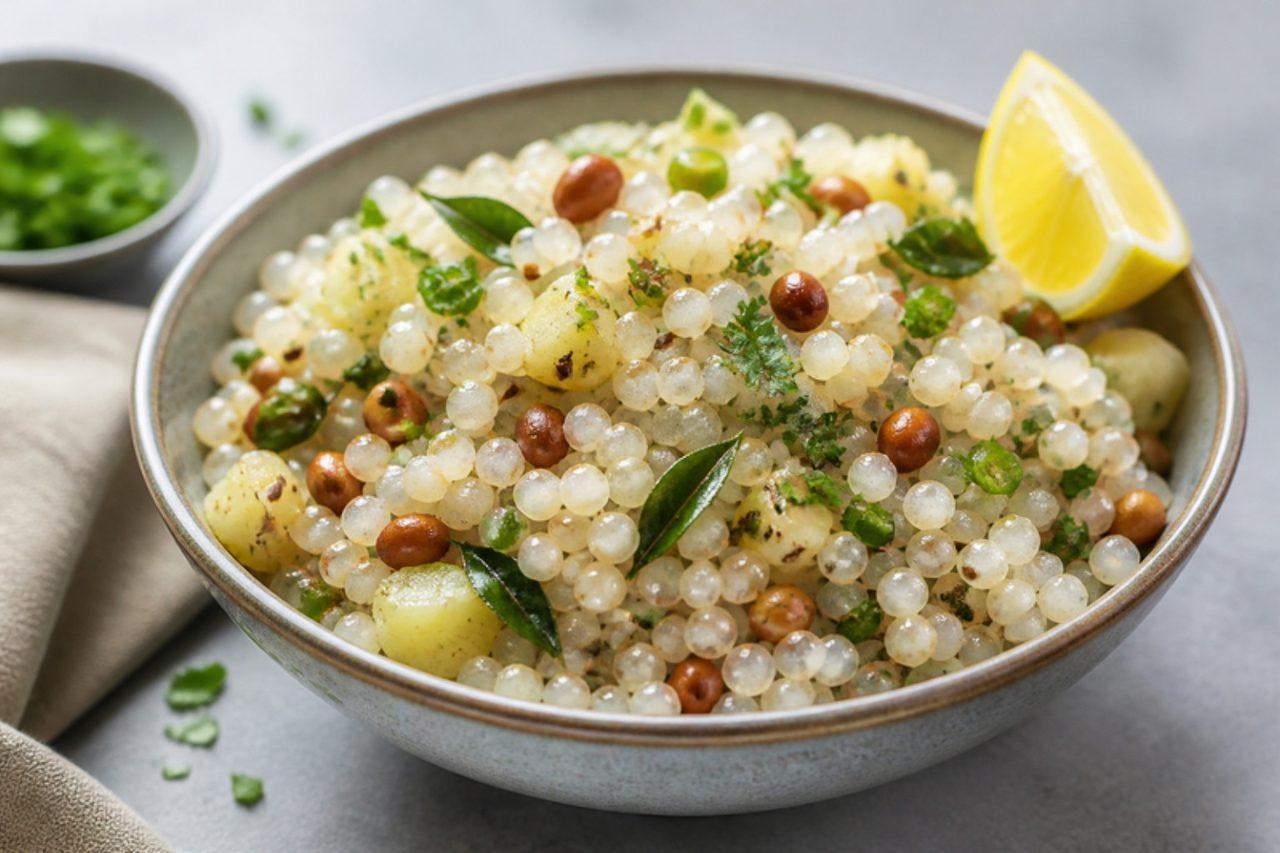
Sabudana khichdi is the dish that sees Maharashtra through every vrat (fast), from Navratri to Ekadashi, but it's so good that people eat it any day of the week. Soaked sago pearls are tossed in a pan with crushed roasted peanuts, cubes of potato, cumin and green chilli until each pearl turns glassy and separate, then finished with lemon and coriander. It's soft, chewy, nutty and gently hot. Fasting rules vary from family to family, so check yours; this version uses rock salt and no asafoetida, onion or garlic. Traditionally it's cooked in ghee; use ghee instead of oil if you aren't keeping it vegan. Chef's tip: soak the sago in just enough water to cover by the height of the pearls themselves, no more; too much water is the reason khichdi turns into one sticky lump.

Bagara baingan
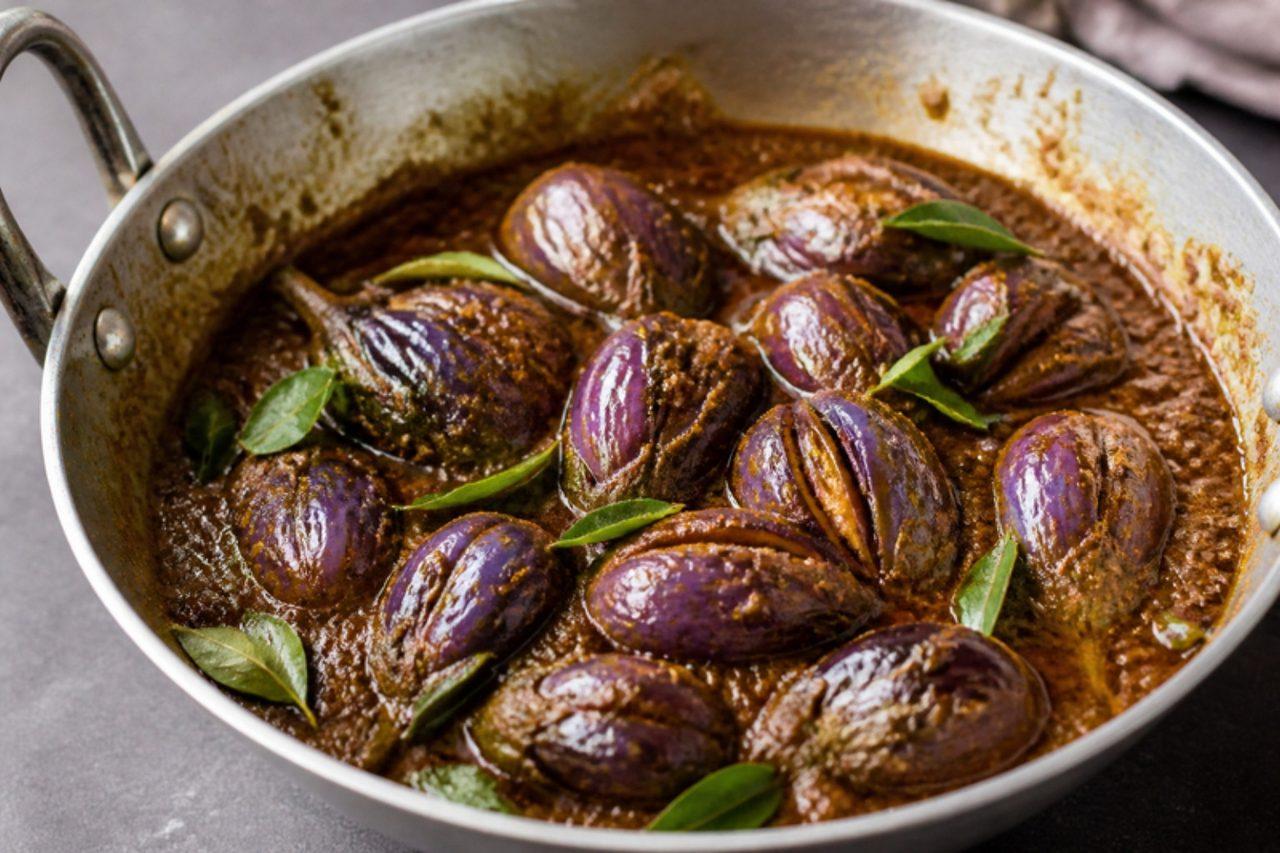
Bagara baingan is a Hyderabadi wedding dish of small aubergines cooked whole in a dark, tangy gravy of roasted peanuts, sesame, dried coconut and tamarind. Unlike a Gujarati stuffed brinjal, the aubergines here are only quartered at the base and fried until silky, then left to soak up a thin-but-rich sauce that is finished with a tempering, the 'baghar' that gives the dish its name. It's sour, nutty and gently spiced, and is served with biryani, bagara rice or plain rice. Chef's tip: choose small, glossy purple aubergines that feel heavy for their size; soft, light ones are full of seeds and turn mushy before the gravy has a chance to cling.