
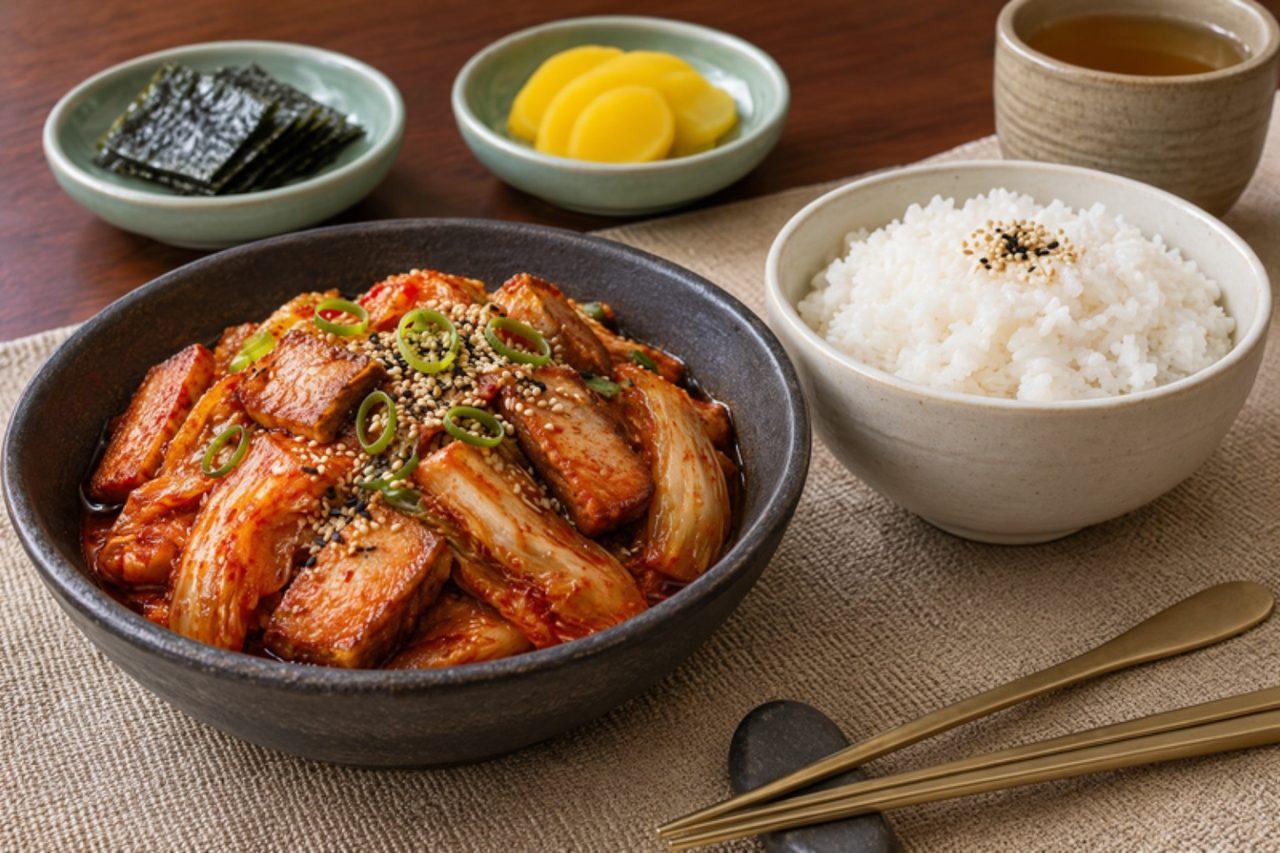
AI-generated image
Bokkeum kimchi
Bokkeum kimchi (볶음김치): ripe kimchi stir-fried with pork belly and sesame oil


When a jar of kimchi turns very sour in Korean homes, it gets stir-fried with a little sugar and sesame oil, and often with pork belly, into bokkeum kimchi, a deep, mellow side dish that keeps for days and is a favourite in school and office dosirak. For a vegan version, use kimchi made without fish sauce or salted shrimp and leave out the pork. The usual mistake is using fresh, crisp kimchi, which tastes harsh when fried; it needs to be properly sour. Chef's tip: fry the kimchi until the edges just begin to catch and caramelise, which is where the flavour is.
- Total time
- 17 min
- Difficulty
- easy
- Serves
- 4
Ingredients
- 5 ½ oz pork bellycut into thin strips
- 14 oz ripe sour napa cabbage kimchichopped
- 1 tbsp vegetable oil
- 1 tbsp sugar
- 1 tsp gochugaru (optional)
- 1 tbsp toasted sesame oil
- 1 tsp toasted sesame seeds
Shop this recipe on Amazon
Fresh ingredients (2)
Links open Amazon in a new tab. As an Amazon Associate, WhatToEat.Today earns from qualifying purchases.
Method
0/4 doneStep 1: Heat 1 tbsp vegetable oil in a frying pan over a medium-high heat and fry 5 ½ oz pork belly for 4–5 minutes until browned, crisp at the edges and cooked through (160°F).
5 minStep 2: Add 14 oz ripe sour napa cabbage kimchi and fry for 5–6 minutes, stirring, until it softens, darkens and starts to catch at the edges.
6 minStep 4: Off the heat, stir in 1 tbsp toasted sesame oil and 1 tsp toasted sesame seeds. Cool quickly and keep in the fridge for up to 4 days.
Nutrition per serving
- Calories
- 210 kcal
- Protein
- 8 g
- Carbs
- 9 g
- Fat
- 16 g
- Fibre
- 2 g
Nutrition values are estimates.
KrazyBadal
Good to know
- How long does bokkeum kimchi take?
- About 17 minutes in total: 5 minutes to prepare and 12 minutes to cook.
- How many people does it serve?
- 4 as written. Change the servings above the ingredients and every amount scales to match.
- Is it very spicy?
- It has some heat. Use less chilli for a milder version, or more if you like it hot.
- Can I make it ahead?
- Yes. It keeps well, so you can cook it earlier in the day or the day before and reheat it.
- What can I use instead of sugar?
- Caster sugar, same amount.
- What can I use instead of toasted sesame oil?
- Toasted sesame seeds ground with a little vegetable oil.
Reviews
No reviews yet. Be the first to cook it.
Rate this recipe
Sign in to rate and review this recipe.
You might also like

Tteokbokki
Tteokbokki (떡볶이) is Korea's best-loved street snack: chewy cylinders of rice cake simmered in a thick, glossy, sweet and spicy red sauce. It became a classic in Seoul, where it is sold from street stalls and snack bars in every neighbourhood. Street versions use anchovy stock and fish cakes; this vegan version uses a quick kelp and shiitake stock with cabbage and spring onions, and has all the same punch. Eat it hot, while the rice cakes are soft and stretchy. Chef's tip: keep stirring and scrape the bottom; the rice cakes release starch that thickens the sauce but also catches. The sauce is right when it clings to the spoon in a glossy coat.


Tteokgalbi
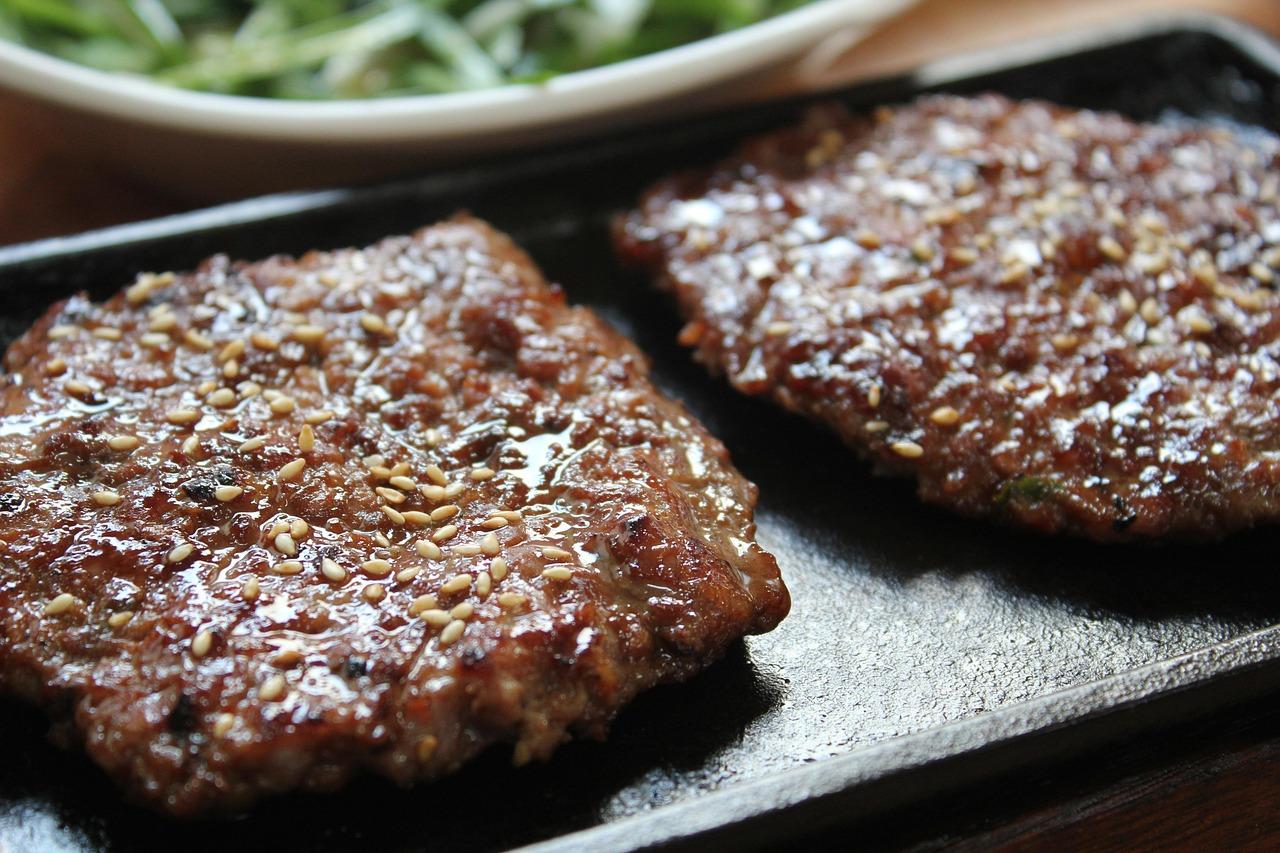
Tteokgalbi is rib meat chopped finely, pressed back into neat slabs and grilled, so it's soft enough to eat without struggling with a bone. Two places in South Jeolla claim it: Damyang, the bamboo county, where all-beef patties come with rice steamed in bamboo tubes, and Gwangju's Songjeong district, whose restaurant street near the railway station mixes beef with pork. This home version uses minced beef and pork, seasoned with soy, garlic and pear, then brushed with a soy and honey glaze as it cooks. Serve with rice, lettuce and a few banchan; leftovers are good cold in a lunchbox. Chef's tip: slap the mince against the bowl for a few minutes; it turns sticky and the patties hold together on the grill without any breadcrumbs.
Tacacho
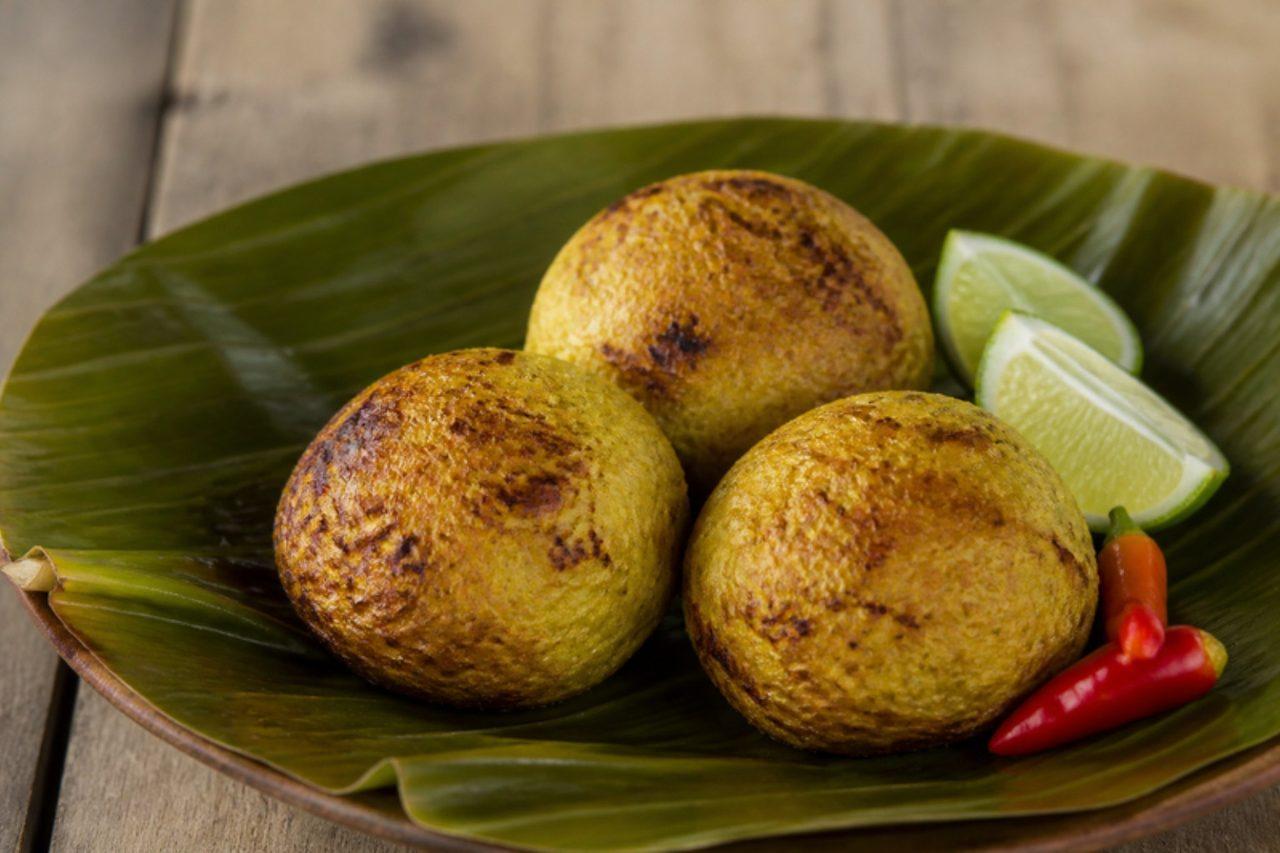
Tacacho is the breakfast of the Peruvian Amazon, from Tarapoto to Iquitos: green plantains roasted over coals, mashed with fat and salt and shaped into balls. There it comes with cecina (smoked pork) and is mashed with lard and crackling; this vegan tacacho uses good oil and a pinch of smoked paprika for the same savoury, smoky depth. The balls are dense, chewy and starchy, crisp at the edges where the plantain charred, and they are eaten hot with a fiery chilli sauce or alongside stews. Use plantains that are fully green and firm. Chef's tip: mash the plantains while they are still very hot; as green plantain cools its starch sets and it won't bind into a smooth ball.
 Peruvian
