
AI-generated image
Bebek betutu
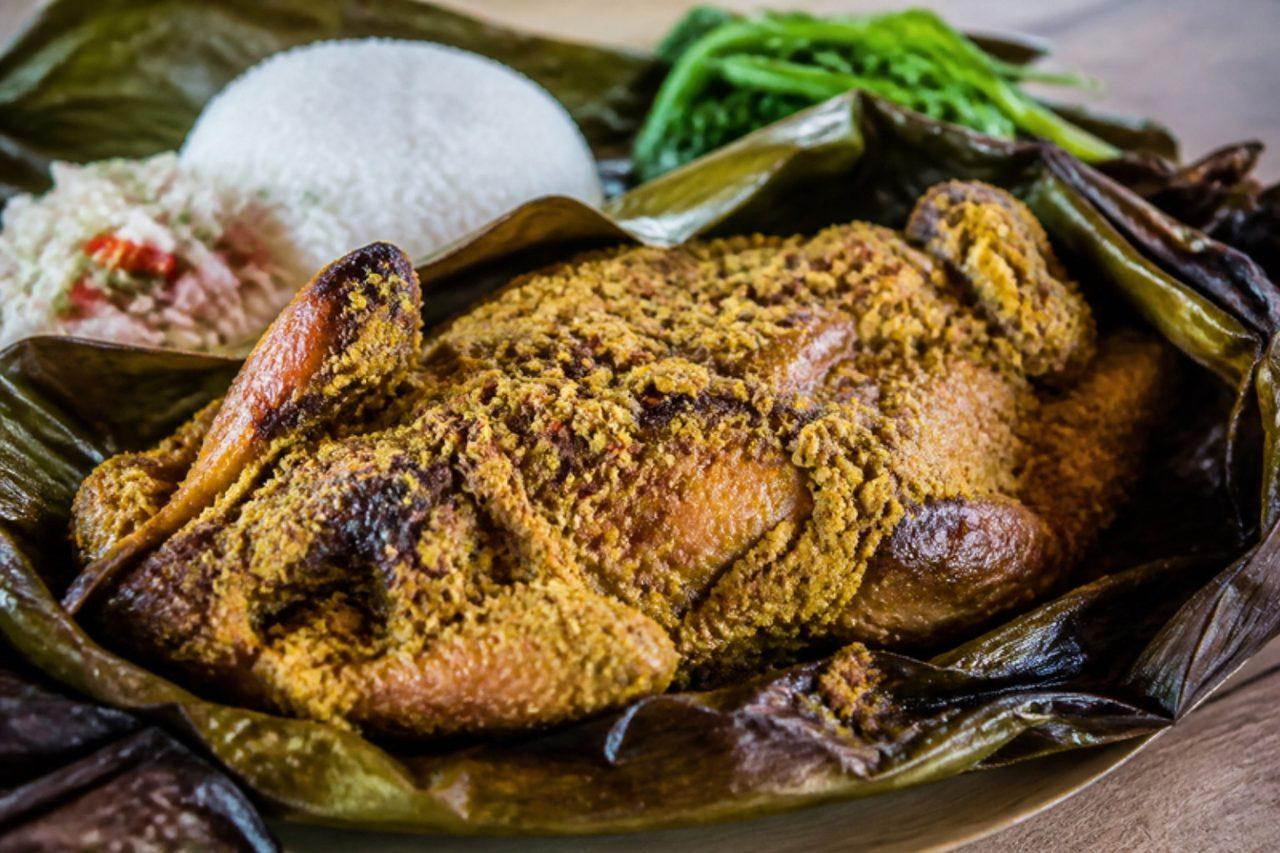
Bebek betutu — Gianyar-style whole duck slow-roasted in spice paste and banana leaf


For ceremonies in the villages around Gianyar in central Bali, a whole duck is stuffed and smothered with base genep, wrapped in banana leaves and areca-palm sheath, and buried overnight in smouldering rice husks. By morning the meat has turned meltingly soft, the fat has rendered into the spices and the parcel smells of turmeric, smoke and lime leaf. This home version keeps the stuffing and the leaf parcel but uses a low oven for three hours, then opens the parcel for a short blast to colour the skin. Serve it in its juices with rice, a sharp sambal matah and long beans or water spinach. Chef's tip: marinate the duck overnight in the fridge if you can; the paste needs time to get past the fat and into the meat.
- Total time
- 240 min
- Difficulty
- hard
- Serves
- 6
Ingredients
For the paste
For the duck
To serve
Method
0/10 doneStep 1: Blend 12 shallots, 10 cloves garlic, 6 large red chillies, 6 bird's eye chillies, 2 in galangal, 1 ⅝ in kencur (aromatic ginger), 2 ⅜ in fresh turmeric, 1 ⅝ in fresh ginger, 6 candlenuts, 3 stalks lemongrass, 1 ½ tbsp coriander seeds, 1 ½ tsp black peppercorns, ¼ tsp ground nutmeg and 1 ½ tsp shrimp paste to a coarse paste.
4 minStep 2: Fry the paste in 4 tbsp coconut oil in a wok over a medium-low heat with 1 tbsp palm sugar and 1 tbsp salt for 12–15 minutes, stirring, until deep orange and the oil splits out. Cool completely.
15 minStep 3: On a board kept for raw poultry, pat 4 ⅞ lb whole duck dry inside and out. Trim off loose neck skin and prick the skin all over with a skewer, especially over the fatty breast, without piercing the meat.
Step 4: Mix 9 oz cassava leaves with a third of the paste and pack it into the cavity with 6 makrut lime leaves. Close the opening with a skewer.
5 minStep 5: Rub the rest of the paste all over the outside and under the skin. Cover and refrigerate for at least 2 hours, ideally overnight. Wash your hands and the board well.
Step 6: Heat the oven to 325°F (275°F fan). Pass 6 large sheets banana leaves briefly over a gas flame or dip in hot water until they turn glossy and supple.
Step 7: Overlap the leaves on 1 large sheet kitchen foil, set the duck in the middle with any paste left in the bowl, and wrap it tightly in the leaves, then in the foil. A common mistake is a loose parcel: the juices escape, the paste scorches and the meat dries out.
5 minStep 8: Put the parcel in a roasting tin and cook for 3 hours until the meat is falling-apart tender. The thickest part of the thigh must read at least 165°F (165 °F) with clear juices.
180 minStep 9: Turn the oven up to 425°F (400°F fan). Open the foil and leaves to expose the top and roast for 15 minutes until the skin is coloured and sizzling.
15 minStep 10: Rest for 15 minutes. Spoon off excess fat from the juices (keep it for frying rice), then break the duck into pieces and serve with its juices, the stuffing, 6 portions steamed rice and 6 tbsp sambal matah.
15 min
Nutrition per serving
- Calories
- 690 kcal
- Protein
- 42 g
- Carbs
- 12 g
- Fat
- 53 g
- Fibre
- 4 g
Nutrition values are estimates.
KrazyBadal
Good to know
- How long does bebek betutu take?
- About 240 minutes in total: 45 minutes to prepare and 195 minutes to cook.
- How many people does it serve?
- 6 as written. Change the servings above the ingredients and every amount scales to match.
- Is it gluten free?
- Yes, as written. Check the labels on stock, sauces and spice mixes, which sometimes contain gluten.
- Is it very spicy?
- It has some heat. Use less chilli for a milder version, or more if you like it hot.
- What can I use instead of shallots?
- Half an onion per 2 shallots.
- What can I use instead of garlic?
- ½ tsp garlic paste or ⅛ tsp garlic powder per clove.
Reviews
No reviews yet. Be the first to cook it.
Rate this recipe
Sign in to rate and review this recipe.
You might also like

Soto Banjar
Along the rivers of Banjarmasin in South Kalimantan, breakfast often means soto Banjar eaten at a wooden riverside warung, sometimes after a dawn trip to the floating market. Unlike the turmeric sotos of Java, this broth is pale and clear, perfumed with the sweet spices that traders brought up the river centuries ago: cinnamon, cloves, star anise, cardamom and nutmeg. Shredded chicken, glass noodles, carrot and a boiled egg go into the bowl with rice cakes, and lime and a little chilli sharpen it at the table. Chef's tip: toast the whole spices in the pan for a minute before the paste goes in; it brings out their sweetness without the dusty edge of ground spice.

Sayur lodeh
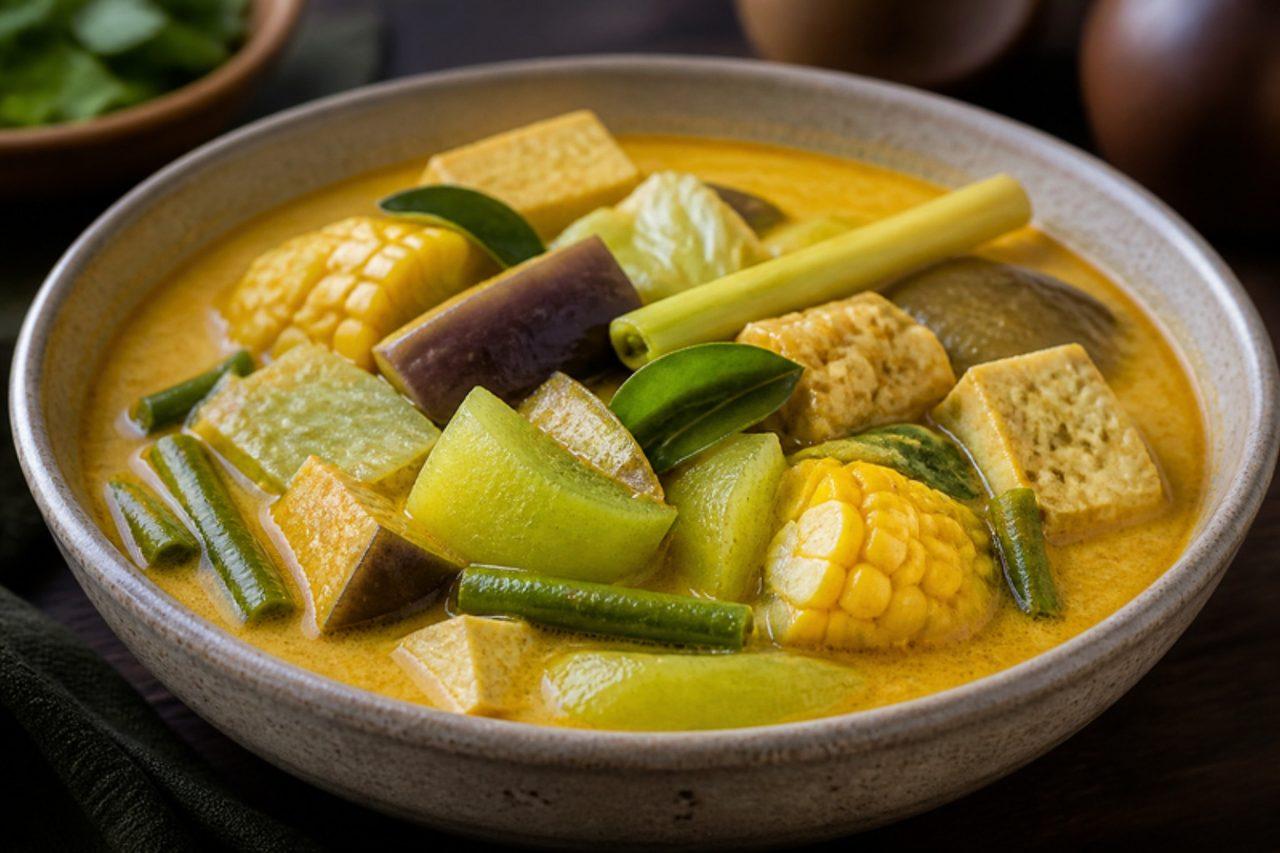
Sayur lodeh is everyday cooking in Central Java, made in big pots in Solo and Semarang kitchens and ladled over rice, with lontong rice cakes at Lebaran, or alongside opor and sambal goreng on festive tables. It's soupy rather than thick: a fragrant broth of coconut milk, galangal, lemongrass and lime leaf that carries chunks of aubergine, long beans, chayote and sweetcorn, plus tempeh and tofu to make it a meal. The flavour is mellow and slightly sweet, so the heat comes from sambal on the side. Chef's tip: keep the pot at a gentle simmer once the coconut milk goes in and stir now and then — a rolling boil splits the coconut milk into oily curds.

Beef and broccoli stir-fry
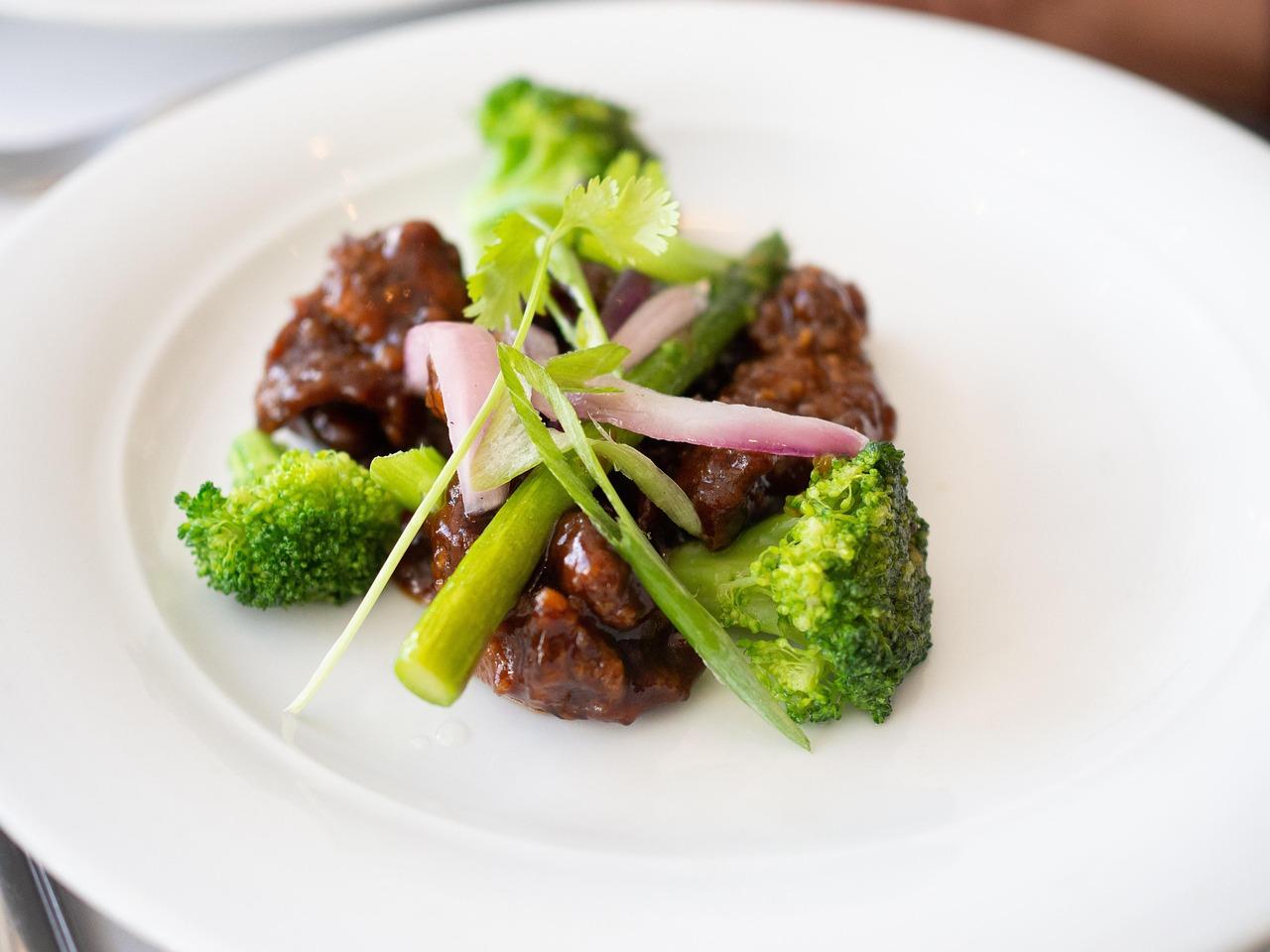
A quick coat of cornflour and soy keeps thin slices of beef silky, and a hot wok gives the broccoli char without overcooking it. Faster than ordering in.