
AI-generated image
Vegetarian banh tet
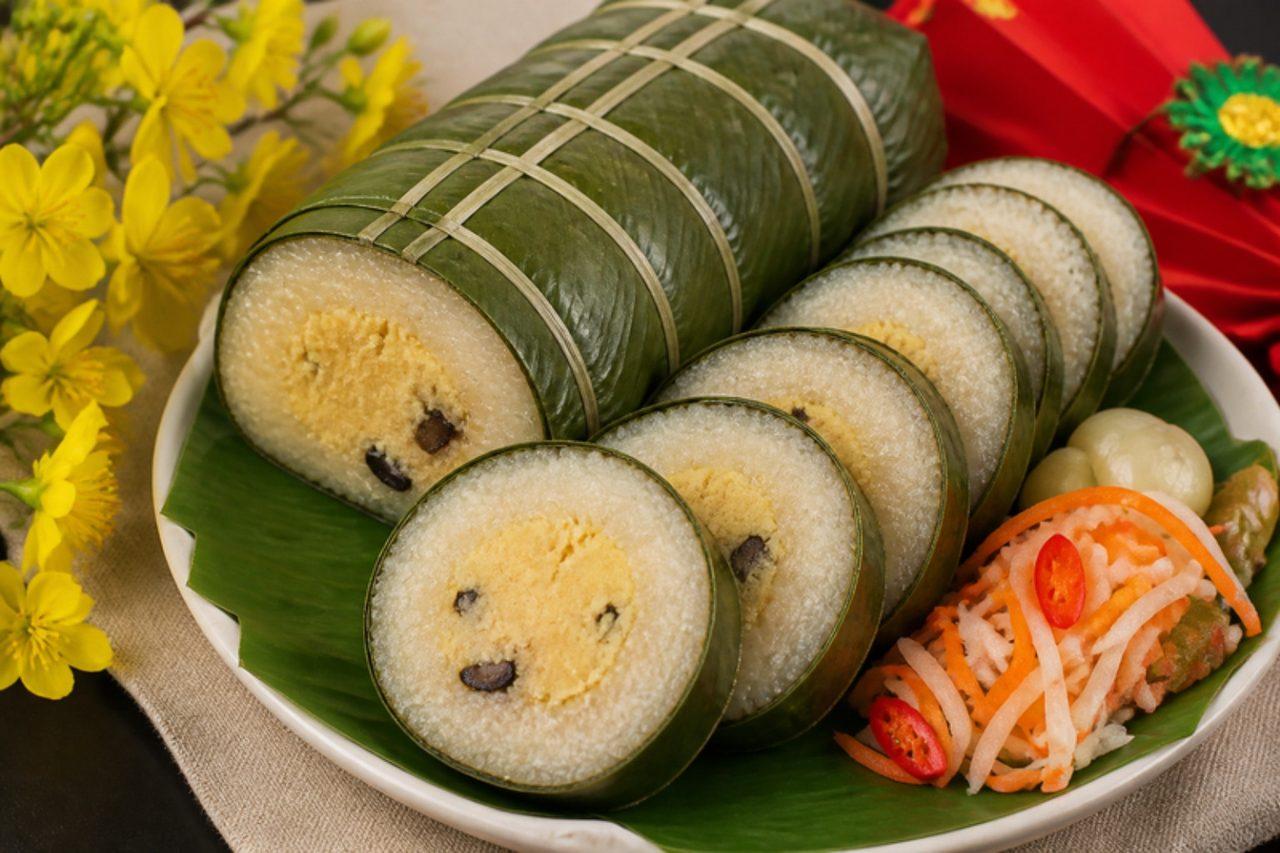
Bánh tét chay: Mekong Delta Tet sticky rice log with a peppery mung bean centre, boiled in banana leaves


In the Mekong Delta, families gather in the days before Tết (Lunar New Year) to wrap bánh tét: long, round logs of coconut-scented sticky rice around a core of mung bean, tied in banana leaves and boiled overnight over a wood fire. The everyday version hides a strip of pork belly in the middle; the chay version here, with peppery shallot-seasoned mung bean, is the one made in Buddhist pagodas and vegetarian households, and some cooks make a sweet bánh tét chuối with ripe banana instead. Slices are cut with a loop of string, eaten with pickled vegetables, or fried until crisp in the days after Tết. Chef's tip: roll and tie the log tightly; a firm parcel is what keeps the water out and gives clean, dense slices.
- Total time
- 540 min
- Difficulty
- hard
- Serves
- 12
Ingredients
For the rice
For the mung bean filling
For wrapping
Method
0/10 doneStep 1: Drain 2 ¼ lb glutinous (sticky) rice well. Stir in ¾ cup coconut milk, 2 tsp salt and 1 tbsp sugar and leave for 20 minutes so the grains drink up the coconut.
Step 2: Steam or simmer the drained 10 ½ oz split peeled mung beans with just enough water to cover for 15 to 20 minutes over a low heat until soft and dry. Mash it while hot.
20 minStep 3: Fry 4 shallots in 3 tbsp vegetable oil over a medium heat for 3 to 4 minutes until golden and fragrant. Mix the shallots and oil, 1 tsp black pepper and the rest of 2 ½ tsp salt into the mung bean. Divide into 2 portions and roll each into a firm sausage shape about 20 cm long.
4 minStep 4: Soften 1 ⅛ lb banana leaves by passing them briefly over a gas flame or dipping them in hot water until they turn glossy and bend without cracking. Lay out 3 to 4 overlapping leaves, shiny side up, to make a sheet about 30 × 35 cm.
Step 5: Spread a quarter of the rice along the middle in a strip about 20 cm long. Lay one mung bean log on top (or 2 bananas end to end for the sweet version, 4 ripe small bananas) and cover with another quarter of the rice.
Step 6: Fold the leaves over tightly and roll into a log about 8 cm across. Fold the ends in like a parcel and stand the log on each end, tapping gently, to pack the rice down.
Step 7: Tie kitchen string tightly around the log every 2 to 3 cm, then once along its length. It should feel hard and not squash when you press it. Make the second log the same way. Common mistake: loose ties let water seep in and the rice turns soggy and grey at the edges.
Step 8: Lay the logs in a large pot, cover with water by at least 5 cm and weigh them down with a plate. Bring to the boil, then keep at a steady simmer over a medium-low heat for 7 to 8 hours, topping up with boiling water so they always stay covered.
450 minStep 9: Lift out the logs, rinse them in cold water and hang or stand them upright to drain and cool for at least 4 hours. When cut, the rice should be dark green-tinged at the edge, translucent and sticky all through, with no chalky white grains.
Step 10: Cut into 2 cm rounds with a loop of the string or a wet knife. Serve at room temperature with pickled vegetables, or pan-fry slices in a little oil for 4 minutes per side until crisp and golden. Keeps for 3 days at cool room temperature or a week in the fridge (re-steam or fry chilled slices).
Nutrition per serving
- Calories
- 390 kcal
- Protein
- 10 g
- Carbs
- 74 g
- Fat
- 6 g
- Fibre
- 3 g
Nutrition values are estimates.
KrazyBadal
Good to know
- How long does vegetarian banh tet take?
- About 540 minutes in total: 60 minutes to prepare and 480 minutes to cook.
- How many people does it serve?
- 12 as written. Change the servings above the ingredients and every amount scales to match.
- Is it vegan?
- Yes. It has no meat, fish, dairy or eggs.
- Is it gluten free?
- Yes, as written. Check the labels on stock, sauces and spice mixes, which sometimes contain gluten.
- Can I make it ahead?
- Yes. It keeps well, so you can cook it earlier in the day or the day before and reheat it.
- What can I use instead of coconut milk?
- Single cream, same amount (not dairy free).
- What can I use instead of sugar?
- Caster sugar, same amount.
Reviews
No reviews yet. Be the first to cook it.
Rate this recipe
Sign in to rate and review this recipe.
You might also like
Caramelised clay-pot tofu and mushrooms
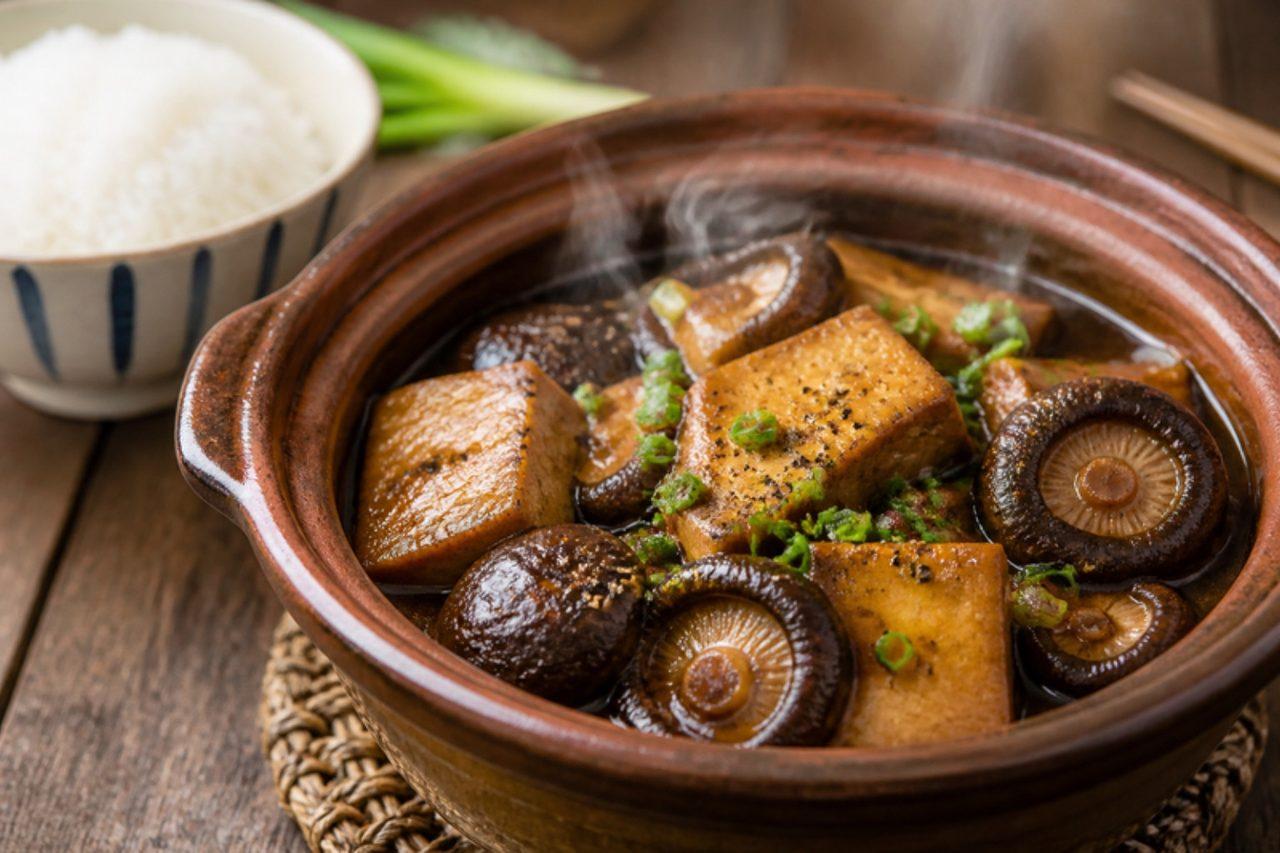
Kho is the slow braise of the Mekong Delta: food simmered in a little clay pot (nồi đất) with dark caramel and seasoning until the sauce is sticky and the flavours go deep. This vegetarian cousin of cá kho tộ (braised fish) uses golden tofu and meaty mushrooms in place of fish, cooked in coconut water, as cooks do in the south, and finished with plenty of black pepper. Serve it bubbling in its pot with steamed rice and a sour soup or plain boiled vegetables. Chef's tip: take the caramel (nước màu) to a deep mahogany, darker than you think, just before it smokes; pale caramel only tastes sweet, while dark caramel gives the bittersweet, smoky flavour of a real kho.

Paneer biryani
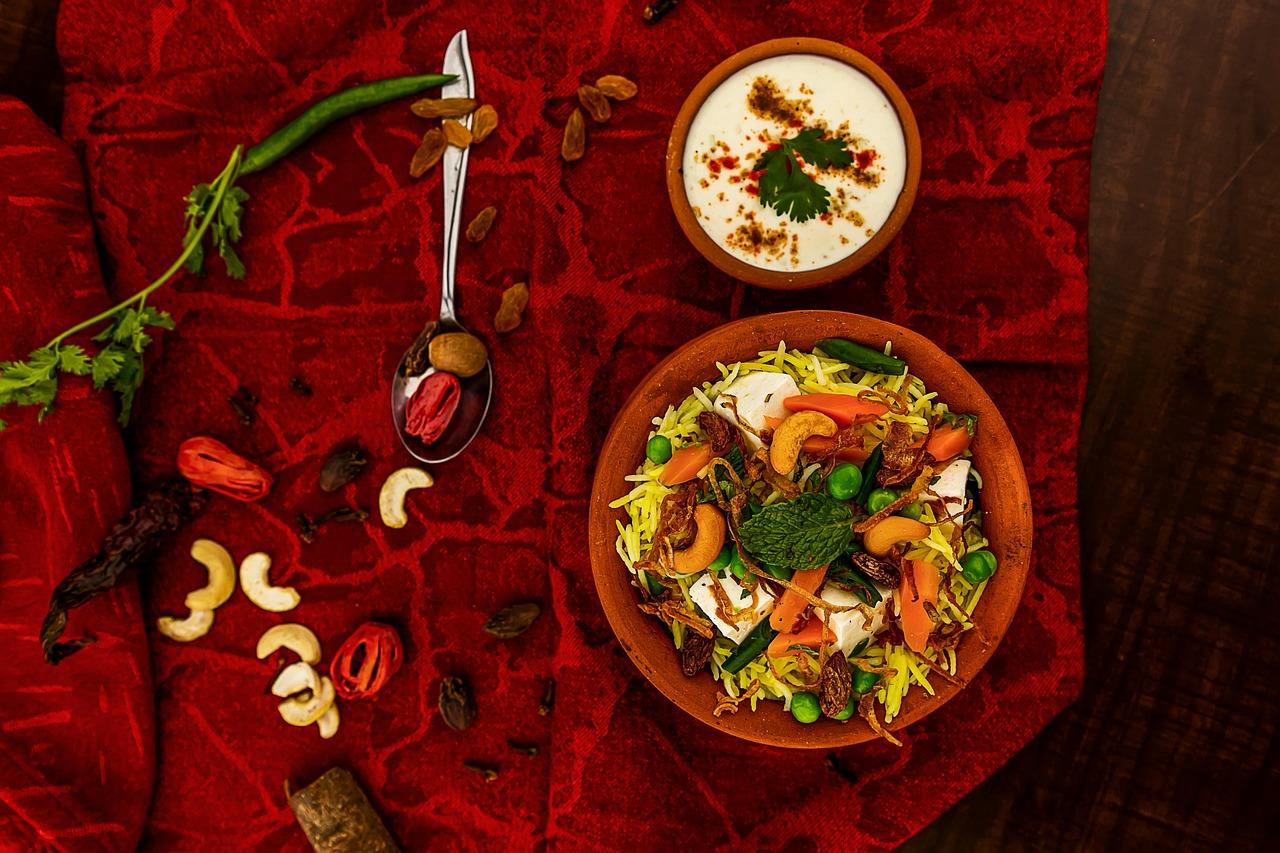
A mild, creamy biryani: rice and husked green gram roasted in ghee, then cooked in coconut milk with peas, carrots, potatoes, peanuts and cashews, and finished with soft fried paneer and a fresh coriander yogurt. Serve hot, garnished with more fried cashews and paneer.


Vegan nuoc cham
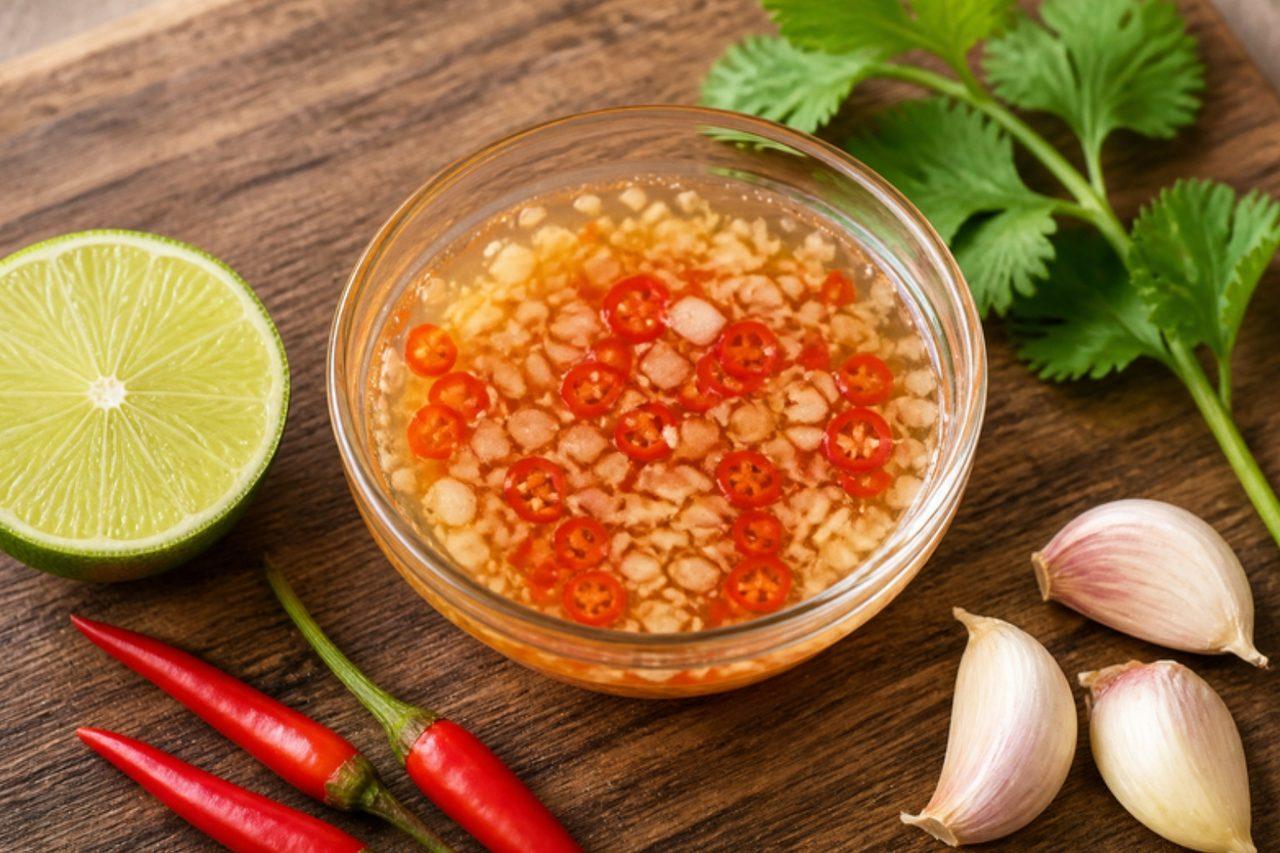
Nước chấm is the dipping sauce that goes with almost everything in Vietnam: spring rolls, bánh xèo, noodle salads and broken rice. Buddhist vegetarian cooks, all over the country, make it without fish sauce, using light soy sauce and a little coconut water for the deep, rounded taste. It should be thin, clear and pale amber, with flecks of garlic and chilli floating on top. Chef's tip: dissolve the sugar in the warm water first, then add the lime and soy, and stir in the garlic and chilli last, pounded with a pinch of sugar, so they float on the surface instead of sinking.